What it means
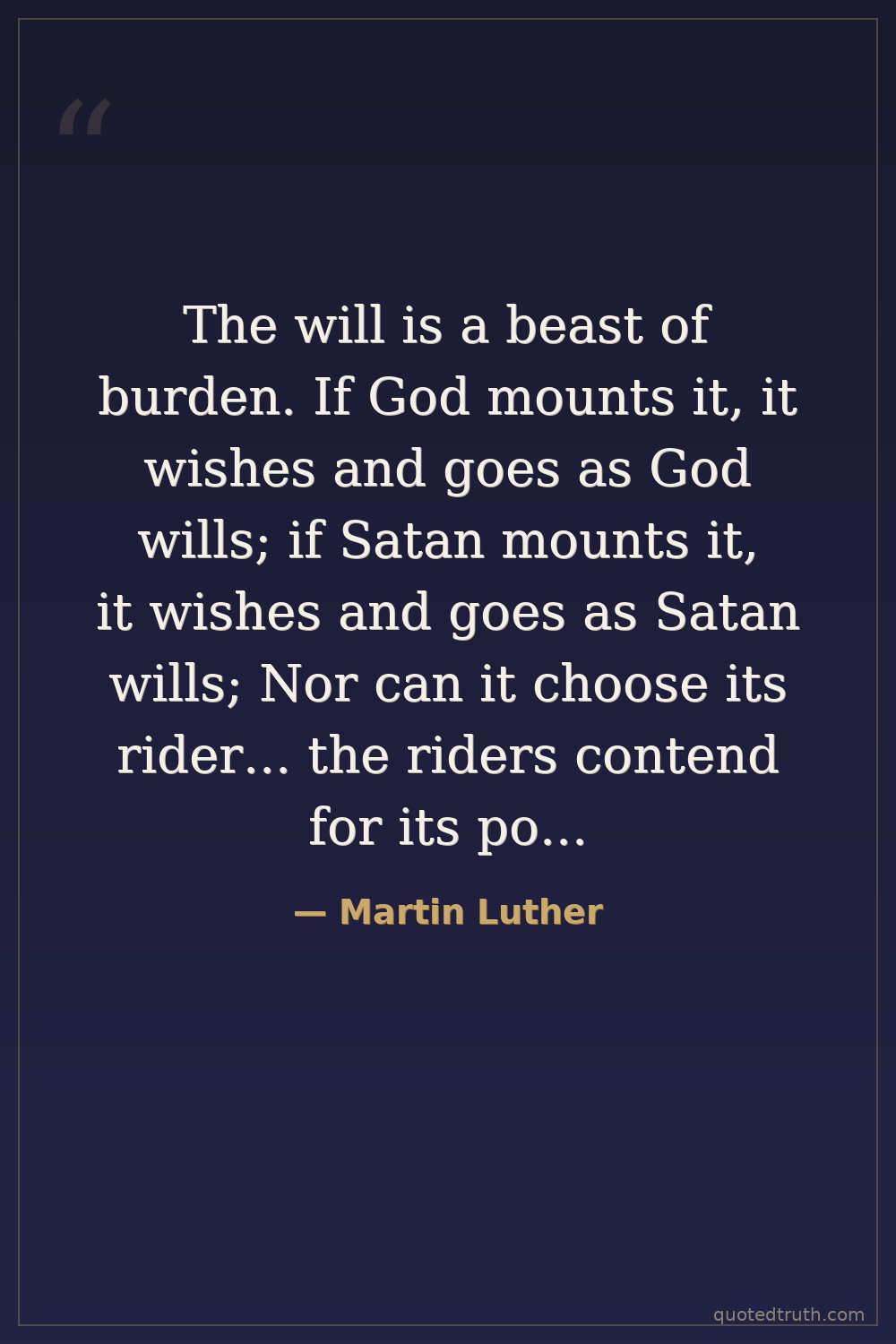
Human willpower is not truly free or self-directing. It is like a pack animal that always carries some rider, either God or Satan, and obediently moves in whatever direction that rider steers it. The will cannot pick which force controls it; instead, those two powers fight over who gets to sit in the saddle. Whoever wins that contest determines what a person wants and does.
Relevance to Martin Luther
This captures Luther's core theology from On the Bondage of the Will (1525), his fierce reply to Erasmus. A former Augustinian monk tormented by his inability to earn salvation, Luther concluded that humans cannot freely choose God; grace alone saves. The beast-and-rider image reflects his conviction that salvation is entirely God's work, a belief that fueled his break with Rome's emphasis on meritorious works and sacramental cooperation.
The era
In the early sixteenth century, Renaissance humanists like Erasmus championed human dignity and moral freedom, while the Catholic Church sold indulgences promising souls could cooperate in their own salvation. Luther's 1517 Ninety-Five Theses had already ignited the Reformation, fracturing Western Christendom. Printing presses spread theological debates to laypeople for the first time, making disputes over free will, grace, and authority not just academic but politically explosive across German-speaking Europe.
AI-generated insights based on extensive research and information for context. Factual errors? Email [email protected].