Martin Luther — "Mankind has a free will; but it is free to milk cows and to build houses, nothin…"
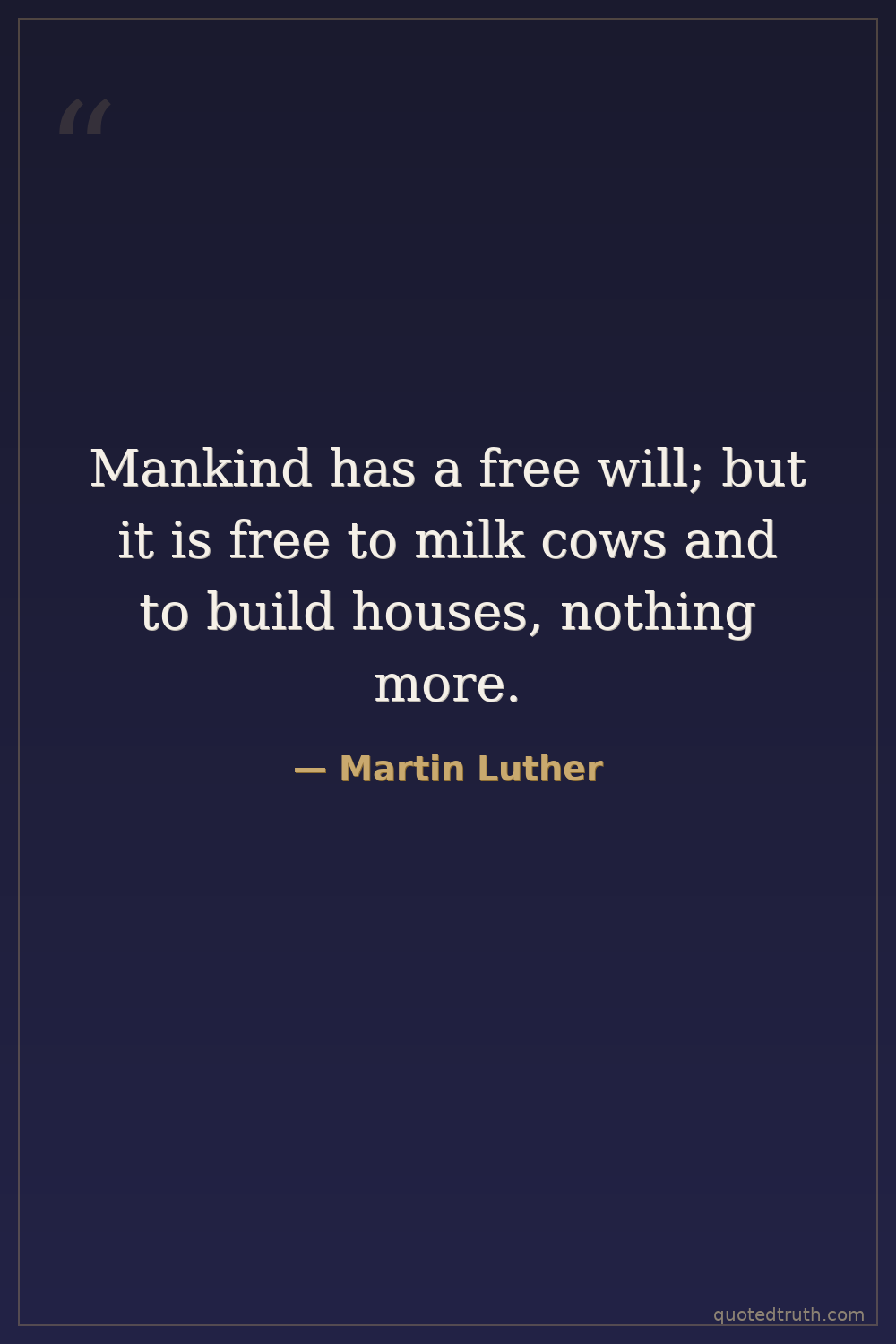
Mankind has a free will; but it is free to milk cows and to build houses, nothing more.
Mankind has a free will; but it is free to milk cows and to build houses, nothing more.
Click any product to generate a realistic preview. Up to 3 at a time.
* Initial load can take up to 90 seconds — revising the preview in another color is nearly instant.
"I would rather have my tongue cut out than retract a single syllable."
"A dog is a dog, and a cat is a cat, but a man is a man."
"I would have been a saint if I had remained in the monastery, but I was forced to become a devil."
"Sleep is a most excellent thing, for it makes us forget all the miseries of life."
"I'm like a ripe stool and the world's like a gigantic anus, and we're about to let go of each other."
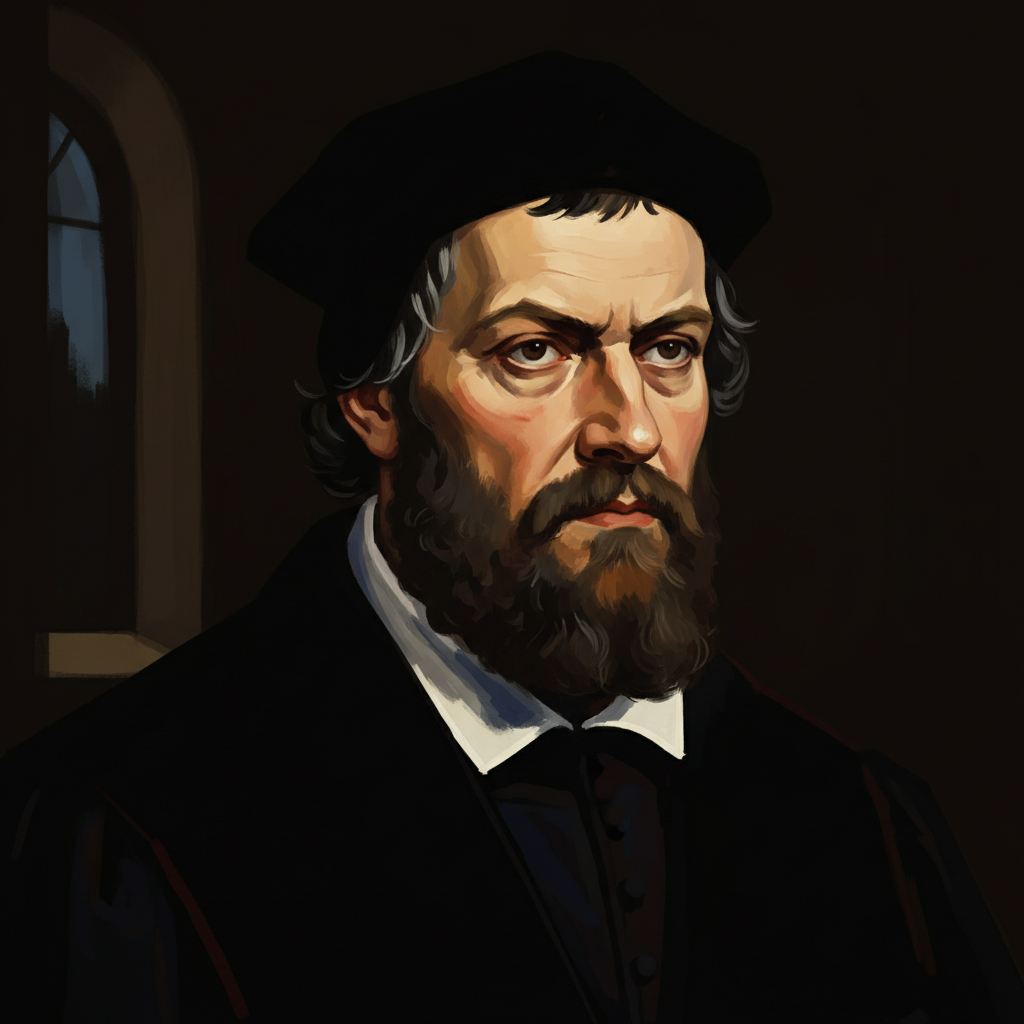
German theologian whose 95 Theses (1517) launched the Protestant Reformation and broke the Catholic Church's monopoly on Western Christianity. Closely associated with Philipp Melanchthon (Lutheran systematizer) and John Calvin (later Reformer who built on Luther's break). For an intellectual contrast, see Pope Leo X, Renaissance pope (1513-1521) — Leo X's indulgence sales triggered Luther's break and Leo excommunicated him in 1521 — Luther's entire Reformation is structured as a direct answer to the indulgence-funded Vatican Leo represented.
Found in 1 providers: gemini
1 source checked
Humans can freely make ordinary, practical choices—what job to do, what to build, how to run daily life. But when it comes to salvation, faith, or turning toward God, the will is not actually free. Luther is drawing a sharp line: human autonomy works fine for mundane tasks, yet in spiritual matters people are bound and cannot choose righteousness on their own without divine grace.
This captures the heart of Luther's theology, especially his 1525 work 'On the Bondage of the Will' against Erasmus. A former Augustinian monk turned reformer, Luther insisted salvation came by grace alone, not human effort. As a preacher who valued honest labor—he praised milkmaids and craftsmen—he affirmed earthly freedom while denying spiritual self-determination, the cornerstone conviction that fueled his break from Rome.
In early modern Europe, the Catholic Church taught that humans cooperated with grace through sacraments, indulgences, and good works. Renaissance humanists like Erasmus defended free will as essential to morality. Luther's 1517 Ninety-Five Theses ignited the Reformation, and the free-will debate became its theological fault line. Printing presses spread these arguments rapidly, fracturing Christendom and reshaping politics, peasant revolts, and the very idea of individual conscience across German-speaking lands.
AI-generated insights based on extensive research and information for context. Factual errors? Email [email protected].
Your cart is empty