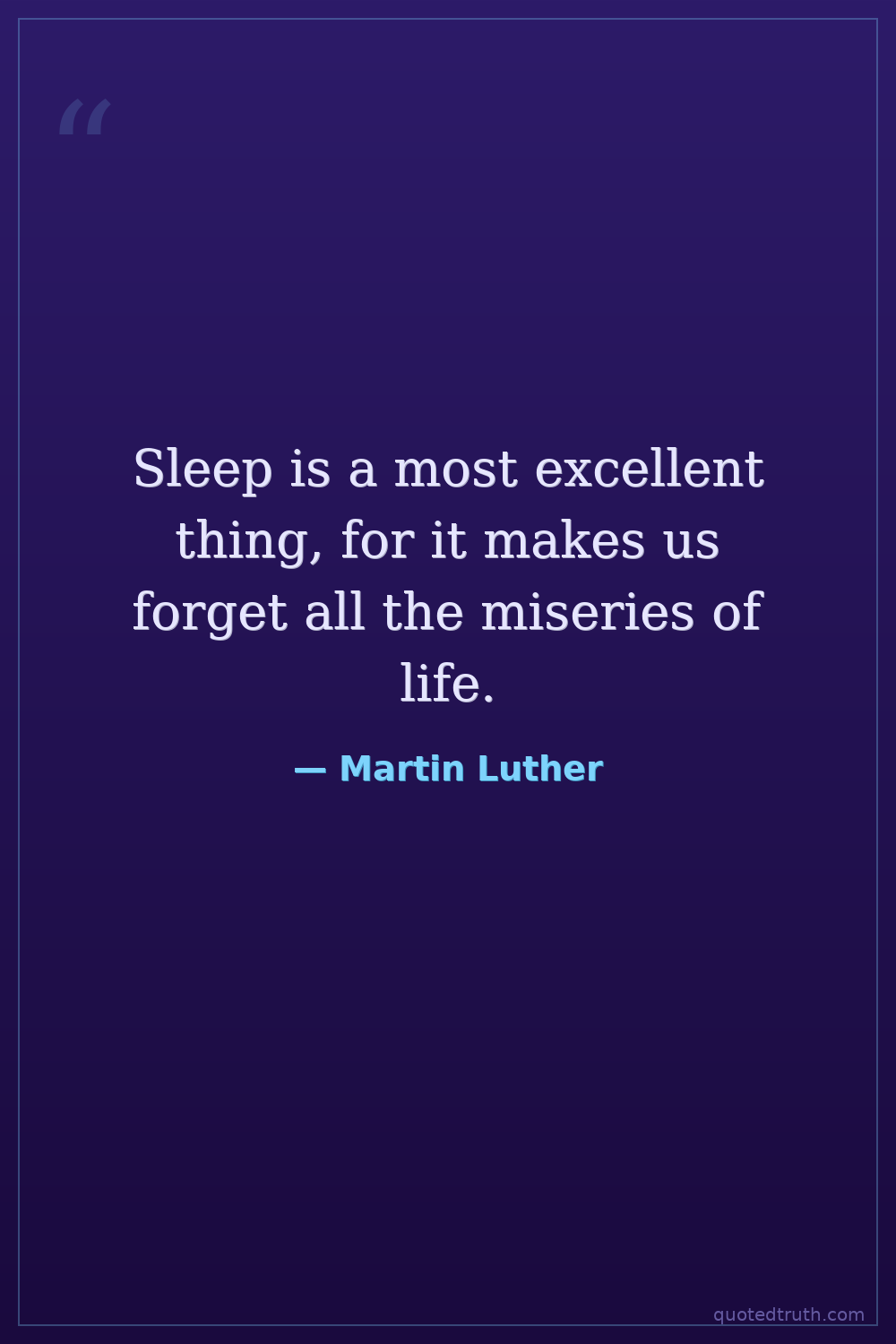
Martin Luther — "Sleep is a most excellent thing, for it makes us forget all the miseries of life…"
Sleep is a most excellent thing, for it makes us forget all the miseries of life.
Sleep is a most excellent thing, for it makes us forget all the miseries of life.
Click any product to generate a realistic preview. Up to 3 at a time.
* Initial load can take up to 90 seconds — revising the preview in another color is nearly instant.
"Tomorrow I have to lecture on the drunkenness of Noah [Gen. 9:20-27], so I should drink enough this evening to be able to talk about that wickedness as one who knows by experience."
"A happy fart never comes from a miserable ass."
"War is the greatest plague that can afflict humanity, it destroys religion, it destroys states, it destroys families. Any scourge is preferable to it."
"Where God builds a church, the Devil builds a chapel."
"Faith is a living, daring confidence in God's grace, so sure and certain that a man could stake his life on it a thousand times."
German theologian whose 95 Theses (1517) launched the Protestant Reformation and broke the Catholic Church's monopoly on Western Christianity. Closely associated with Philipp Melanchthon (Lutheran systematizer) and John Calvin (later Reformer who built on Luther's break). For an intellectual contrast, see Pope Leo X, Renaissance pope (1513-1521) — Leo X's indulgence sales triggered Luther's break and Leo excommunicated him in 1521 — Luther's entire Reformation is structured as a direct answer to the indulgence-funded Vatican Leo represented.
Found in 1 providers: gemini
1 source checked
Sleep is one of life's greatest gifts because it temporarily erases our worries, pains, and hardships. When we're unconscious, we don't feel grief, stress, physical discomfort, or emotional burdens. For those few hours, the mind escapes suffering and finds peace. The quote frames rest not merely as biological necessity but as a merciful pause from existence itself, a nightly reprieve that resets our capacity to face waking struggles.
Luther suffered chronic ailments including kidney stones, constipation, vertigo, and severe depressive episodes he called Anfechtungen, dark spiritual assaults where he felt abandoned by God. He also endured excommunication, an imperial death warrant, and years of hiding. For a man battling constant physical pain and psychological torment while reshaping Christianity, sleep genuinely offered rare relief from both bodily suffering and the crushing weight of theological warfare.
Early sixteenth-century Europe was brutal: plague recurred regularly, infant mortality was catastrophic, peasant wars erupted, and religious conflict killed thousands. Medicine was primitive, chronic pain untreatable, and anxiety about damnation pervasive. Luther's 1517 Ninety-Five Theses ignited decades of violent upheaval across the Holy Roman Empire. In an age without painkillers, therapy, or social safety nets, sleep was genuinely one of few accessible escapes from lives saturated with physical hardship and existential dread.
AI-generated insights based on extensive research and information for context. Factual errors? Email [email protected].
Your cart is empty