What it means
When guilt and shame overwhelm you with reminders of your failures and the punishment you've earned, don't argue the point. Concede it fully, then pivot: your rescue doesn't depend on your worthiness. Someone else already paid the price and absorbed the consequences on your behalf. Because you're tied to him, wherever he ends up is where you end up too. Accusation loses its grip the moment you stop defending yourself and point to the substitute instead.
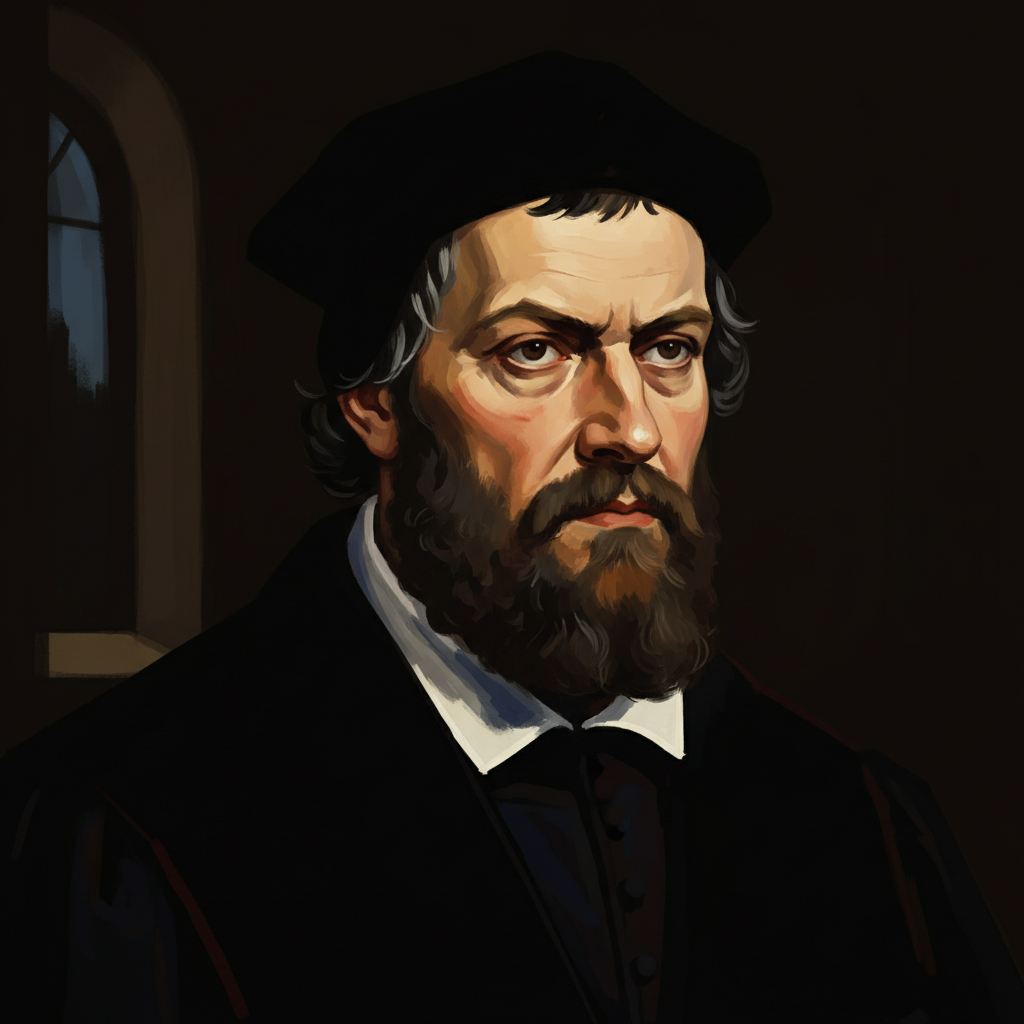
Relevance to Martin Luther
Luther wrestled intensely with scrupulosity and spiritual despair, what he called Anfechtungen, throughout his monastic years and beyond. This passage captures his hard-won answer: not moral self-improvement but radical reliance on Christ's imputed righteousness. It crystallizes sola fide, the doctrinal engine of his 1517 break with Rome, where he rejected indulgences and the merit-based confessional system in favor of justification received through faith alone.
The era
In early-sixteenth-century Europe, salvation anxiety was industrialized. The medieval church sold indulgences, prescribed penances, and emphasized purgatorial suffering, leaving ordinary Christians terrified of dying with unpaid spiritual debt. Johann Tetzel's 1517 indulgence campaign in Germany was the spark. Luther's pastoral counsel here directly subverted that economy, telling the conscience to bypass priestly mediation and speak back to accusation with Christ's finished work, a devastatingly liberating message in a fear-saturated age.
AI-generated insights based on extensive research and information for context. Factual errors? Email [email protected].