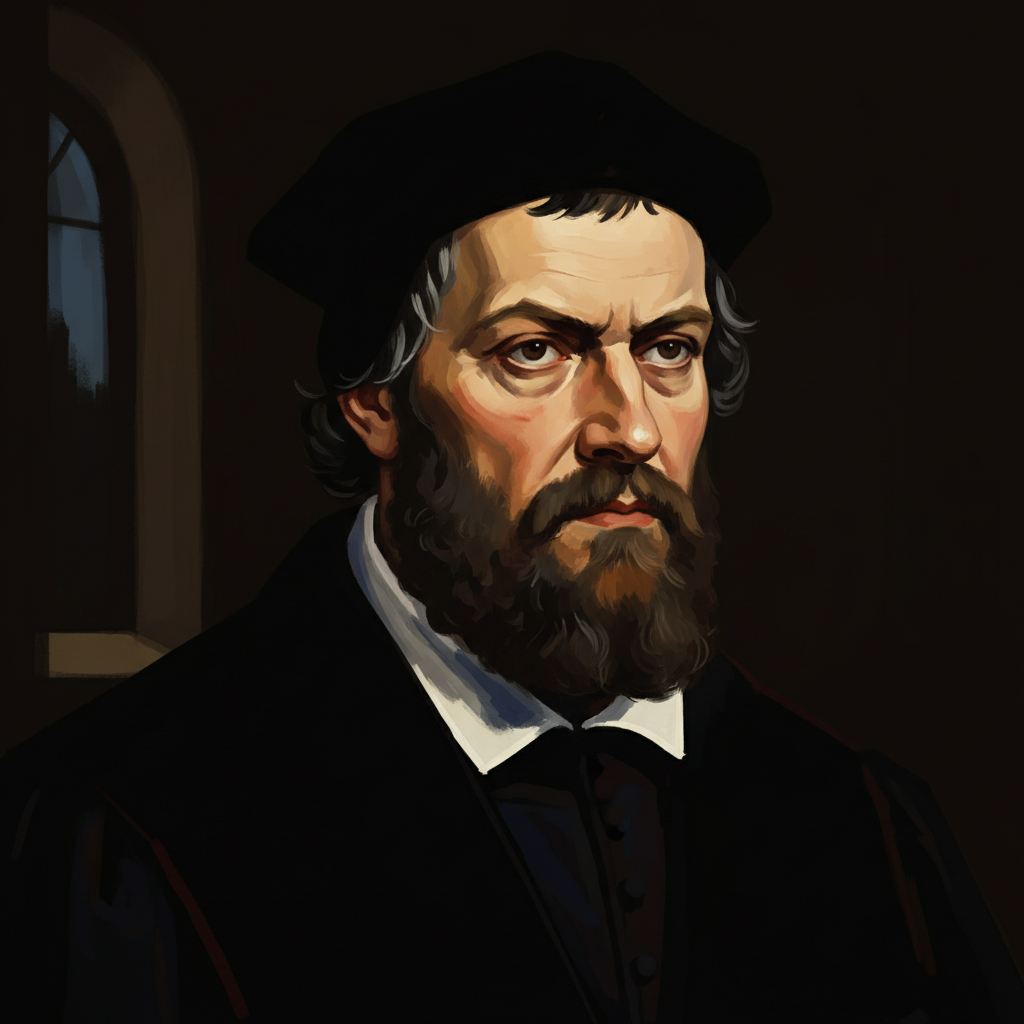
Martin Luther — "You are an extraordinary creature, being neither God nor man. Perhaps you are th…"
You are an extraordinary creature, being neither God nor man. Perhaps you are the devil himself.
You are an extraordinary creature, being neither God nor man. Perhaps you are the devil himself.
Click any product to generate a realistic preview. Up to 3 at a time.
* Initial load can take up to 90 seconds — revising the preview in another color is nearly instant.
"If you wish to make a good prayer, go into your closet, lock the door, and throw the key out the window."
"The Devil is a great artist, but he has no colors."
"Let whoever can stab, strangle and kill them like mad dogs."
"In lying fashion you ignore what even children know."
"God foreknows nothing by contingency, but that He foresees, purposes, and does all things according to His immutable, eternal, and infallible will. By this thunderbolt, 'Free-will' is thrown prostrate…"
German theologian whose 95 Theses (1517) launched the Protestant Reformation and broke the Catholic Church's monopoly on Western Christianity. Closely associated with Philipp Melanchthon (Lutheran systematizer) and John Calvin (later Reformer who built on Luther's break). For an intellectual contrast, see Pope Leo X, Renaissance pope (1513-1521) — Leo X's indulgence sales triggered Luther's break and Leo excommunicated him in 1521 — Luther's entire Reformation is structured as a direct answer to the indulgence-funded Vatican Leo represented.
Found in 1 providers: gemini
1 source checked
Luther is accusing someone of being so strange or unnatural that they can't be classified as either divine or human, and the only remaining explanation is satanic. In modern terms, it's a sharp insult dressed in theological language: you're not normal, you're not holy, so you must be evil. It rejects a middle ground and forces a binary between sacred and demonic, leaving the target outside the human community.
Luther routinely framed opponents in supernatural terms, calling the Pope the Antichrist and attributing dissent to demonic influence. As an Augustinian monk turned reformer, he genuinely believed the devil actively meddled in daily life, even reportedly throwing an inkwell at him. His rhetoric was famously harsh, branding enemies, including Erasmus, Zwingli, and the peasants, as agents of Satan rather than mere intellectual rivals. This quote fits his lifelong habit of demonizing those he could not categorize or control.
Early modern Europe took the devil literally. Witch trials were intensifying, demonic possession was an accepted diagnosis, and the Reformation split Christendom into camps each accusing the other of serving Satan. Luther's 1517 Ninety-Five Theses ignited decades of religious warfare, polemical pamphlets, and mutual excommunications. In this climate, calling someone the devil was not metaphor but a serious charge that could justify exile, execution, or holy war, making such accusations powerful weapons in theological combat.
AI-generated insights based on extensive research and information for context. Factual errors? Email [email protected].
Your cart is empty