Martin Luther — "Where the battle rages, there the loyalty of the soldier is proved."
Where the battle rages, there the loyalty of the soldier is proved.
Where the battle rages, there the loyalty of the soldier is proved.
Click any product to generate a realistic preview. Up to 3 at a time.
* Initial load can take up to 90 seconds — revising the preview in another color is nearly instant.
"The best way to worship God is to do your duty."
"You have as much laughter as you have faith."
"A man remains foolish until his 40th year, when he begins to recognize his foolishness; then life is soon over."
"The Christian shoemaker does his duty not by putting little crosses on the shoes, but by making good shoes, because God is interested in good craftsmanship."
"You abominable abomination."
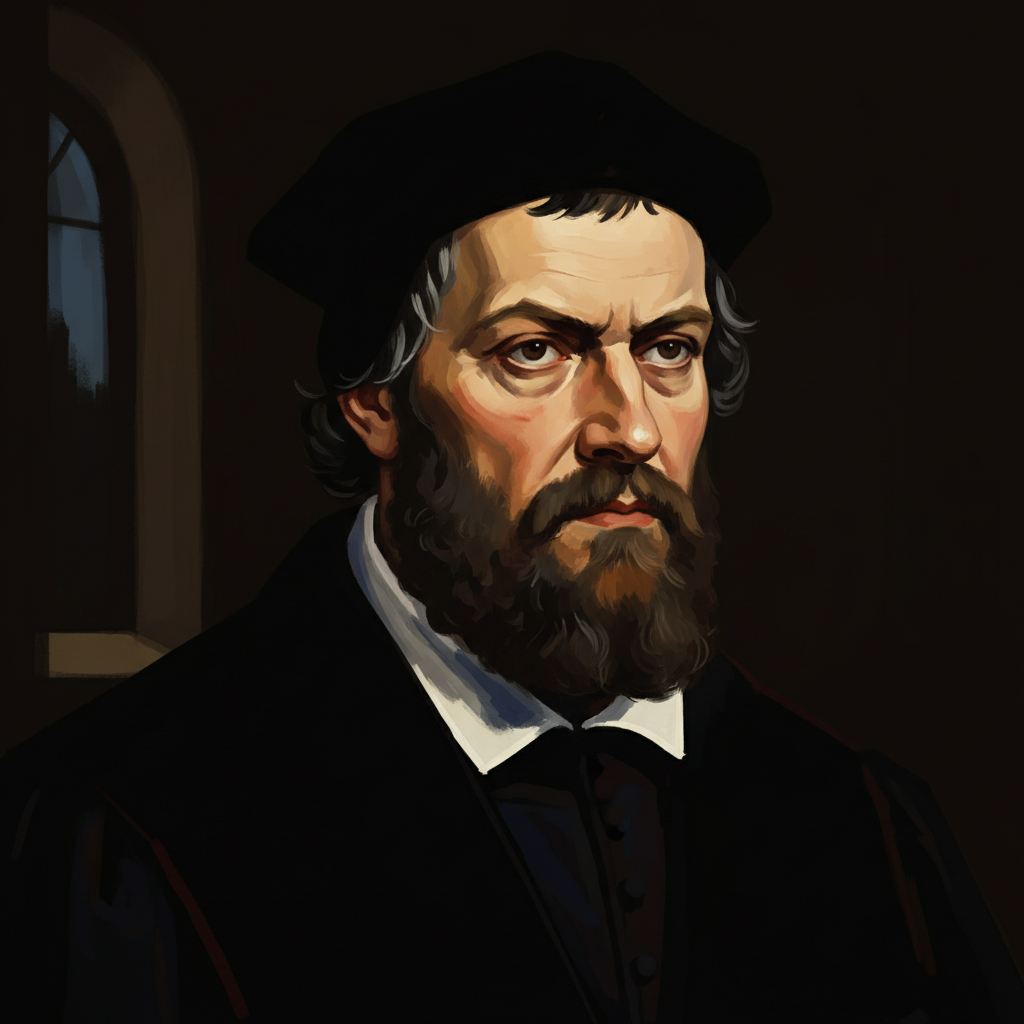
German theologian whose 95 Theses (1517) launched the Protestant Reformation and broke the Catholic Church's monopoly on Western Christianity. Closely associated with Philipp Melanchthon (Lutheran systematizer) and John Calvin (later Reformer who built on Luther's break). For an intellectual contrast, see Pope Leo X, Renaissance pope (1513-1521) — Leo X's indulgence sales triggered Luther's break and Leo excommunicated him in 1521 — Luther's entire Reformation is structured as a direct answer to the indulgence-funded Vatican Leo represented.
Found in 1 providers: gemini
1 source checked
Loyalty isn't tested in calm, easy times—it's proven when things get hard and dangerous. Anyone can claim to support a cause when there's no cost, but real commitment shows up when you're under pressure, facing opposition, or risking something real. The person who stands firm exactly where the fight is hottest, rather than retreating to safer ground, is the one whose dedication actually matters.
Luther lived this personally. After posting his 95 Theses in 1517, he was excommunicated by the Pope and declared an outlaw by Emperor Charles V at the Diet of Worms in 1521, where he famously refused to recant. He hid at Wartburg Castle under threat of execution, yet kept writing, translating the Bible, and defending reform. His loyalty to conscience was proved precisely where the theological battle raged fiercest.
The early 16th century was an era of violent religious upheaval. The printing press spread Luther's ideas across Europe within weeks, triggering the Protestant Reformation, the Peasants' War of 1524-25, and decades of religious conflict culminating in the Thirty Years' War. Clergy, princes, and ordinary believers faced real choices between Rome and reform—often at the cost of property, freedom, or life. Neutrality was rarely an option when battle lines literally divided towns.
AI-generated insights based on extensive research and information for context. Factual errors? Email [email protected].
Your cart is empty