What it means
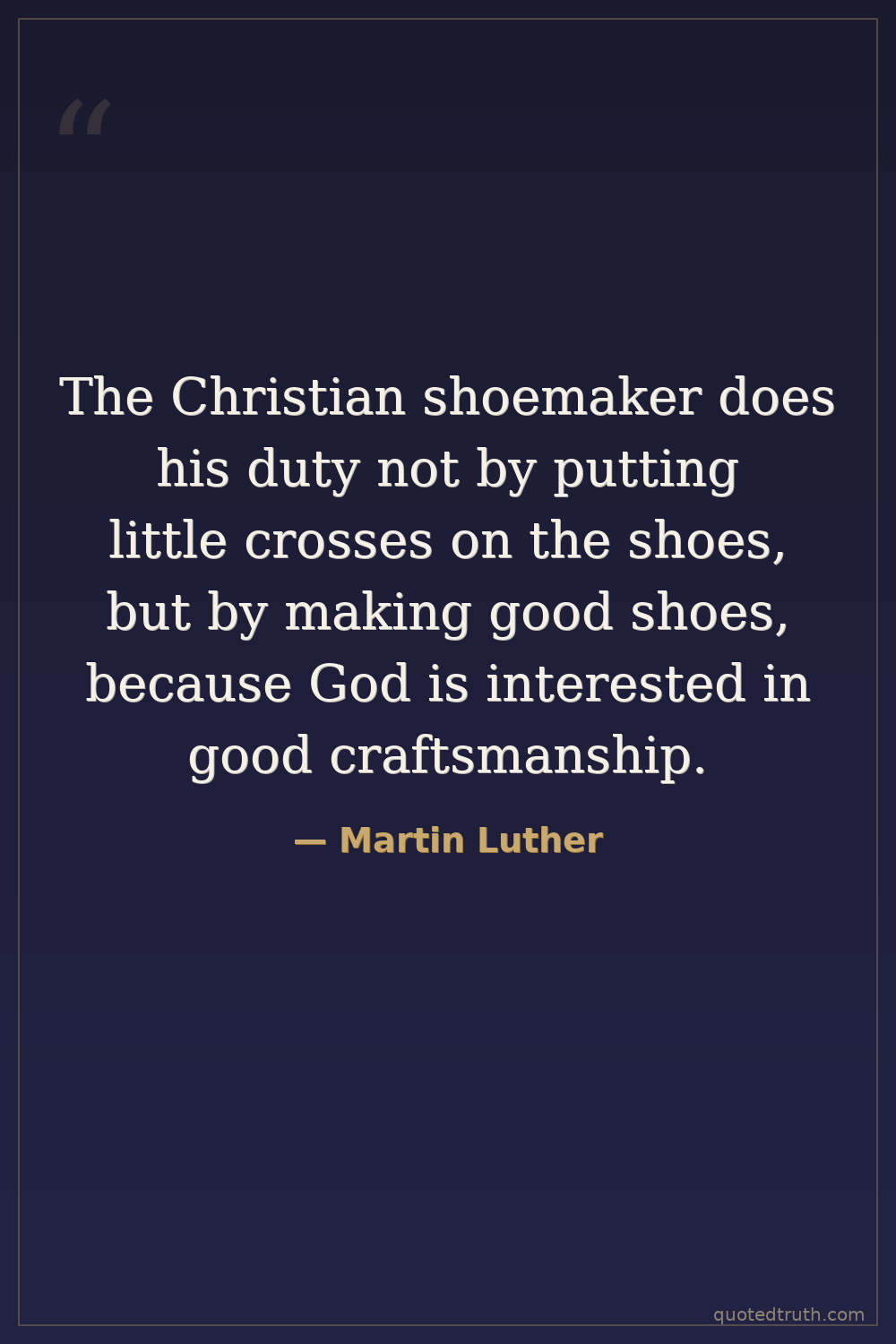
Real devotion shows up in the quality of your everyday work, not in religious decoration stuck onto it. A shoemaker honors God by making shoes that fit well and last, not by stamping crosses on them. Slapping spiritual symbols on a shoddy product misses the point entirely. Competence, honesty, and care in ordinary labor are themselves acts of worship, because God values the substance of what you do over pious branding.
Relevance to Martin Luther
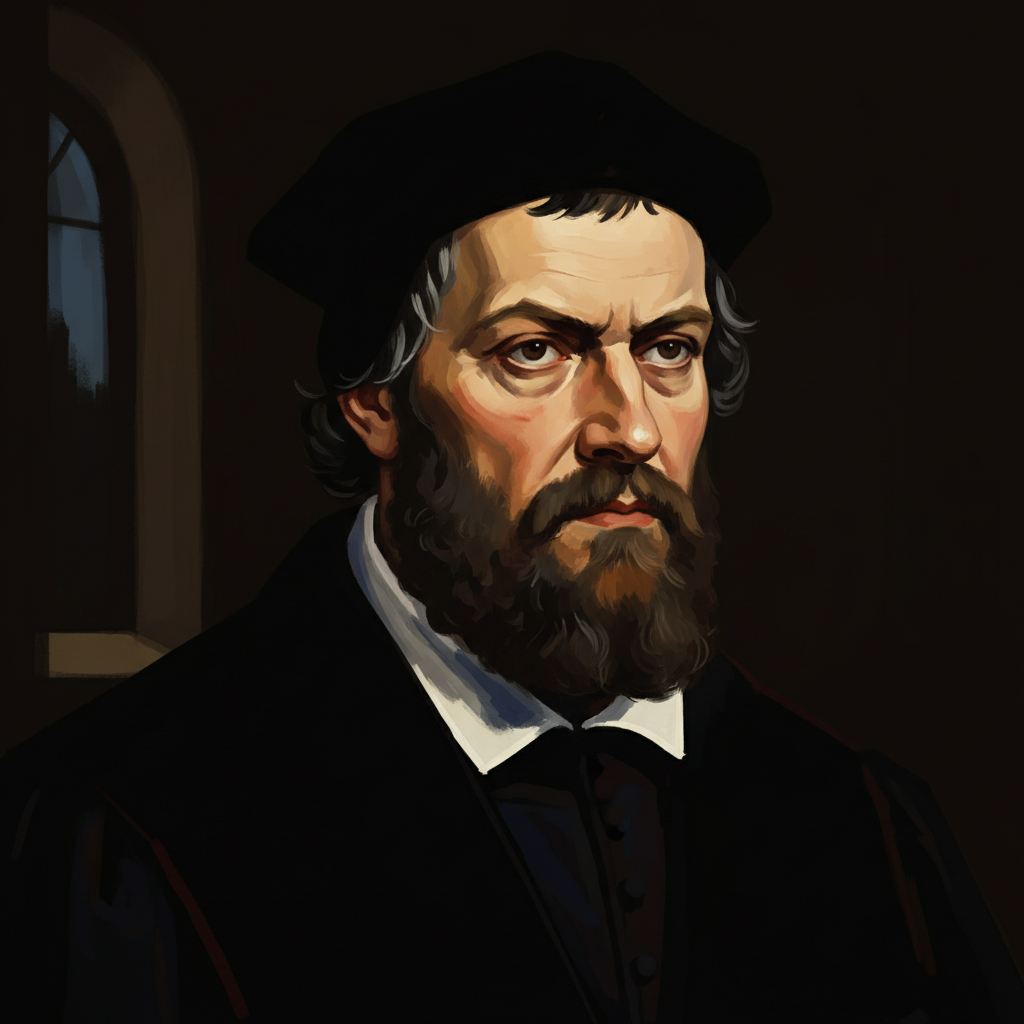
Luther rejected the medieval split between sacred vocations (monks, priests) and ordinary work, arguing every honest job is a divine calling. Having left the monastery himself, he preached that a farmer, mother, or cobbler serves God as fully as any clergyman. This shoemaker line captures his doctrine of vocation and his suspicion of outward religious show, both central to his break with Rome and his rewriting of Christian daily life.
The era
In early-modern Europe, the late-medieval church sold indulgences and prized visible piety, relics, and monastic withdrawal as the highest Christian life. Craftsmen were spiritually second-tier. Luther's 1517 Ninety-Five Theses and the Reformation that followed attacked this hierarchy, elevating lay work as God-pleasing service. Printing presses spread these ideas across German-speaking lands, reshaping how ordinary Europeans understood labor, worship, and the relationship between faith and everyday competence.
AI-generated insights based on extensive research and information for context. Factual errors? Email [email protected].