Laozi — "Difficult things in the world must needs have their beginnings in the easy; Big …"
Difficult things in the world must needs have their beginnings in the easy; Big things must needs have their beginnings in the small.
Difficult things in the world must needs have their beginnings in the easy; Big things must needs have their beginnings in the small.
Click any product to generate a realistic preview. Up to 3 at a time.
* Initial load can take up to 90 seconds — revising the preview in another color is nearly instant.
"He who is without desire sees the mystery. He who is with desire sees only the manifestations."
"Let people return to making knots on ropes, instead of writing."
"The higher the sun rises, the less shadow it casts."
"The reason why the river and the sea are able to be the lords of the hundred valleys is that they excel in taking the lower position. That is why they are able to be the lords of the hundred valleys."
"The superior man, when he hears of the Tao, endeavors to observe it."
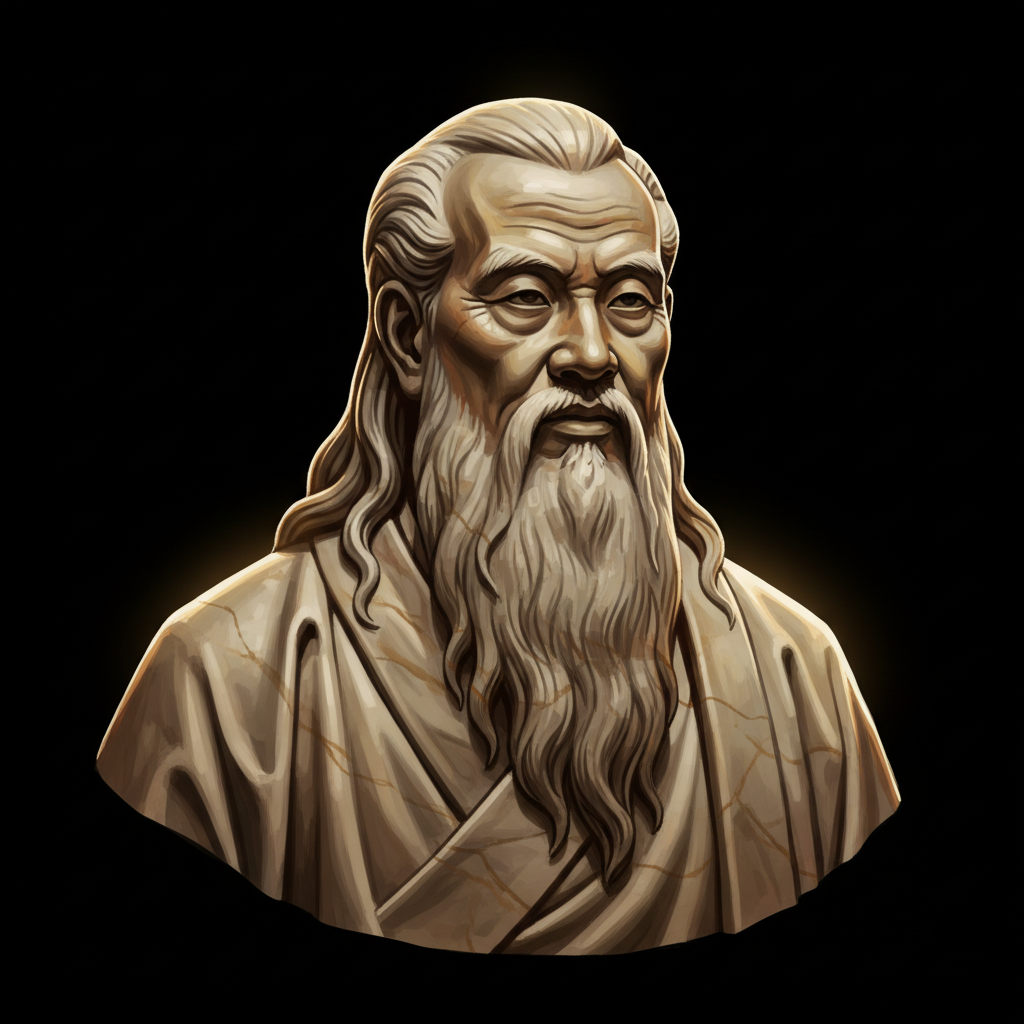
Reputed founder of Taoism and author of the Tao Te Ching, whose wu wei (effortless action) shaped East Asian philosophy. Closely associated with Zhuangzi (later Taoist who extended Laozi's framework). For an intellectual contrast, see Confucius, near-contemporary Chinese sage of social ritual and duty — Confucius systematized social order through ritual and hierarchy; Laozi argued that all such systems were the disease, not the cure — the two founding poles of Chinese moral philosophy.
Found in 1 providers: gemini
1 source checked
Every hard challenge starts as something manageable, and every massive achievement grows from modest origins. Before a problem becomes overwhelming, it was once simple to address. Before an empire rises, it began as a single step or choice. The saying urges readers to act on small issues before they compound, and to respect humble beginnings because they contain the seeds of what eventually becomes enormous.
Laozi served as a keeper of royal archives, observing dynasties rise and collapse from documented origins. This gave him a long view of how events compound. Taoism, which he founded, emphasizes wu wei, effortless action aligned with natural flow, and teaches that sages handle matters while they remain small. The quote distills his signature method: attend to subtle beginnings rather than struggling with full-blown crises, mirroring how water shapes stone gradually.
Laozi lived during the late Zhou dynasty, an era of fracturing feudal order that later erupted into the Warring States period. Rulers faced constant rebellions, shifting alliances, and collapsing institutions, all of which had grown from ignored early warnings. Competing schools like Confucianism and Legalism debated how to restore stability. In this climate of escalating chaos, Laozi's reminder that large disasters begin as small oversights offered rulers and subjects a practical diagnostic for preventing ruin.
AI-generated insights based on extensive research and information for context. Factual errors? Email [email protected].
Your cart is empty