Laozi — "Therefore it is because the sage never attempts to be great that he succeeds in …"
Therefore it is because the sage never attempts to be great that he succeeds in becoming great.
Therefore it is because the sage never attempts to be great that he succeeds in becoming great.
Click any product to generate a realistic preview. Up to 3 at a time.
* Initial load can take up to 90 seconds — revising the preview in another color is nearly instant.
"The people are hungry: it is because those in authority eat up too much in taxes."
"The sage puts his person last and finds his person first. He treats his person as external and his person is preserved."
"Governing a large country is like frying a small fish."
"Without going out of the door, one can know the whole world. Without peeping through the window, one can see the Way of Heaven. The further one goes, the less one knows."
"The sage governs by emptying senses and filling bellies."
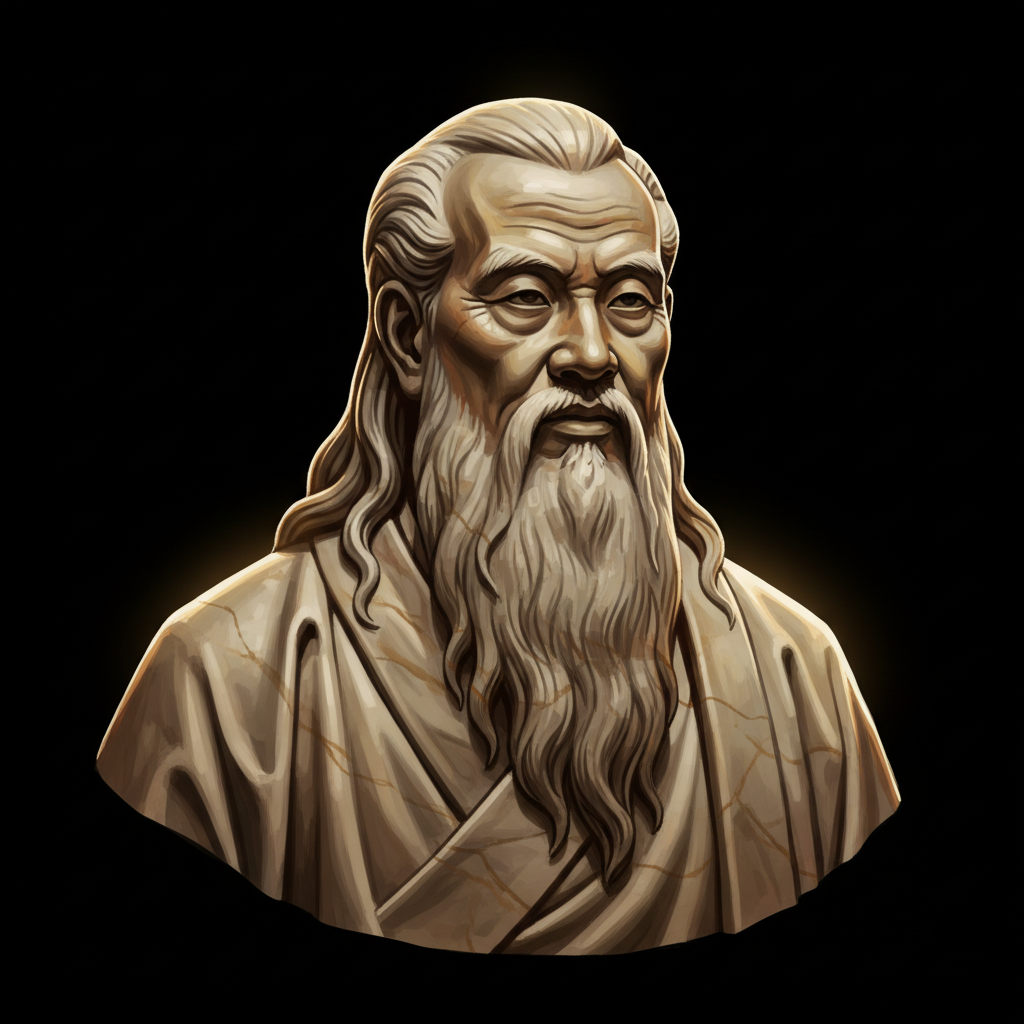
Reputed founder of Taoism and author of the Tao Te Ching, whose wu wei (effortless action) shaped East Asian philosophy. Closely associated with Zhuangzi (later Taoist who extended Laozi's framework). For an intellectual contrast, see Confucius, near-contemporary Chinese sage of social ritual and duty — Confucius systematized social order through ritual and hierarchy; Laozi argued that all such systems were the disease, not the cure — the two founding poles of Chinese moral philosophy.
Found in 1 providers: gemini
1 source checked
True greatness comes to those who don't chase it. When someone constantly strives for recognition, power, or status, they create resistance and miss what actually matters. But a wise person who focuses on doing good work, serving others, and staying humble ends up achieving real influence. Greatness arrives as a byproduct of genuine purpose, not as the target itself. Ambition for its own sake usually backfires.
Laozi reportedly worked as an archivist in the Zhou court, observing power without seeking it, and legend says he left quietly on a water buffalo rather than cultivate fame. This fits his core teaching of wu wei, effortless action that accomplishes through non-striving. He refused to write down his philosophy until a border guard insisted, embodying the very paradox he describes: reluctance to pursue greatness is precisely what secured his lasting influence.
Laozi lived during the late Zhou dynasty around the 6th century BCE, an era of political fragmentation later worsening into the Warring States period. Rulers chased territory, philosophers competed for court patronage, and ambition was rewarded openly. Against this backdrop of aggressive self-promotion, his counsel to abandon striving was radical. Confucianism was emerging with its emphasis on social duty and hierarchy, making Taoism's withdrawal and humility a deliberate countercurrent to the dominant ethos of the age.
AI-generated insights based on extensive research and information for context. Factual errors? Email [email protected].
Your cart is empty