Laozi — "Governing a large country is like frying a small fish."
Governing a large country is like frying a small fish.
Governing a large country is like frying a small fish.
Click any product to generate a realistic preview. Up to 3 at a time.
* Initial load can take up to 90 seconds — revising the preview in another color is nearly instant.
"People fail at the threshold of success. Be as cautious at the end as at the beginning. Then there will be no failure."
"The sage rules by emptying their minds and filling their bellies, by weakening their wills and strengthening their bones."
"Use justice to rule a country. Use surprise to wage war. Use non-action to govern the world."
"The soft and the weak overcome the hard and the strong."
"If you want to awaken all of humanity, then awaken all of yourself. If you want to eliminate the suffering in the world, then eliminate all that is dark and negative in yourself. Truly, the greatest g…"
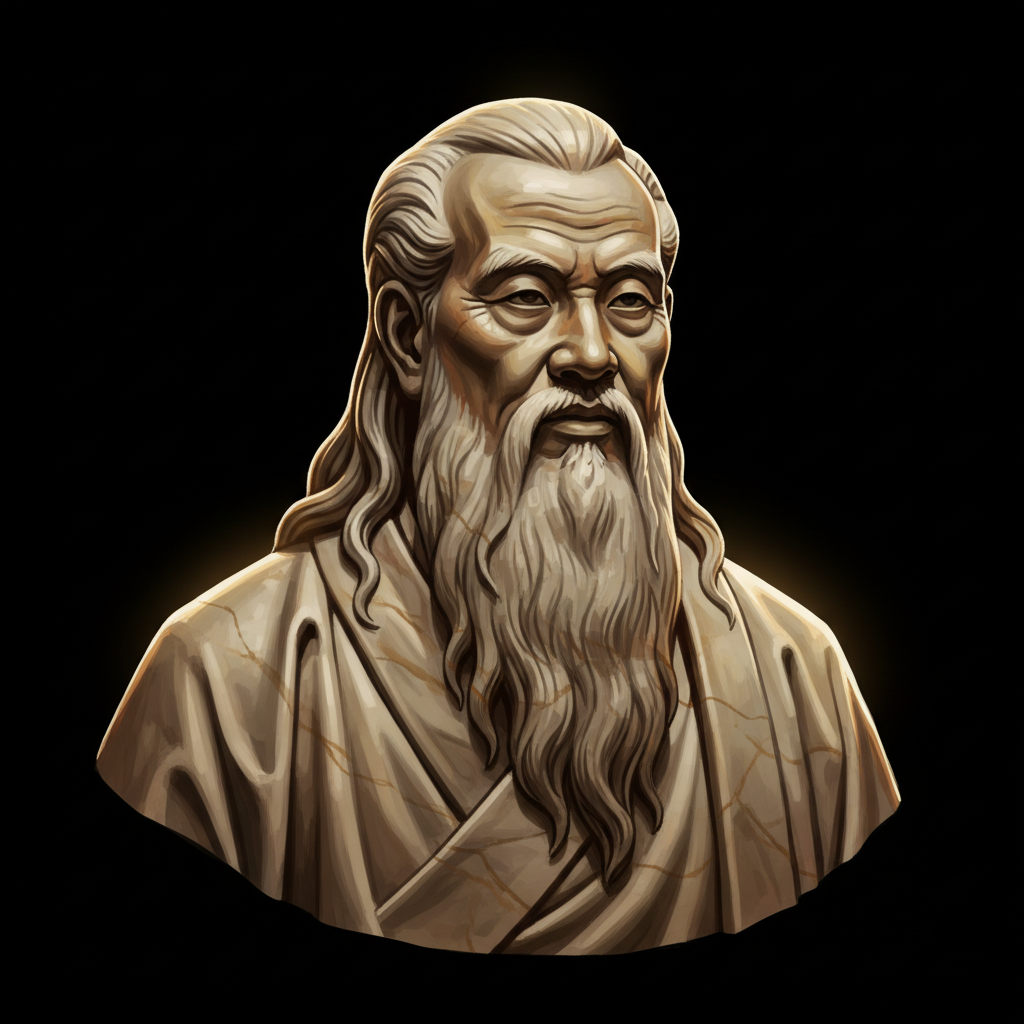
Reputed founder of Taoism and author of the Tao Te Ching, whose wu wei (effortless action) shaped East Asian philosophy. Closely associated with Zhuangzi (later Taoist who extended Laozi's framework). For an intellectual contrast, see Confucius, near-contemporary Chinese sage of social ritual and duty — Confucius systematized social order through ritual and hierarchy; Laozi argued that all such systems were the disease, not the cure — the two founding poles of Chinese moral philosophy.
Found in 1 providers: deepseek
1 source checked
Ruling a large nation requires a light touch, just as cooking a delicate fish demands minimal handling. Stir or flip too often and the fish falls apart; intervene constantly in a country's affairs with new laws, taxes, and mandates and society crumbles under the meddling. The best governance is restrained, patient, and non-intrusive, letting people and systems settle into their natural rhythms rather than being endlessly poked, reformed, and micromanaged from above.
Laozi served as a keeper of royal archives in the Zhou court, granting him close observation of how rulers governed and how often their interference produced chaos. His core teaching, wu wei or effortless action, argued that the wisest leader does least. Disillusioned by political decay, he reportedly left society entirely, writing the Tao Te Ching at a border pass. This fish metaphor distills his lifelong conviction that force and constant intervention corrupt the natural order.
Laozi lived during the late Zhou dynasty, roughly the 6th century BCE, as centralized authority disintegrated and regional warlords competed through shifting alliances, heavy taxation, and harsh legal codes. Peasants suffered under constant conscription and bureaucratic churn. Rival schools like Legalism pushed ever stricter control, while Confucians advocated elaborate ritual. Against this backdrop of over-governance and escalating violence preceding the Warring States period, Laozi's plea for minimal, gentle rule offered a radical counterweight to the era's obsession with top-down order.
AI-generated insights based on extensive research and information for context. Factual errors? Email [email protected].
Your cart is empty