Guru Nanak — "False is the body that leads to lust and anger, and false are the clothes that l…"
False is the body that leads to lust and anger, and false are the clothes that lead to pride.
False is the body that leads to lust and anger, and false are the clothes that lead to pride.
Click any product to generate a realistic preview. Up to 3 at a time.
* Initial load can take up to 90 seconds — revising the preview in another color is nearly instant.
"The greatest pilgrimage is to the temple of one's own heart. And sometimes, that temple needs a good cleaning."
"The world is burning in the fire of desire, O Nanak, save it, save it, Lord!"
"As reflection is within the mirror, So does your Lord abide within you, Why search for him without?"
"The true Guru is the one who shows the path of truth and righteousness."
"The world is a fleeting show, a temporary abode."
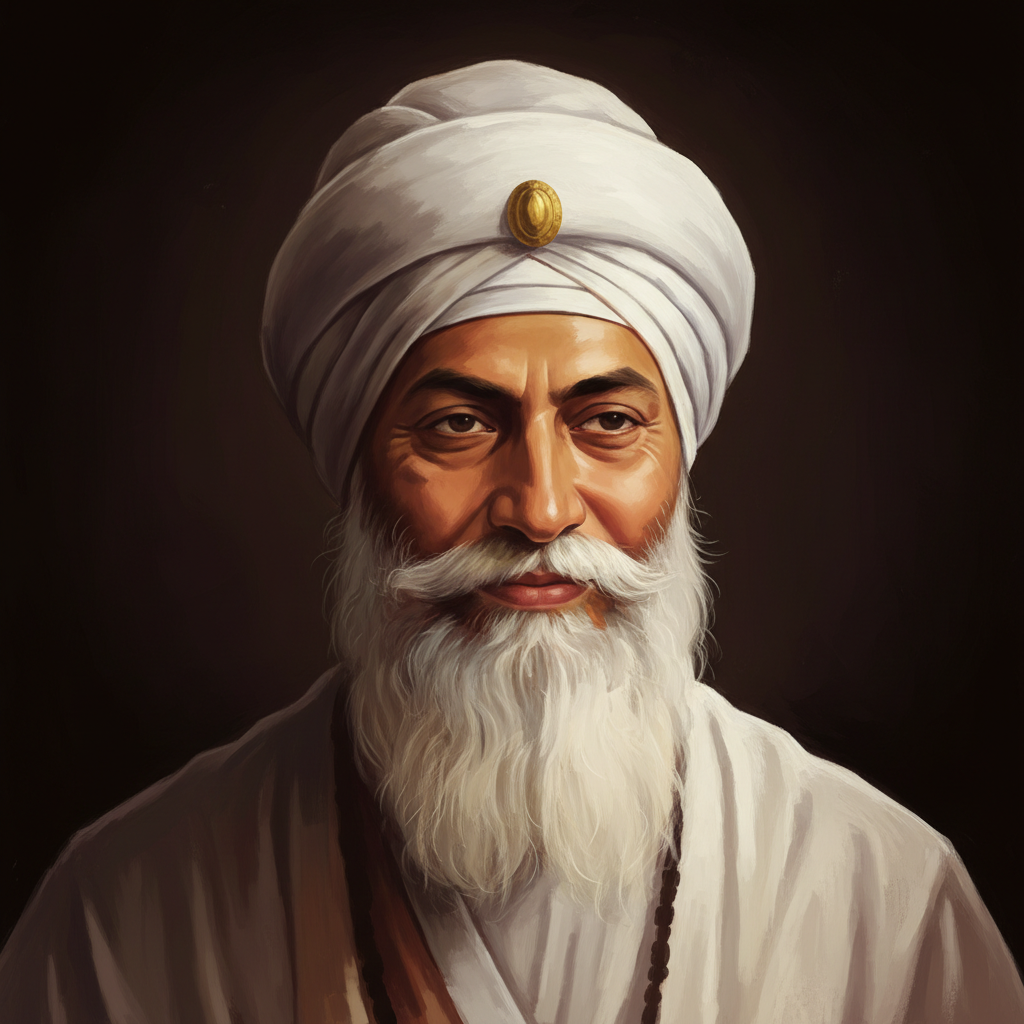
Founder of Sikhism and the first of the Ten Sikh Gurus, whose teachings of one universal God and rejection of caste shaped Punjab. Closely associated with Kabir (mystical poet whose verses appear in the Sikh Guru Granth Sahib). For an intellectual contrast, see Brahmanical orthodoxy, the Hindu caste-and-ritual establishment of his era — Sikhism was founded as a deliberate alternative to both Hindu ritual hierarchy and Islamic exclusivism — Nanak's universalism was a structural rejection of caste and priestly mediation.
Found in 1 providers: gemini
1 source checked
A body ruled by lust and anger is spiritually empty — it exists in falsehood, cut off from divine truth. Clothing worn to signal wealth or status is equally false because it feeds ego rather than God. True living means transcending physical cravings and social performance. Inner alignment with the divine is what's real; outward appearances and bodily passions that pull you away from that truth are, by definition, false.
Guru Nanak grounded Sikhism in Sat (divine truth) and the rejection of haumai (ego). He explicitly named lust, anger, and pride among the panj vikar — five thieves that corrupt the soul. Traveling thousands of miles across India, the Middle East, and Central Asia, he deliberately wore simple clothing and refused priestly robes, embodying his own teaching. He condemned both sensual indulgence and dress-based status signaling as identical barriers blocking the soul from union with Waheguru.
Guru Nanak lived 1469–1539 under the Lodi Sultanate and early Mughal rule, when caste hierarchy was enforced partly through dress — Brahmins wore sacred threads, royalty wore elaborate garments as authority markers. Clothing literally announced social rank. Simultaneously, Bhakti and Sufi reform movements challenged ritual formalism across the subcontinent. Denouncing pride-driven clothing was a direct blow against caste stratification, while condemning lust and anger echoed the era's broader spiritual demand for inner purification over inherited status and outward ceremony.
AI-generated insights based on extensive research and information for context. Factual errors? Email [email protected].
Your cart is empty