Guru Nanak — "Like the juggler, deceiving by his tricks, one is deluded by egotism, falsehood …"
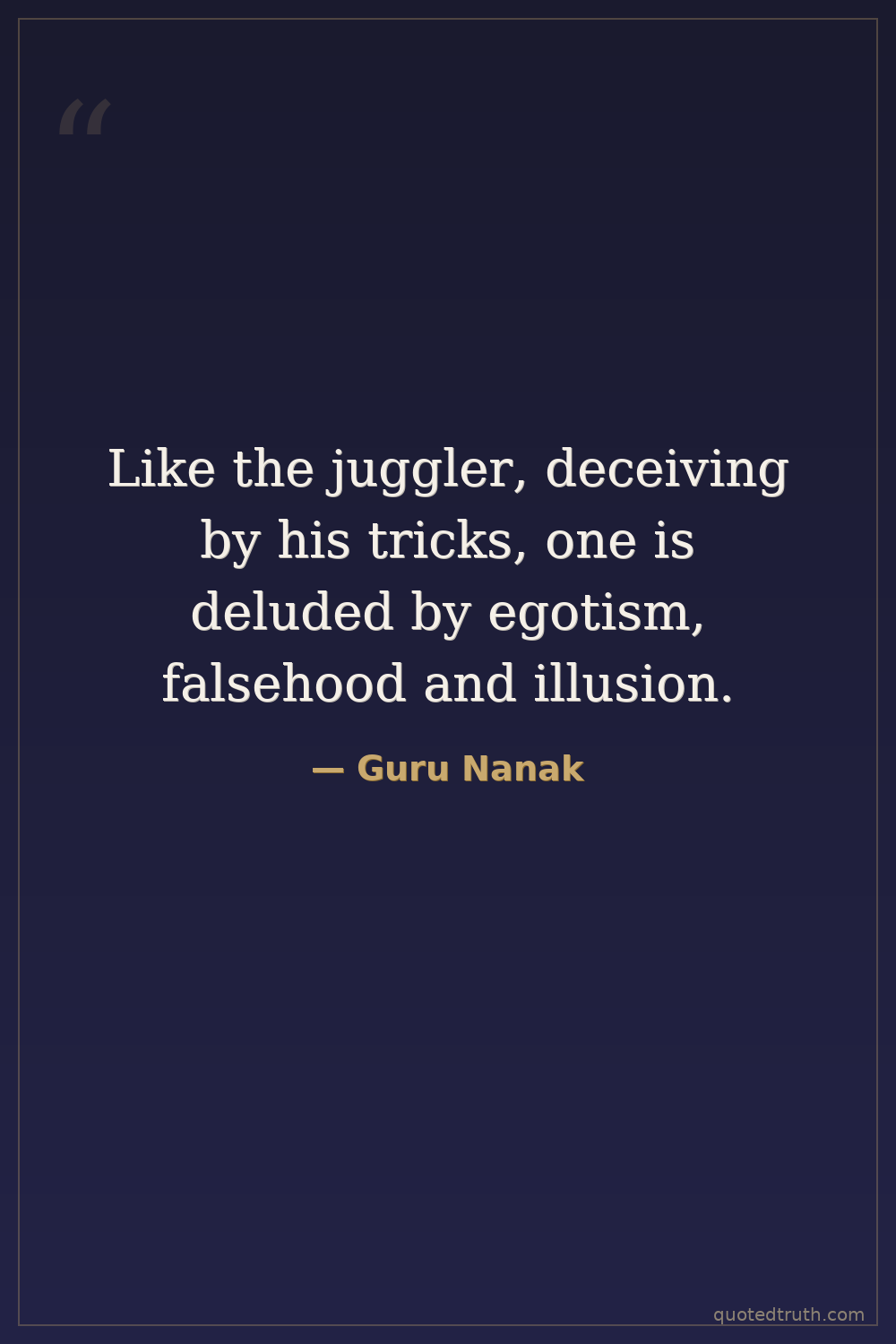
Like the juggler, deceiving by his tricks, one is deluded by egotism, falsehood and illusion.
Like the juggler, deceiving by his tricks, one is deluded by egotism, falsehood and illusion.
Click any product to generate a realistic preview. Up to 3 at a time.
* Initial load can take up to 90 seconds — revising the preview in another color is nearly instant.
"There is no Hindu, there is no Muslim."
"The world is a garden, love is its flower. And sometimes, you get weeds."
"Be the wisdom your support. Be the compassion your guide and listen to the Divine Music that beats in every heart."
"The sun and moon, O Lord, are Thy lamps; the firmament Thy salver; the orbs of the stars the pearls encased in it."
"Bathing in holy rivers alone cannot wash away sins of injustice and greed; the most important thing is not ritual purity, but purity of words and deeds."
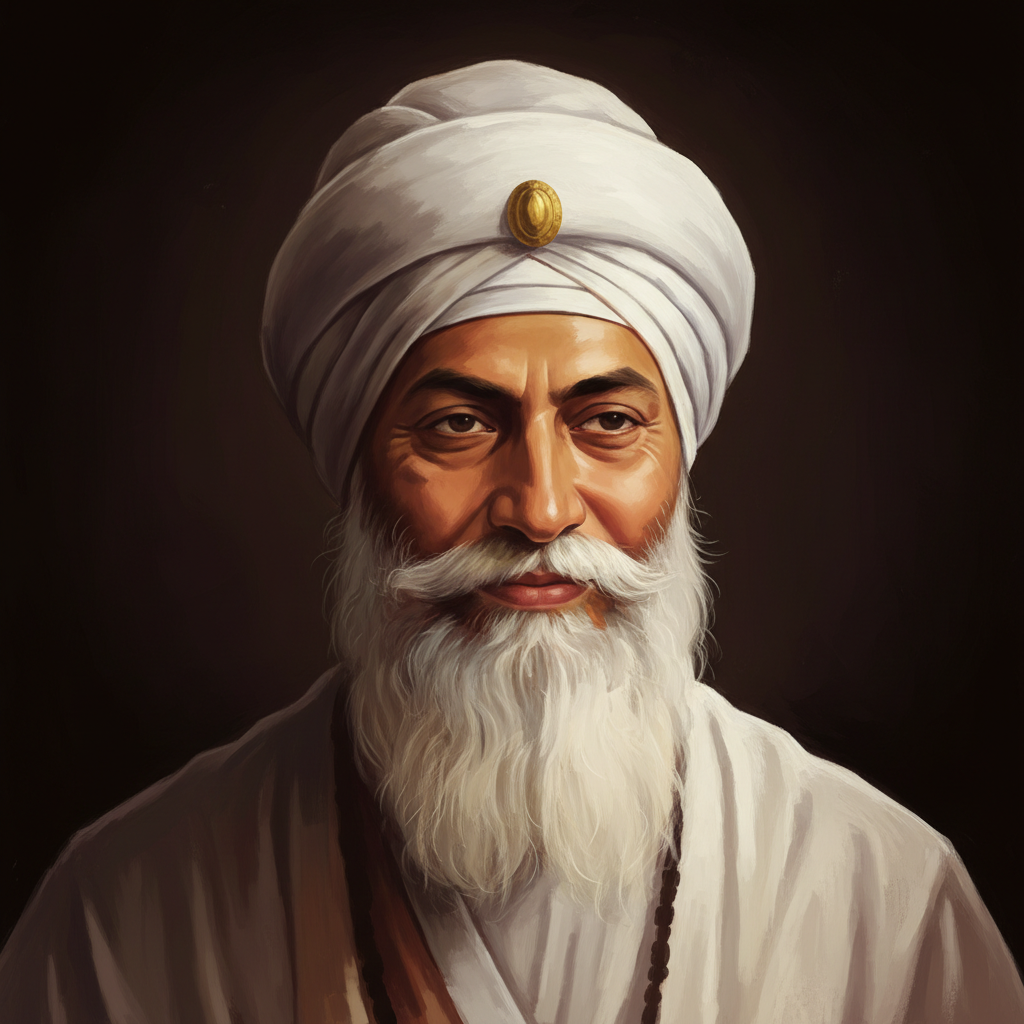
Founder of Sikhism and the first of the Ten Sikh Gurus, whose teachings of one universal God and rejection of caste shaped Punjab. Closely associated with Kabir (mystical poet whose verses appear in the Sikh Guru Granth Sahib). For an intellectual contrast, see Brahmanical orthodoxy, the Hindu caste-and-ritual establishment of his era — Sikhism was founded as a deliberate alternative to both Hindu ritual hierarchy and Islamic exclusivism — Nanak's universalism was a structural rejection of caste and priestly mediation.
Found in 1 providers: gemini
1 source checked
A person caught in ego, lies, and illusion is like a street juggler's audience — distracted by spectacular tricks while missing reality. Egotism makes us believe we are the center of existence; falsehood distorts our perception; illusion keeps us chasing what is not real. Together they trap the soul in a cycle of confusion, preventing genuine self-knowledge and connection with the divine truth.
Guru Nanak traveled thousands of miles on foot across South Asia, Central Asia, and Arabia, directly observing how religious performers, priests, and pandits used ritual spectacle to deceive ordinary people. He rejected empty ceremony, caste performance, and priestly manipulation throughout his teachings. This juggler metaphor reflects his lifelong mission of cutting through religious showmanship to reveal direct, humble, honest devotion as the only true path.
15th-16th century Punjab sat at the crossroads of Mughal Islamic rule and Hindu Brahminical tradition, both systems riddled with hierarchical gatekeeping and elaborate ritual theater. Street performers and religious intermediaries alike exploited illiterate peasants through spectacle and superstition. Nanak's radical egalitarianism — one God, no caste, no priestly monopoly on truth — directly challenged these deceptive structures that kept common people spiritually manipulated and socially oppressed.
AI-generated insights based on extensive research and information for context. Factual errors? Email [email protected].
Your cart is empty