What it means
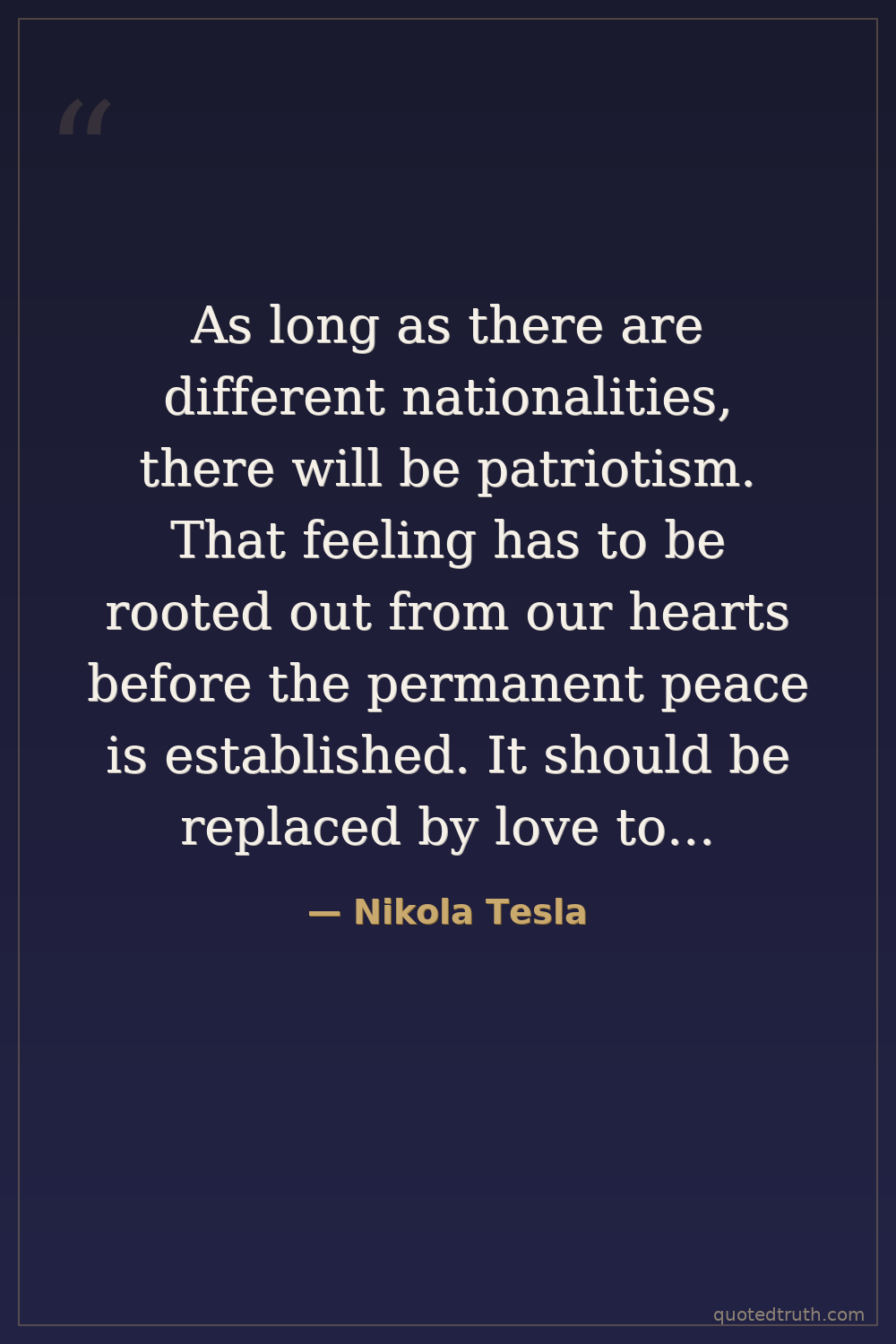
Patriotism and national identity breed inevitable conflict — as long as people define themselves by nationality, war follows. Lasting peace requires replacing that tribal loyalty with something universal: reverence for nature and scientific knowledge. Tesla believed science, being objective and borderless, could unite humanity under a shared identity, making national divisions obsolete. The advancement of invention itself would erode the boundaries that separate peoples into competing groups.
Relevance to Nikola Tesla
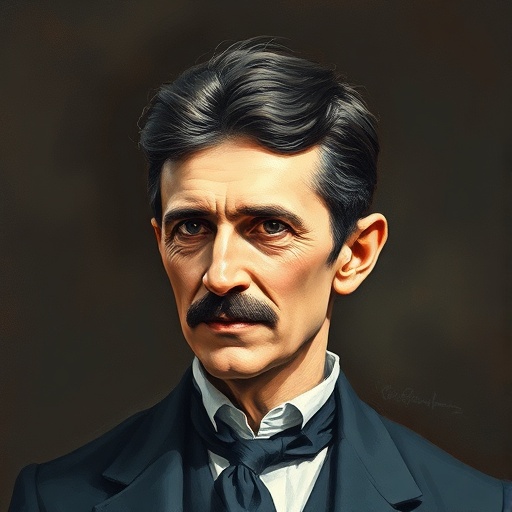
Tesla, born in Serbian-majority Austria-Hungary and immigrating to America, built his career across national borders. He designed his AC electrical system and envisioned Wardenclyffe's wireless power as resources for all humanity equally. A lifelong loner unburdened by familial or national ties, he found his deepest connections to nature — obsessively studying pigeons, lightning, and electromagnetic phenomena. Science was his true homeland; he saw national identity as an obstacle to human potential.
The era
Tesla's adult life coincided with Europe's most explosive era of nationalism. The late 1800s saw intensifying imperial rivalry and Social Darwinism normalize national competition as natural law. World War I — fueled by patriotic fever — killed 20 million people using the very industrial technology Tesla helped create. The League of Nations afterward proved insufficient. Against this backdrop, Tesla's argument that science must replace patriotism was urgent: he had watched nationalism weaponize invention itself.
AI-generated insights based on extensive research and information for context. Factual errors? Email [email protected].