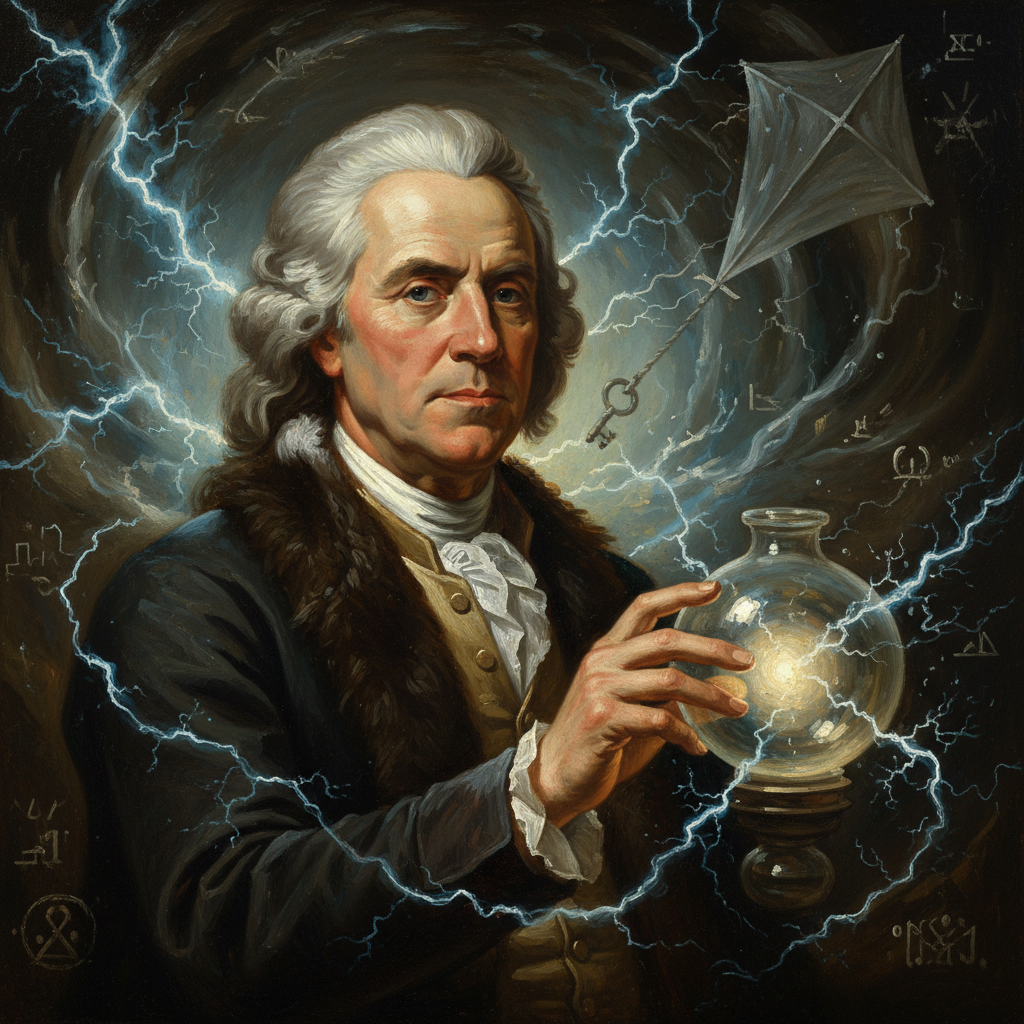
Benjamin Franklin — "The Constitution only guarantees the American people the right to pursue happine…"
The Constitution only guarantees the American people the right to pursue happiness. You have to catch it yourself.
The Constitution only guarantees the American people the right to pursue happiness. You have to catch it yourself.
Click any product to generate a realistic preview. Up to 3 at a time.
* Initial load can take up to 90 seconds — revising the preview in another color is nearly instant.
"When you incline to have new clothes, look first well over the old ones, and see if you cannot shift with them another year, either by scouring, mending, or even patching if necessary. Remember, a pat…"
"He that is good for making excuses is seldom good for anything else."
"Well done is better than well said."
"Instead of cursing the darkness, light a candle."
"He that has a calling, has an office of profit and honor."
Polymath Founding Father, diplomat, and Poor Richard's Almanack author who helped draft the Declaration of Independence and the Constitution. Closely associated with John Adams (fellow Founder, Massachusetts statesman) and Thomas Jefferson (fellow Declaration drafter). For an intellectual contrast, see Thomas Hutchinson, last royal governor of colonial Massachusetts — Franklin leaked Hutchinson's loyalist correspondence to Boston in 1772 to inflame revolutionary sentiment — Hutchinson represented the colonial-aristocrat crown-loyalty that Franklin's revolution was organized to dismantle.
Widely attributed, emphasizing personal responsibility for happiness.
Date: Post-1787
PhilosophicalFound in 1 providers: gemini
1 source checked
The quote separates legal entitlement from personal attainment. The Constitution creates conditions for opportunity — it removes barriers and protects the right to try — but the actual work of achieving happiness falls entirely on the individual. No government can deliver fulfillment; it can only clear a path. Rights are the starting line, not the finish line. Personal agency, not legal guarantee, determines whether someone actually reaches happiness.
Franklin's own life embodied this principle. Born to a tallow chandler with no wealth or formal education, he became a printer, scientist, diplomat, and statesman through relentless self-improvement. His Poor Richard's Almanack preached industriousness and frugality as the only reliable paths to prosperity. As a drafter of foundational American documents, he understood precisely what those documents could and could not guarantee for ordinary citizens.
The phrase pursuit of happiness entered American consciousness through Jefferson's Declaration of Independence in 1776, drawn from Locke's natural rights philosophy. The Founders deliberately chose pursuit rather than happiness itself, reflecting Enlightenment belief that government removes tyrannical obstacles rather than guaranteeing outcomes. In a republic suspicious of centralized power, individual virtue and effort were considered essential to sustaining liberty — the state could never substitute for personal character.
AI-generated insights based on extensive research and information for context. Factual errors? Email [email protected].
Your cart is empty