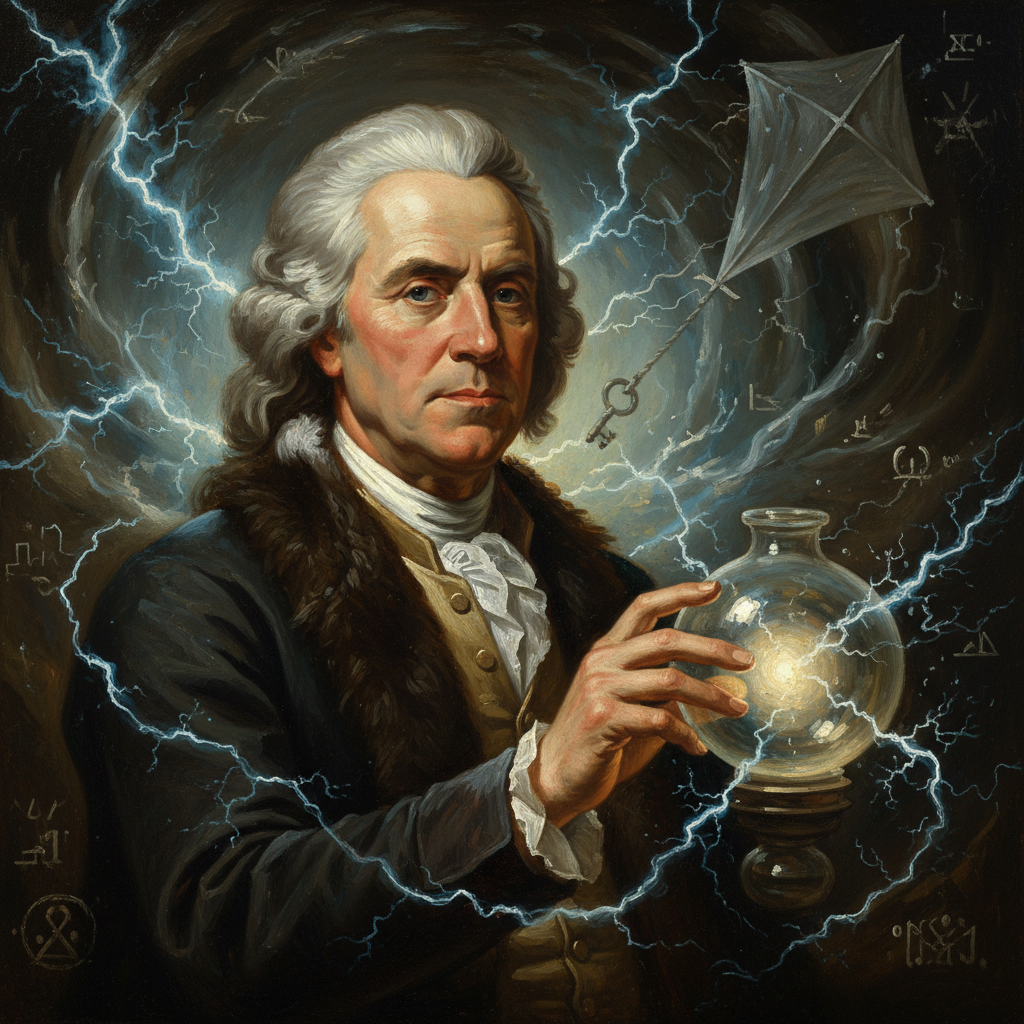
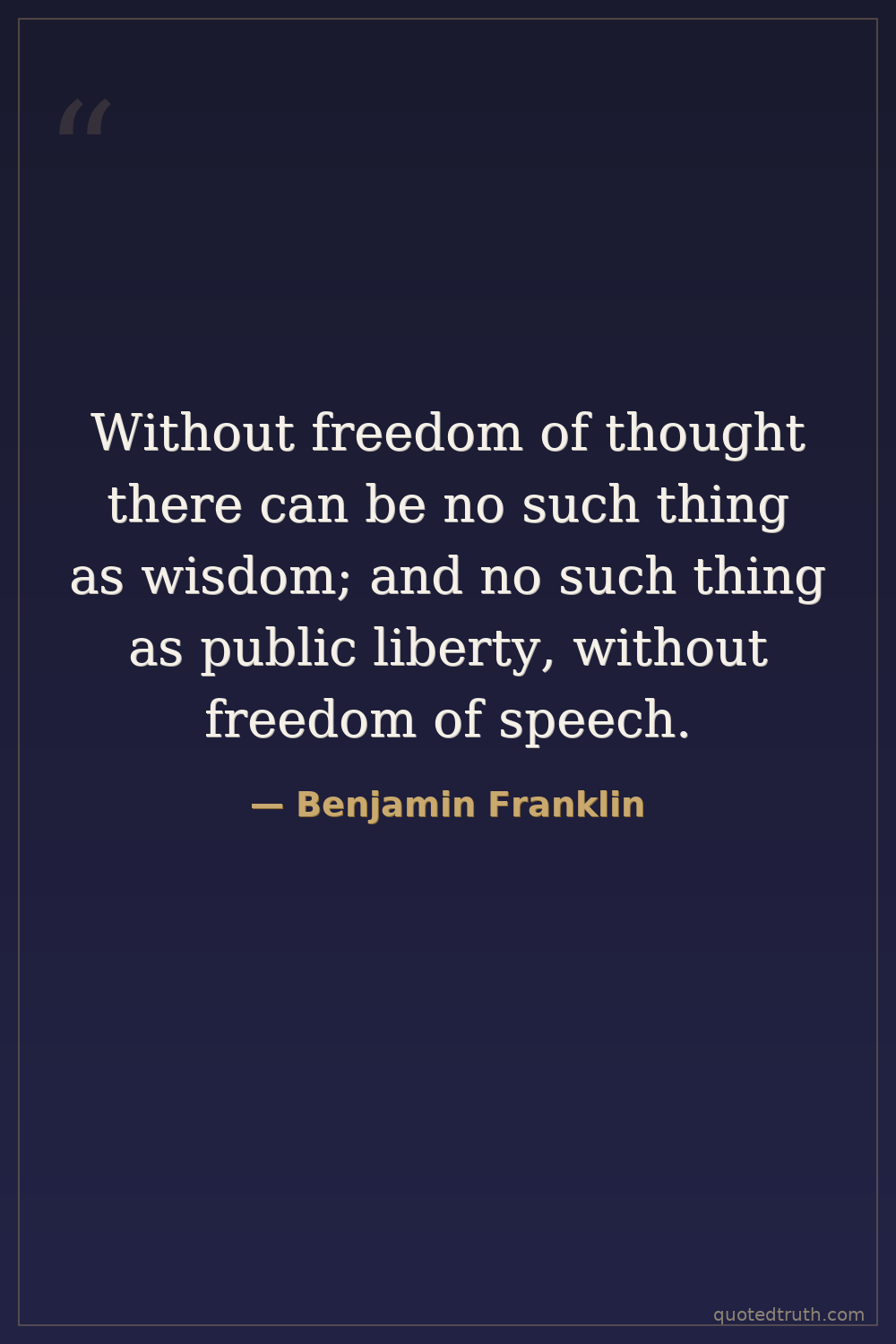
Benjamin Franklin — "Without freedom of thought there can be no such thing as wisdom; and no such thi…"
Without freedom of thought there can be no such thing as wisdom; and no such thing as public liberty, without freedom of speech.
Without freedom of thought there can be no such thing as wisdom; and no such thing as public liberty, without freedom of speech.
Click any product to generate a realistic preview. Up to 3 at a time.
* Initial load can take up to 90 seconds — revising the preview in another color is nearly instant.
"Pardoning the Bad, is injuring the Good."
"Honest cards, short reckonings."
"He that by the Plough would thrive, Himself must either hold or drive."
"A man who lives on hope dies farting."
"The worst wheel of the cart makes the most noise."
Polymath Founding Father, diplomat, and Poor Richard's Almanack author who helped draft the Declaration of Independence and the Constitution. Closely associated with John Adams (fellow Founder, Massachusetts statesman) and Thomas Jefferson (fellow Declaration drafter). For an intellectual contrast, see Thomas Hutchinson, last royal governor of colonial Massachusetts — Franklin leaked Hutchinson's loyalist correspondence to Boston in 1772 to inflame revolutionary sentiment — Hutchinson represented the colonial-aristocrat crown-loyalty that Franklin's revolution was organized to dismantle.
Widely attributed, a core principle of his political philosophy.
Date: Undated
PhilosophicalFound in 1 providers: gemini
1 source checked
Wisdom requires the freedom to think independently—you cannot reach truth if your mind is constrained by outside authority. Equally, a society cannot be genuinely free unless people can speak openly without fear. Inner freedom of thought and outer freedom of expression are not separate luxuries; they are inseparable prerequisites. Suppress either one and you lose both real knowledge and real liberty. The two rise and fall together.
Franklin was a printer and publisher who built his entire career on the free exchange of ideas, running the Pennsylvania Gazette and writing under pseudonyms—including Silence Dogood at age sixteen—to challenge authority. A self-taught polymath who rose from poverty through intellectual curiosity, he lived this conviction daily. He helped shape the First Amendment's underlying principles and used persuasive writing as his primary political weapon. For Franklin, free thought and free speech were not abstract ideals but practical survival tools.
Franklin wrote during an era when colonial governments and the British Crown actively suppressed dissent through censorship and strict libel laws. The 1735 Zenger trial had recently established truth as a defense against libel charges, a landmark moment for press freedom in America. Enlightenment philosophy was sweeping Europe and the colonies, championing reason over royal and religious authority. Pamphlets and newspapers were the primary vehicles of political debate, making free speech literally the engine powering revolutionary thought.
AI-generated insights based on extensive research and information for context. Factual errors? Email [email protected].
Your cart is empty