What it means
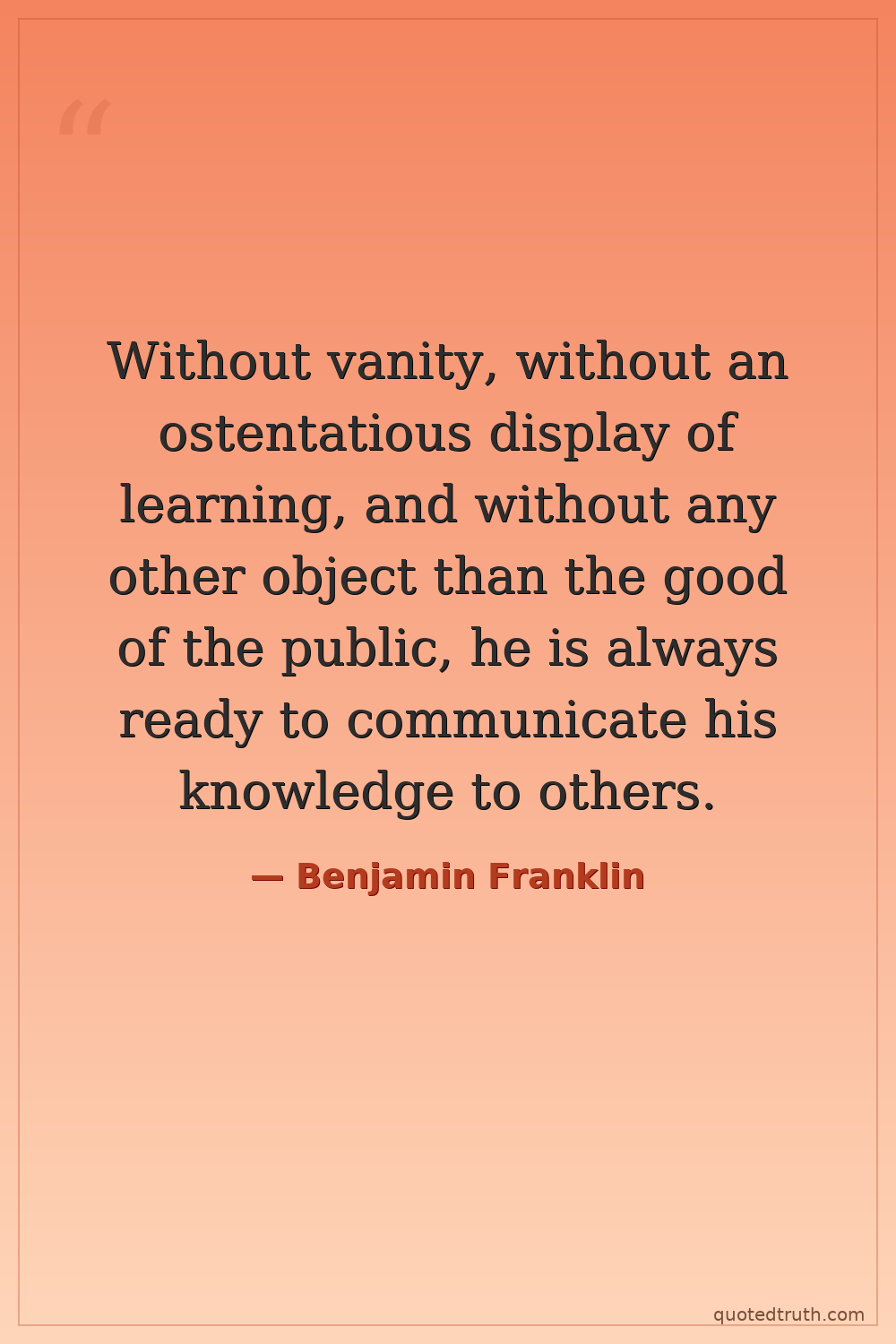
The quote describes a person who shares knowledge selflessly — no ego, no showing off, no hidden agenda beyond helping others. True intellectual generosity means stripping away vanity and the urge to impress, leaving only a genuine desire to inform. In modern terms: someone who explains complex things clearly because they care about your understanding, not because they want credit or admiration for knowing it.
Relevance to Benjamin Franklin
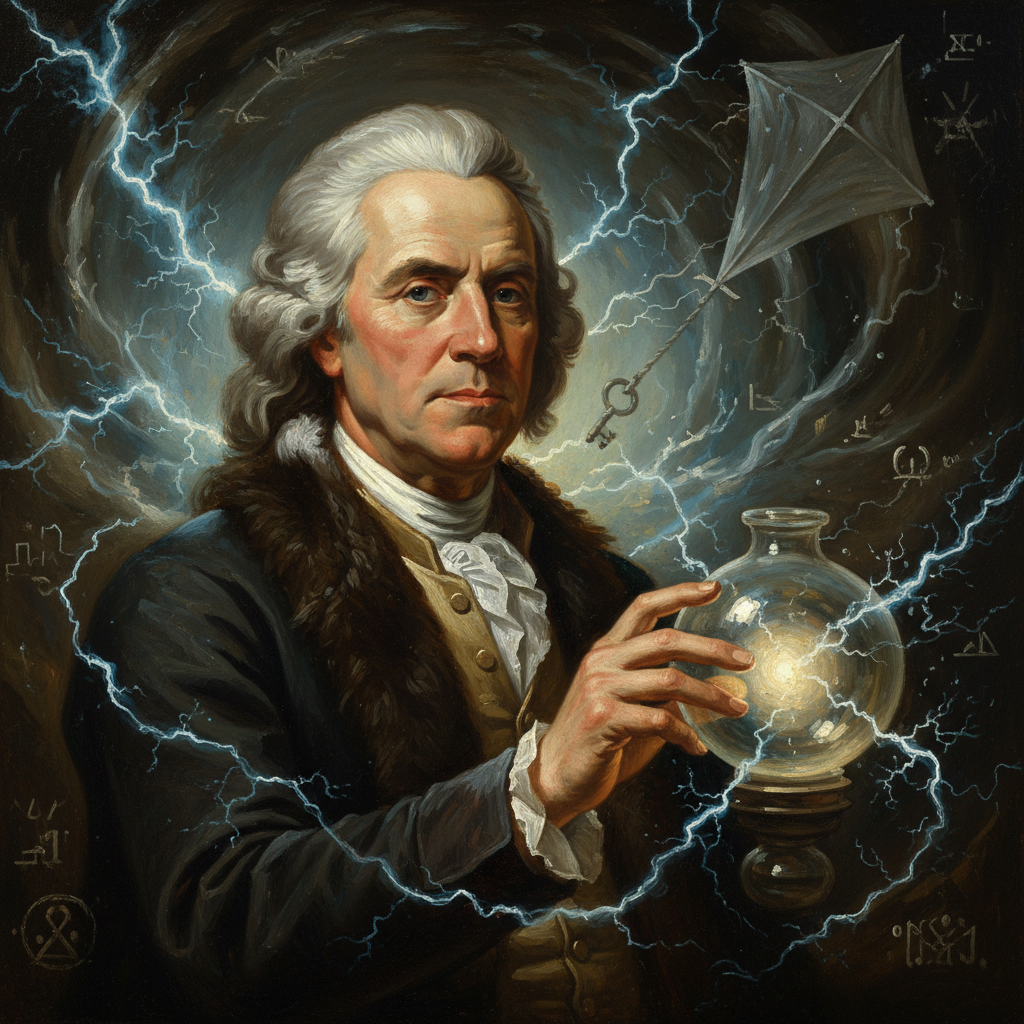
Franklin embodied this ideal throughout his life. He founded America's first public lending library, shared his electricity discoveries without patenting them, and wrote Poor Richard's Almanack to spread practical wisdom to ordinary colonists. He established the American Philosophical Society to freely circulate scientific knowledge. His civic projects — hospitals, fire companies, the postal system — were driven by public utility, not personal fame. He actively avoided titles and refused payment for his inventions.
The era
The 18th-century Enlightenment prized reason and public knowledge, but expertise remained largely gatekept by European universities, royal academies, and aristocratic patronage. Most scholars published for peers, not the public. In the American colonies, where formal institutions were sparse, the ideal of the self-educated public servant who freely shared practical knowledge carried special urgency. Franklin's Philadelphia represented a new model where tradesmen and merchants could build civic knowledge infrastructure without inherited privilege.
AI-generated insights based on extensive research and information for context. Factual errors? Email [email protected].