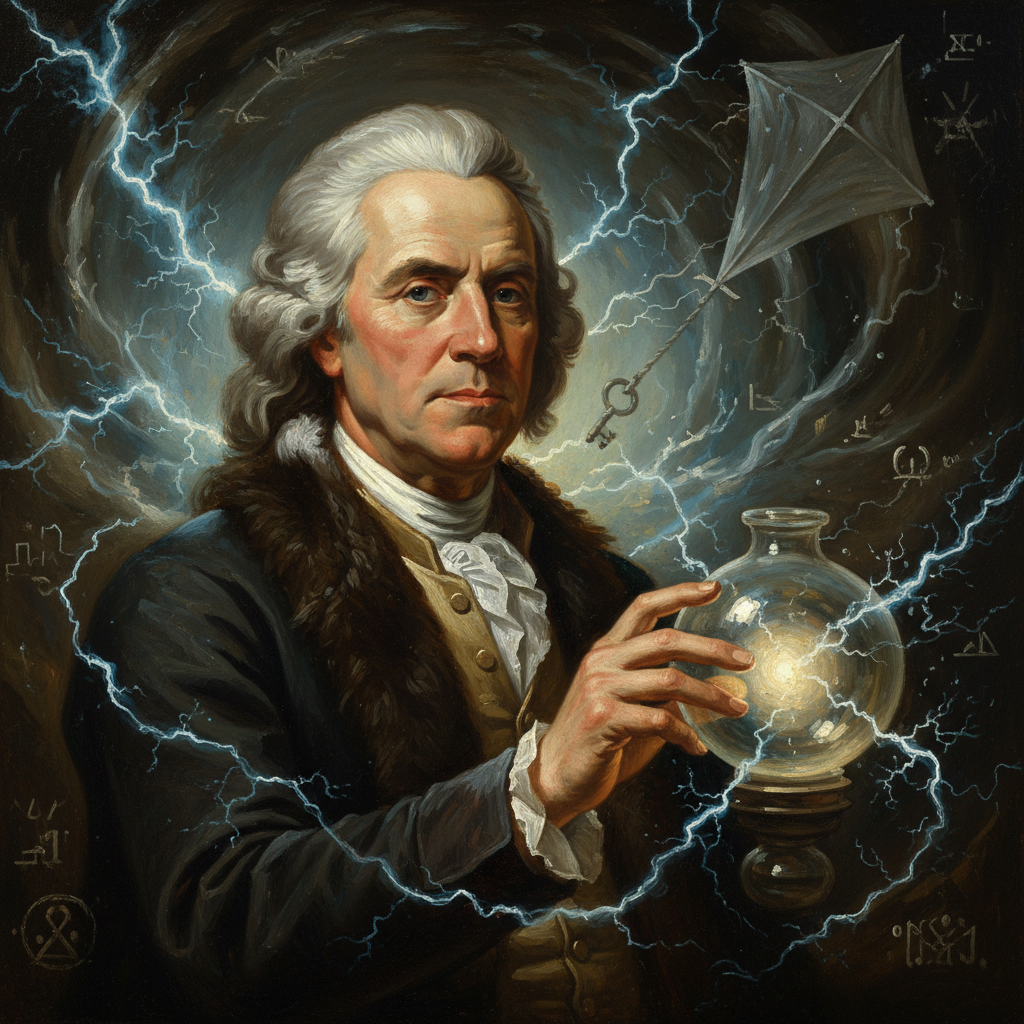
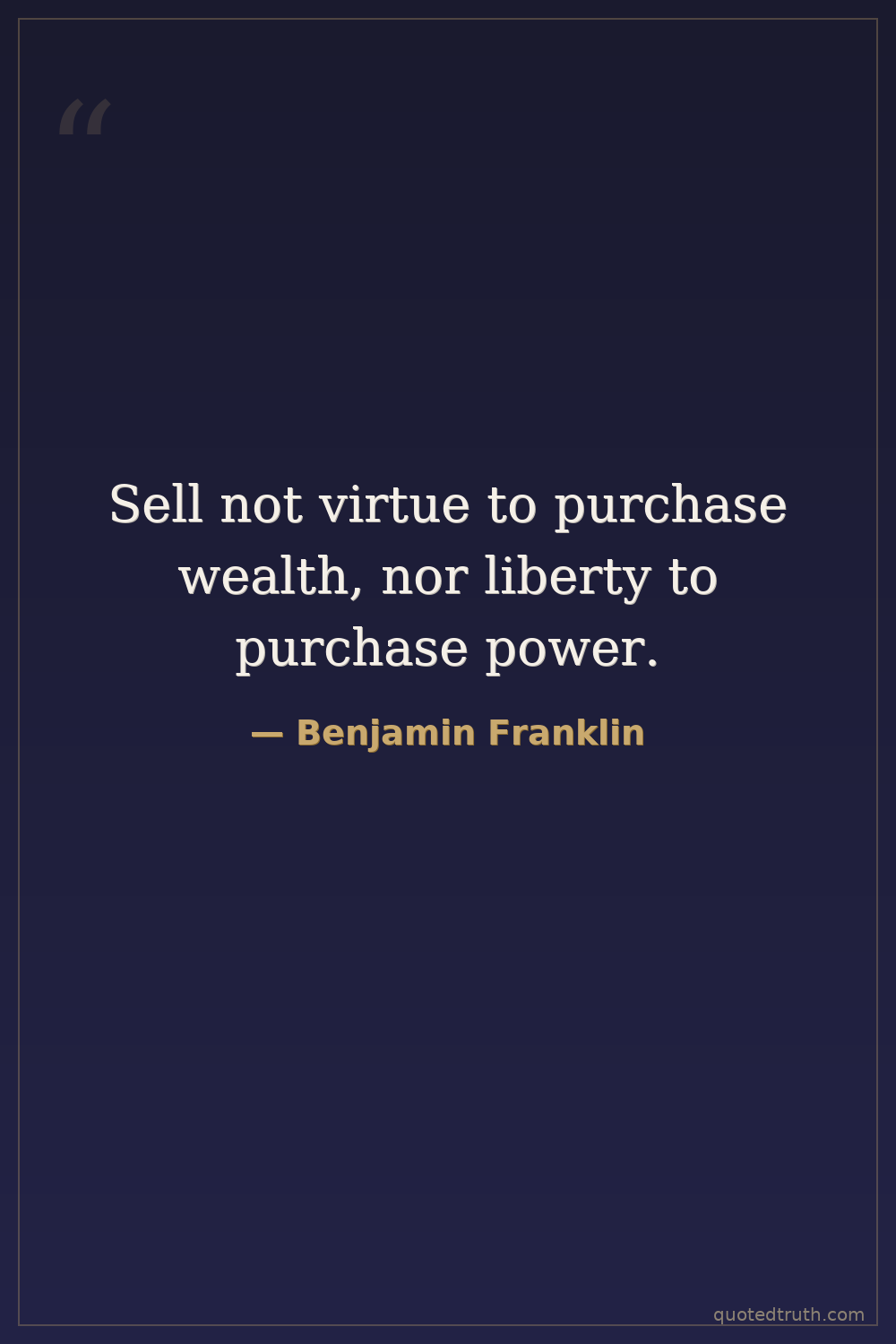
Benjamin Franklin — "Sell not virtue to purchase wealth, nor liberty to purchase power."
Sell not virtue to purchase wealth, nor liberty to purchase power.
Sell not virtue to purchase wealth, nor liberty to purchase power.
Click any product to generate a realistic preview. Up to 3 at a time.
* Initial load can take up to 90 seconds — revising the preview in another color is nearly instant.
"He that has a wife and children, has given hostages to fortune."
"Early to bed and early to rise makes a man healthy, wealthy, and wise."
"Little strokes fell great oaks."
"Honest cards, short reckonings."
"Necessity never made a good bargain."
Polymath Founding Father, diplomat, and Poor Richard's Almanack author who helped draft the Declaration of Independence and the Constitution. Closely associated with John Adams (fellow Founder, Massachusetts statesman) and Thomas Jefferson (fellow Declaration drafter). For an intellectual contrast, see Thomas Hutchinson, last royal governor of colonial Massachusetts — Franklin leaked Hutchinson's loyalist correspondence to Boston in 1772 to inflame revolutionary sentiment — Hutchinson represented the colonial-aristocrat crown-loyalty that Franklin's revolution was organized to dismantle.
Found in 1 providers: gemini
1 source checked
Don't trade your moral character for money or your freedom for power. Two corrupting bargains are warned against here: compromising your ethics to accumulate wealth, and surrendering your autonomy to dominate others. Both leave you with something hollow—riches without integrity, authority without dignity. True prosperity and legitimate influence must be built on a foundation of virtue and freedom, not sacrificed to obtain them.
Franklin refused to patent his inventions—the lightning rod, bifocals—deliberately forgoing wealth so all humanity could benefit. As a printer, he maintained editorial integrity despite commercial pressures. As diplomat to France, he secured alliance without surrendering American sovereignty. His Poor Richard's Almanack consistently preached virtue as life's foundation. A man who could have hoarded power and profit, he repeatedly chose principle over personal gain.
In colonial America and the revolutionary era, these were live dangers. Crown loyalists traded political liberty for royal favor and commercial privilege. Merchant elites enriched themselves cooperating with British policies that harmed ordinary colonists. The Enlightenment insisted virtue—not inherited rank or accumulated wealth—should legitimize power. Franklin's generation was actively deciding whether the new republic would be founded on principle or expediency, making this warning urgent and immediate.
AI-generated insights based on extensive research and information for context. Factual errors? Email [email protected].
Your cart is empty