Carl Linnaeus — "Blessed be the Lord for the beauty of summer and spring, for the air, the water,…"
Blessed be the Lord for the beauty of summer and spring, for the air, the water, the verdure, and the song of birds.
Blessed be the Lord for the beauty of summer and spring, for the air, the water, the verdure, and the song of birds.
Click any product to generate a realistic preview. Up to 3 at a time.
* Initial load can take up to 90 seconds — revising the preview in another color is nearly instant.
"Every plant is a book, which, if we want to understand, we must learn its language."
"The African is lazy, crafty, negligent, and governed by caprice."
"The only true knowledge is that which is acquired through the senses."
"The study of nature will reveal the divine order of creation."
"The system of nature is a great chain of being."
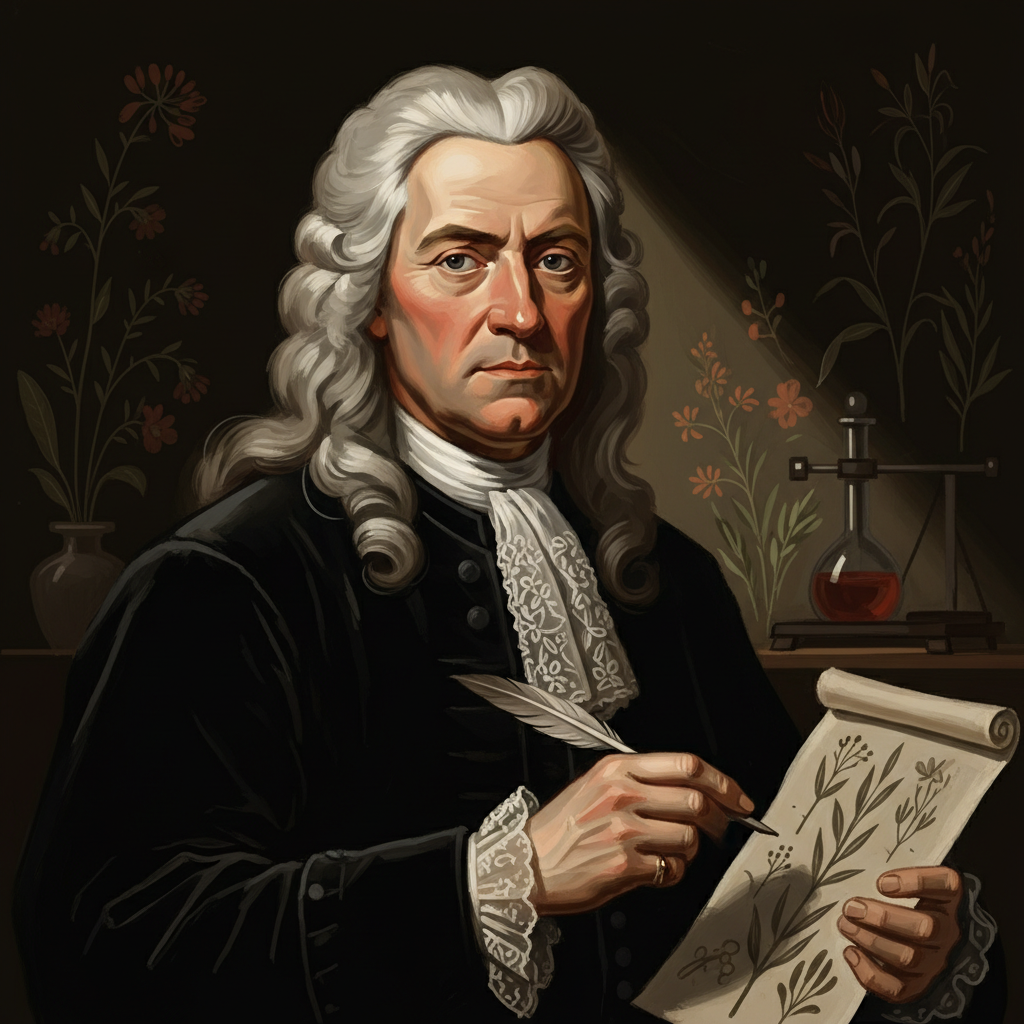
Swedish botanist and the father of modern taxonomy whose Systema Naturae (1735) introduced binomial nomenclature for naming all species. Closely associated with Joseph Banks (British naturalist who carried Linnaean classification on Cook's voyages). For an intellectual contrast, see Comte de Buffon, French naturalist and Histoire Naturelle author (1749-1788) — Buffon explicitly attacked Linnaean fixed-categories taxonomy as artificial and rejected the binomial system; his gradualist, environment-shaped natural history was the explicit alternative. Anticipates the fixed-species-vs-evolution debate Darwin would later resolve.
A statement reflecting his deep appreciation for nature and its divine origin.
Date: 18th Century
PhilosophicalFound in 1 providers: gemini
1 source checked
Life's simplest gifts — warm seasons, clean air, flowing water, green landscapes, and birdsong — deserve profound gratitude. The quote urges us to pause amid daily concerns and recognize that nature's recurring abundance is itself a form of divine blessing, something worthy of reverence rather than being taken for granted.
Linnaeus spent his life cataloguing nature's every form, naming over 12,000 species in his Systema Naturae. This reverence wasn't merely academic — he genuinely experienced the natural world as sacred. His fieldwork across Lapland and Sweden immersed him in exactly these sensory gifts: birdsong, flora, waterways. For him, taxonomy was an act of devotion.
In 18th-century Enlightenment Europe, natural philosophy blended science with theology. Naturalists like Linnaeus operated within a worldview where studying creation meant understanding God's handiwork. Sweden's harsh winters made spring and summer genuinely precious, culturally and spiritually. Midsummer celebrations were central to Swedish life, reinforcing deep seasonal gratitude across all social classes.
AI-generated insights based on extensive research and information for context. Factual errors? Email [email protected].
Your cart is empty