What it means
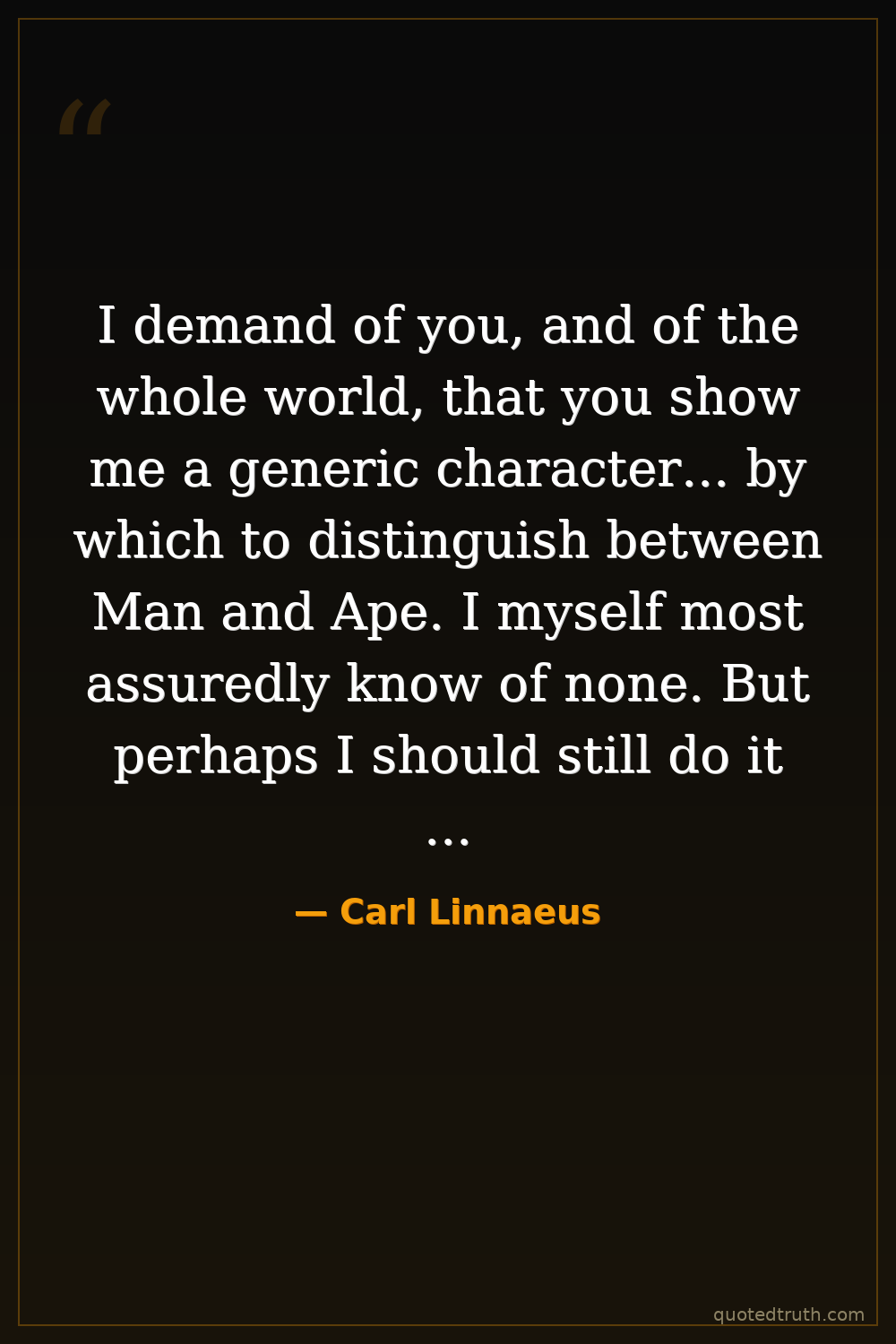
Linnaeus admits he cannot find a scientifically valid morphological characteristic distinguishing humans from apes under his own classification rules — and challenges the entire world to provide one. Despite knowing the uncomfortable implication, he insists science must follow evidence. It captures the collision between empirical honesty and the urge to preserve human exceptionalism: if the rules produce no distinction, then science must accept humans and apes belong in the same category.
Relevance to Carl Linnaeus
Linnaeus invented binomial nomenclature and in Systema Naturae (1758) placed Homo sapiens within Primates alongside apes — a radical taxonomic choice. This quote, from a 1747 letter to Gmelin, exposes his private struggle: his own system produced a conclusion he knew would provoke outrage. His defining trait was methodological rigor over convenience. He classified humans as primates not from irreverence but because his rules, honestly applied, left him no alternative.
The era
The 1740s–1750s were the Enlightenment's peak, where empirical observation clashed with theological dogma. The Great Chain of Being held humans categorically above animals by divine decree, and challenging that distinction risked accusations of heresy. Darwin's theory was still a century away, yet Linnaeus's taxonomy quietly undermined divine human exceptionalism. His admission carried enormous weight — it was the first authoritative scientific voice suggesting biology alone could not sustain the wall between humanity and beasts.
AI-generated insights based on extensive research and information for context. Factual errors? Email [email protected].