William Harvey — "There is no science which does not spring from pre-existing knowledge, and no ce…"

There is no science which does not spring from pre-existing knowledge, and no certain and definite idea which has not derived its origin from the senses.
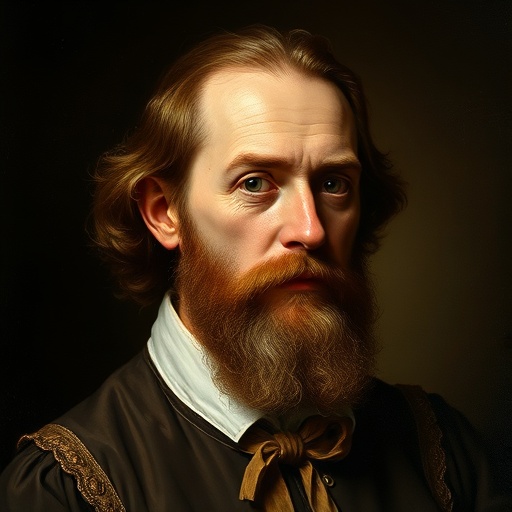
William Harvey — William Harvey Early Modern · Blood circulation

Get This Quote & Author's Image Illustrated On:

Click any product to generate a realistic preview. Up to 3 at a time.
* Initial load can take up to 90 seconds — revising the preview in another color is nearly instant.

Kitchen

Apparel

Other

About William Harvey (1578-1657)

English physician whose On the Motion of the Heart and Blood in Animals (1628) demonstrated blood circulation, overturning 1,400 years of Galenic medicine. Closely associated with Francis Bacon (his contemporary in the new English empiricism). For an intellectual contrast, see Galenic medicine, the 2nd-century Greek medical tradition (humors, blood-as-consumed-fuel) — Harvey calculated that the heart pumps more blood per hour than the body could possibly produce as fuel — a single quantitative observation that demolished the entire Galenic-Aristotelian medical worldview. The cleanest example in medical history of arithmetic disproving 14 centuries of authority.

Details

From his writings, reflecting an empiricist philosophy of science.

Date: 17th Century

Philosophical

Verification

Unverifiable

Found in 1 providers: gemini

1 source checked

Understanding this quote

What it means

All scientific knowledge builds on what came before, and every reliable idea ultimately traces back to sensory experience. True understanding cannot emerge from pure speculation or inherited dogma alone — it must be grounded in direct observation of the physical world, tested against reality, and constructed upon the accumulated discoveries of prior investigators.

Relevance to William Harvey

Harvey's entire career embodied this principle. His discovery of blood circulation came from systematic dissection, vivisection, and meticulous observation across decades — not from Galen's inherited texts. He explicitly rejected ancient authority when his eyes and hands told him otherwise, calculating heart output mathematically to prove blood recirculates rather than being continuously produced.

The era

Harvey worked during the Scientific Revolution, when Europe was breaking from Scholastic philosophy's reliance on Aristotle and Galen as unquestioned authorities. Vesalius had already challenged anatomical dogma with direct dissection. Harvey's era was defined by this tension between received ancient wisdom and empirical observation, making his insistence on sensory evidence a direct challenge to how knowledge itself was legitimized.

AI-generated insights based on extensive research and information for context. Factual errors? Email [email protected].
Your Cart

Your cart is empty