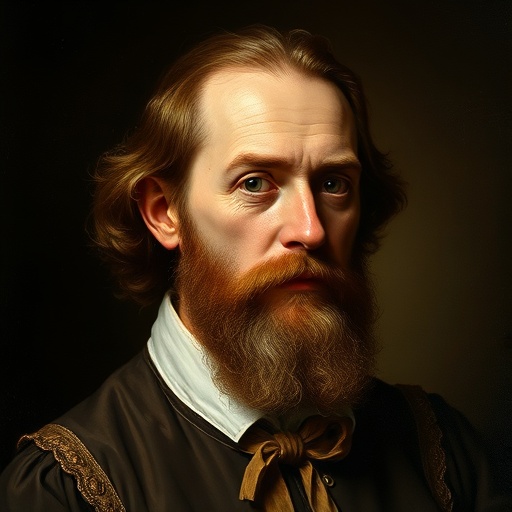
William Harvey — "The more accurately we search into the wonderful works of God, the more a reason…"
The more accurately we search into the wonderful works of God, the more a reason we shall find to admire them.
The more accurately we search into the wonderful works of God, the more a reason we shall find to admire them.
Click any product to generate a realistic preview. Up to 3 at a time.
* Initial load can take up to 90 seconds — revising the preview in another color is nearly instant.
"What remains to be said is of so novel and unheard of a character that I not only fear injury to myself from the envy of a few, but I tremble lest I have mankind at large for my enemies, so much to wo…"
"The heart is the seat of the soul."
"It is better to know a little perfectly than to know much imperfectly."
"The quantity of blood transmitted from the veins to the arteries, and so into the whole body, is so great that it must return to the heart."
"The physician must be a lover of wisdom."
English physician whose On the Motion of the Heart and Blood in Animals (1628) demonstrated blood circulation, overturning 1,400 years of Galenic medicine. Closely associated with Francis Bacon (his contemporary in the new English empiricism). For an intellectual contrast, see Galenic medicine, the 2nd-century Greek medical tradition (humors, blood-as-consumed-fuel) — Harvey calculated that the heart pumps more blood per hour than the body could possibly produce as fuel — a single quantitative observation that demolished the entire Galenic-Aristotelian medical worldview. The cleanest example in medical history of arithmetic disproving 14 centuries of authority.
A statement reflecting a harmonious view of science and religion, where scientific discovery deepens appreciation for creation.
Date: 17th Century
PhilosophicalFound in 1 providers: gemini
1 source checked
The deeper and more rigorously we investigate the natural world, the more we discover reasons to marvel at its complexity and order. True understanding doesn't diminish wonder—it amplifies it. Careful, systematic inquiry reveals layers of intricacy that casual observation misses, turning awe from a vague feeling into something grounded in precise knowledge.
Harvey spent decades meticulously dissecting animals and measuring blood flow, overturning Galen's 1,400-year-old model of circulation. His painstaking empirical method—quantifying heartbeats and blood volume—led to discoveries that astonished even himself. As a deeply religious man practicing rigorous science, he saw anatomical investigation not as contradicting divine creation but as its most sincere form of reverence.
The early modern period witnessed fierce tension between inherited scholastic authority and emerging empirical science. Harvey worked during the Scientific Revolution, alongside Galileo and Kepler, when dissection was still controversial and Galenic medicine dogma. Natural philosophy increasingly framed detailed observation as glorifying God's creation, allowing scientists like Harvey to pursue radical discoveries while remaining theologically respectable within a deeply pious European society.
AI-generated insights based on extensive research and information for context. Factual errors? Email [email protected].
Your cart is empty