Quentin Tarantino — "TV's fun, it's good. I've carried memories that I've seen on television for most…"
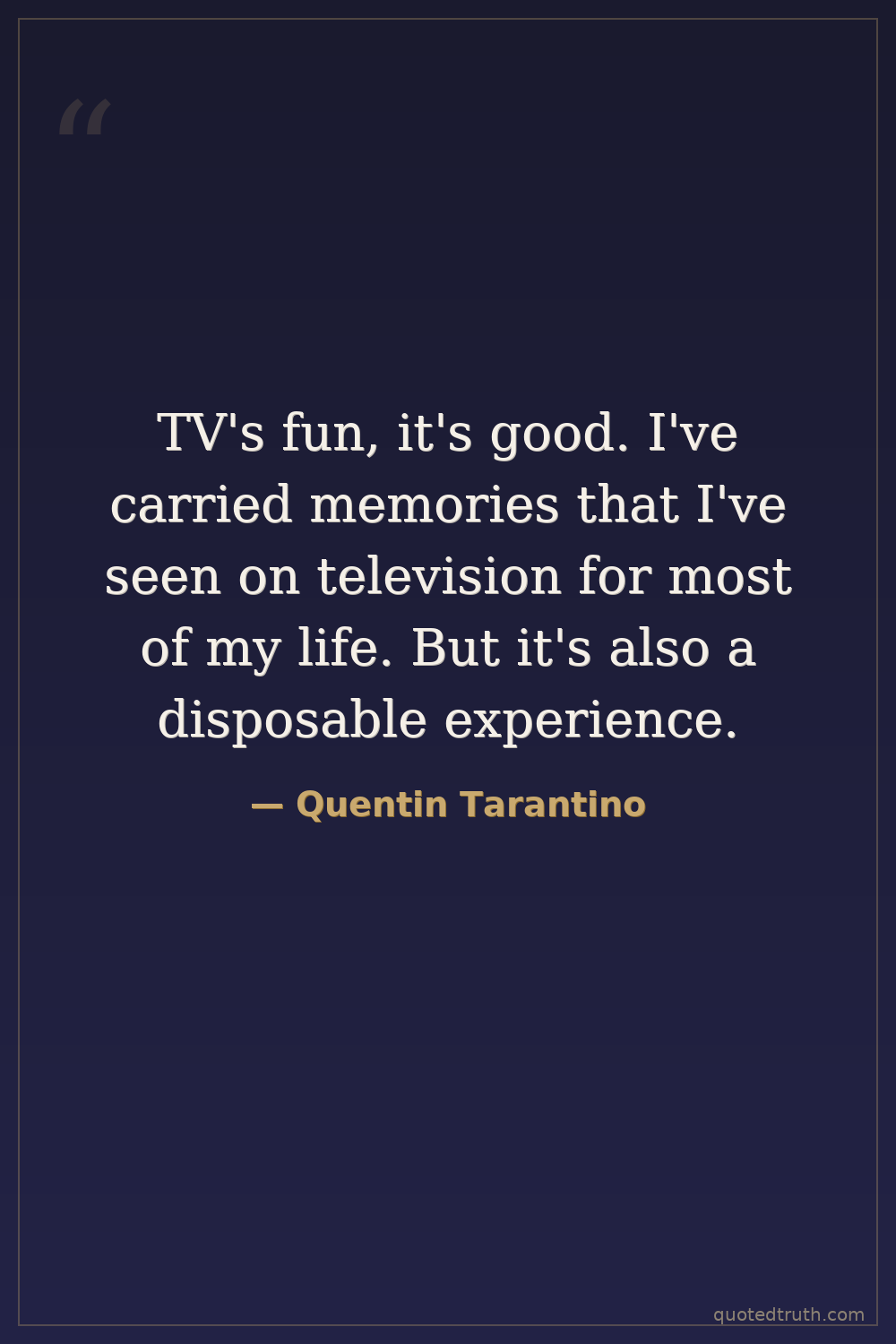
TV's fun, it's good. I've carried memories that I've seen on television for most of my life. But it's also a disposable experience.
TV's fun, it's good. I've carried memories that I've seen on television for most of my life. But it's also a disposable experience.
Click any product to generate a realistic preview. Up to 3 at a time.
* Initial load can take up to 90 seconds — revising the preview in another color is nearly instant.
"I don't believe in the idea of 'guilty pleasures.' If you f***ing like something, like it!"
"The good thing about being a writer is you can make up anything you want."
"Anything that I'm not interested in, I can't even feign interest. I can't do just this little bit to just get by."
"I'm a big fan of practical effects. I think they're better than CGI."
"I don't care about political correctness. I care about telling a good story."
American filmmaker (Pulp Fiction, Kill Bill, Inglourious Basterds) whose intertextual genre-collage redefined 1990s independent cinema. Closely associated with Robert Rodriguez (frequent collaborator (From Dusk Till Dawn, Sin City)) and Paul Thomas Anderson (1990s indie-auteur peer). For an intellectual contrast, see Stanley Kubrick, meticulous formalist filmmaker (1928-1999) — Kubrick's films erase influences into singular monolithic vision through year-long shoots and 100-take perfectionism; Tarantino's foreground every reference as a deliberate tribute — the two opposite ways auteurist cinema can be made.
On The Late Show with Stephen Colbert, discussing the difference between TV and cinema.
Date: 2021
PhilosophicalFound in 1 providers: gemini
1 source checked
Your cart is empty