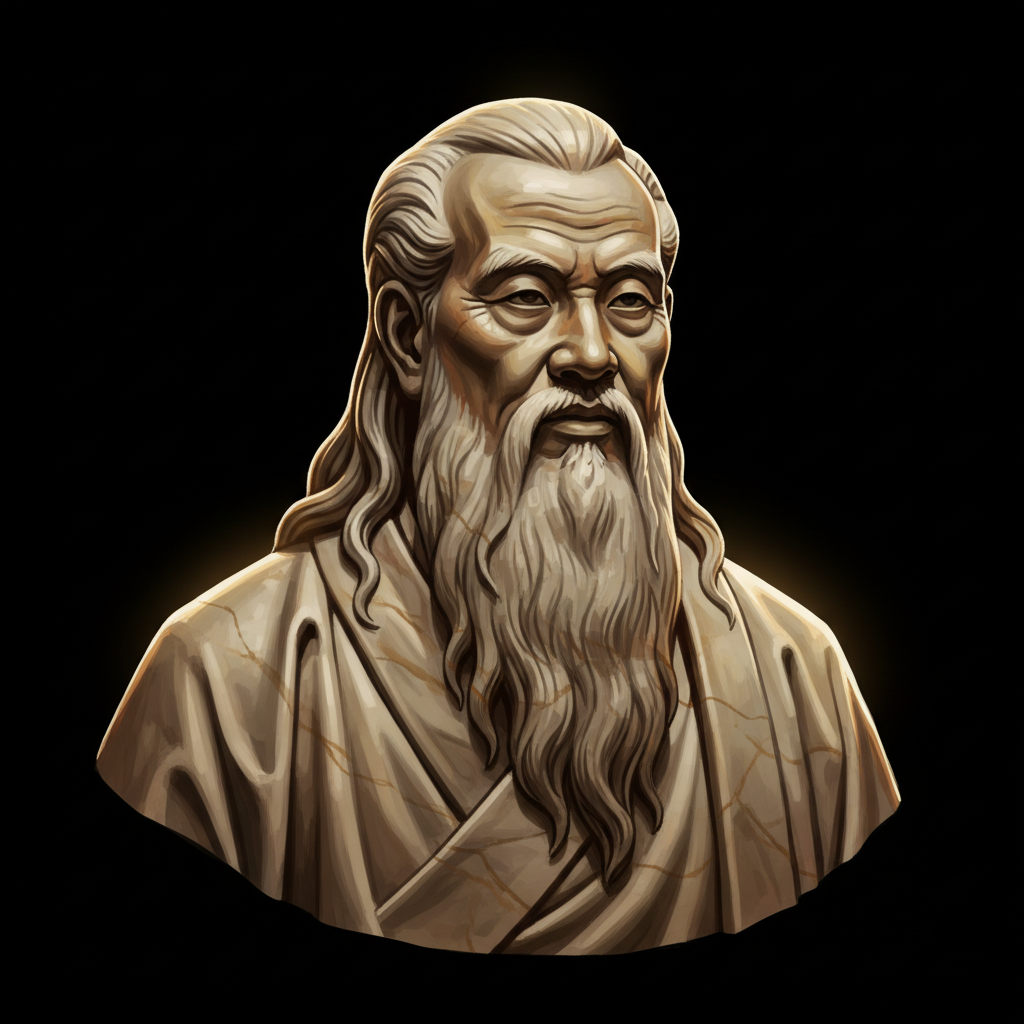
Laozi — "Governing a large country is like cooking a small fish. You spoil it with too mu…"
Governing a large country is like cooking a small fish. You spoil it with too much poking.
Governing a large country is like cooking a small fish. You spoil it with too much poking.
Click any product to generate a realistic preview. Up to 3 at a time.
* Initial load can take up to 90 seconds — revising the preview in another color is nearly instant.
"Governing a large country is like frying a small fish."
"When people see some things as beautiful, other things become ugly. When people see some things as good, other things become bad."
"The difficult is done easily; the easy is done with difficulty."
"Pursue without interfering."
"The sage is like water, which flows to the lowest places and yet is the strongest."
Reputed founder of Taoism and author of the Tao Te Ching, whose wu wei (effortless action) shaped East Asian philosophy. Closely associated with Zhuangzi (later Taoist who extended Laozi's framework). For an intellectual contrast, see Confucius, near-contemporary Chinese sage of social ritual and duty — Confucius systematized social order through ritual and hierarchy; Laozi argued that all such systems were the disease, not the cure — the two founding poles of Chinese moral philosophy.
Found in 3 providers: gemini,grok,deepseek
3 sources checked
Good leadership of a large nation works best with a light touch. Constant interference, excessive regulation, and micromanagement damage what would otherwise function well on its own. Just as poking a small fish while cooking breaks it apart, meddling rulers destabilize their people through endless policy changes, intrusive laws, and restless reforms. The wiser approach is restraint: set conditions, then let natural order take its course without constant adjustment or heavy-handed control.
Laozi championed wu wei, or effortless action, as the core of Taoist philosophy. Traditionally described as a keeper of archives in the Zhou court, he witnessed bureaucratic overreach firsthand before withdrawing from public life. His teachings in the Tao Te Ching repeatedly warn that sages govern least and best, trusting the natural Tao over forceful human intervention. This cooking metaphor captures his conviction that wisdom lies in yielding restraint, not assertive control.
Laozi lived during the turbulent late Zhou dynasty, around the 6th century BCE, an era sliding toward the Warring States period. Rival lords imposed heavy taxes, harsh laws, and constant military conscription on their populations. Legalist thinkers advocated strict control through punishment and surveillance. Against this backdrop of interventionist governance and suffering peasantry, Laozi's message of minimal rule offered a radical counterpoint, influencing later Han emperors who adopted laissez-faire policies that revived a war-exhausted China.
AI-generated insights based on extensive research and information for context. Factual errors? Email [email protected].
Your cart is empty