Laozi — "The difficult is done easily; the easy is done with difficulty."
The difficult is done easily; the easy is done with difficulty.
The difficult is done easily; the easy is done with difficulty.
Click any product to generate a realistic preview. Up to 3 at a time.
* Initial load can take up to 90 seconds — revising the preview in another color is nearly instant.
"If you want to awaken all of humanity, then awaken all of yourself. If you want to eliminate the suffering in the world, then eliminate all that is dark and negative in yourself. Truly, the greatest g…"
"Keep your mouth shut, guard your senses, and you will be free from trouble. Open your mouth, always be busy, and you will be beyond hope."
"Act without doing; work without effort."
"The sage puts his person last, and it comes first. He treats his person as an outsider, and it is preserved."
"The sage attends to the inner and not to the outer."
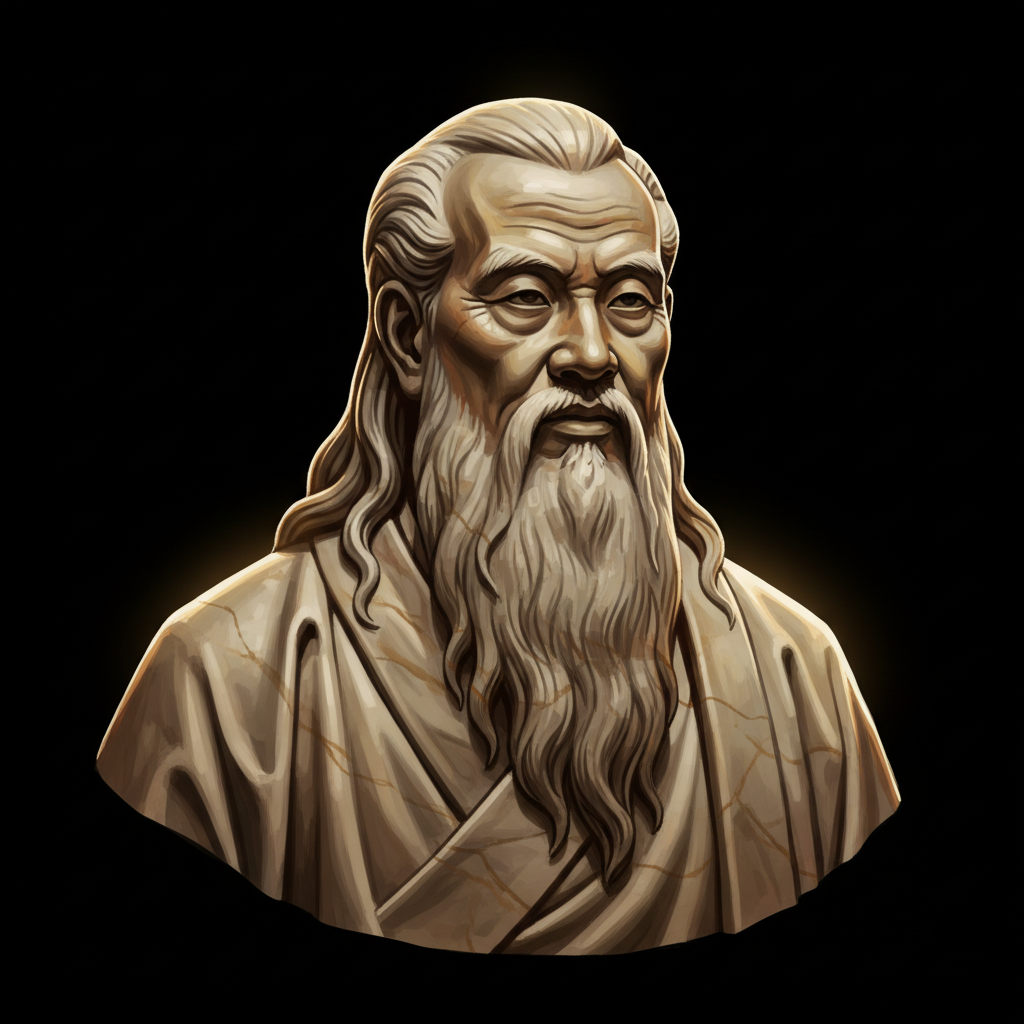
Reputed founder of Taoism and author of the Tao Te Ching, whose wu wei (effortless action) shaped East Asian philosophy. Closely associated with Zhuangzi (later Taoist who extended Laozi's framework). For an intellectual contrast, see Confucius, near-contemporary Chinese sage of social ritual and duty — Confucius systematized social order through ritual and hierarchy; Laozi argued that all such systems were the disease, not the cure — the two founding poles of Chinese moral philosophy.
Found in 1 providers: grok
1 source checked
Tackle hard problems while they are still small and manageable, and they resolve without strain. Wait until something looks trivial or routine, and it often becomes a mess because you underestimated it, rushed, or ignored small warning signs. Handle matters at their beginning, not their peak. Ease comes from timing and attention, not from the size of the task itself.
Laozi taught wu wei, effortless action aligned with the natural flow of things rather than forced effort. As the legendary archivist-sage who reportedly withdrew from court life to write the Tao Te Ching, he prized quiet observation over striving. This saying mirrors his conviction that sages address problems before they ripen, letting small, timely moves replace the exhausting struggles that come from ignoring beginnings.
Laozi lived during the late Zhou decline, an era of fracturing feudal states sliding toward the Warring States period. Rulers consumed themselves in treaties, armies, and elaborate rituals, reacting to crises only once they exploded. Against that backdrop of overreach and endless intervention, his counsel to meet difficulty while still small was a pointed rebuke of ambitious statecraft, urging leaders toward restraint, early attention, and humility instead of grand, belated fixes.
AI-generated insights based on extensive research and information for context. Factual errors? Email [email protected].
Your cart is empty