Laozi — "The uncarved block, though small, is nowhere in the world inferior. If princes a…"
The uncarved block, though small, is nowhere in the world inferior. If princes and kings could but hold on to it, all creatures would submit to them.
The uncarved block, though small, is nowhere in the world inferior. If princes and kings could but hold on to it, all creatures would submit to them.
Click any product to generate a realistic preview. Up to 3 at a time.
* Initial load can take up to 90 seconds — revising the preview in another color is nearly instant.
"The sage puts his own person last, and yet it is found in the foremost place; he treats his person as foreign to him, and yet it is preserved."
"The sage is sharp but does not cut, pointed but does not pierce, forthright but does not offend, bright but does not dazzle."
"Governing a large country is like cooking a small fish. You spoil it with too much poking."
"If you want to awaken all of humanity, then awaken all of yourself. If you want to eliminate the suffering in the world, then eliminate all that is dark and negative in yourself. Truly, the greatest g…"
"The more prohibitions there are, the poorer the people will be. The more sharp weapons the people have, the more trouble there will be in the country. The more clever and skillful man is, the more str…"
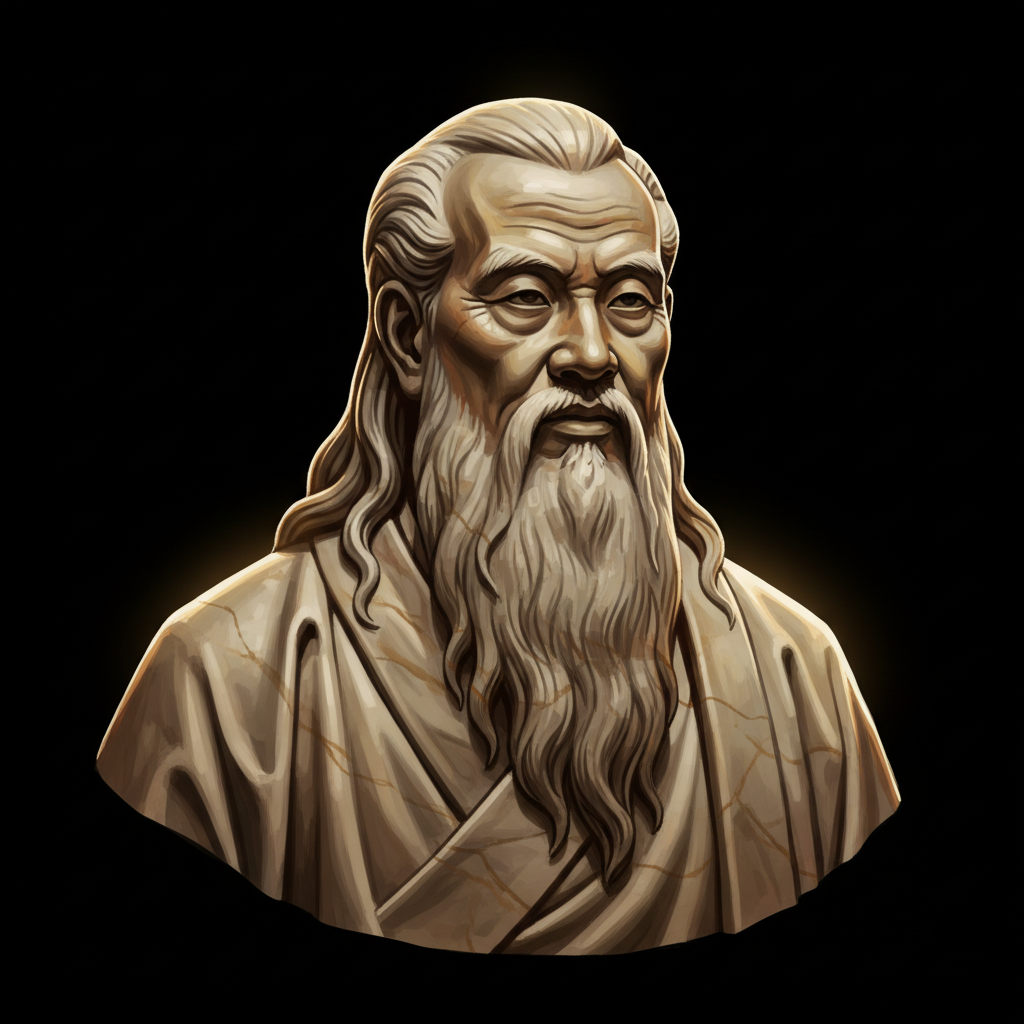
Reputed founder of Taoism and author of the Tao Te Ching, whose wu wei (effortless action) shaped East Asian philosophy. Closely associated with Zhuangzi (later Taoist who extended Laozi's framework). For an intellectual contrast, see Confucius, near-contemporary Chinese sage of social ritual and duty — Confucius systematized social order through ritual and hierarchy; Laozi argued that all such systems were the disease, not the cure — the two founding poles of Chinese moral philosophy.
Found in 1 providers: gemini
1 source checked
Simplicity and authenticity hold more power than elaborate systems or polished personas. The natural, unshaped state—free from artifice and ambition—carries a quiet strength nothing fancy can surpass. Leaders who stay grounded in this plain, honest nature don't need to force obedience; people willingly follow because genuine simplicity earns trust and respect in ways manipulation and showmanship never can. Stripping away pretense is itself a form of authority.
Laozi reportedly worked as an archivist in the Zhou royal court, observing rulers up close before withdrawing from public life disillusioned with political posturing. His entire philosophy centers on wu wei (effortless action) and returning to pu, the 'uncarved block'—raw, unshaped potential. Legend says he left civilization riding a water buffalo, embodying the quiet simplicity he preached. This saying distills his core conviction that rulers corrupt themselves through cleverness.
Laozi lived during the late Zhou dynasty (6th century BCE), when feudal lords waged constant war and court intrigue replaced the old ritual order. Confucius was codifying elaborate social hierarchies as the fix; Laozi offered the opposite prescription. Princes hired strategists, performed lavish ceremonies, and competed for prestige while peasants starved. Against this backdrop of ornate scheming and collapsing legitimacy, advocating uncarved simplicity as the true source of authority was a radical political critique.
AI-generated insights based on extensive research and information for context. Factual errors? Email [email protected].
Your cart is empty