What it means
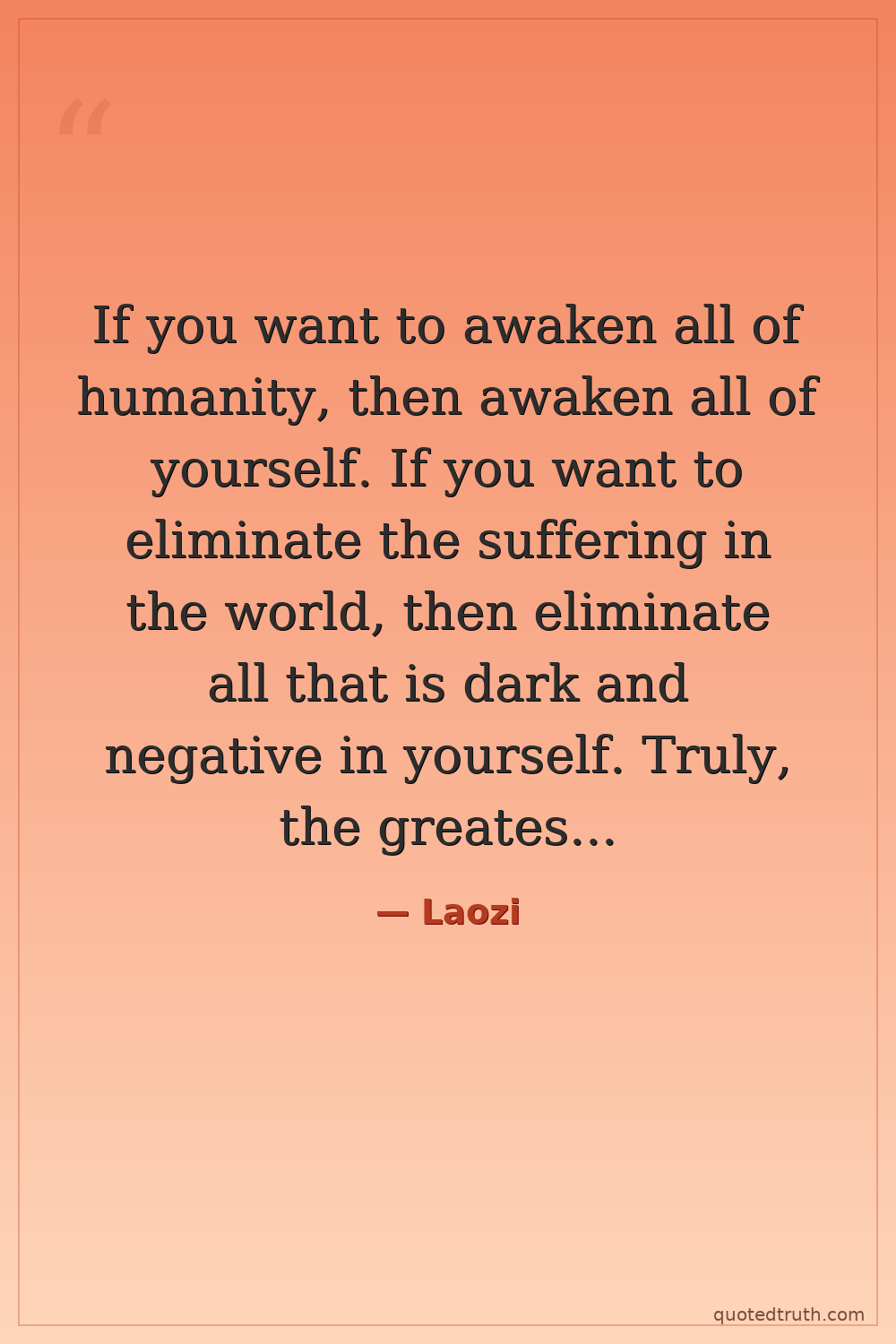
Real change in the world starts with changing yourself. You cannot lift others out of ignorance or pain while you remain stuck in your own confusion, anger, or fear. Instead of trying to fix everyone else, do the harder inner work: face your own darkness, heal your own wounds, and grow. That personal transformation radiates outward and becomes the most valuable contribution you can offer to anyone around you.
Relevance to Laozi
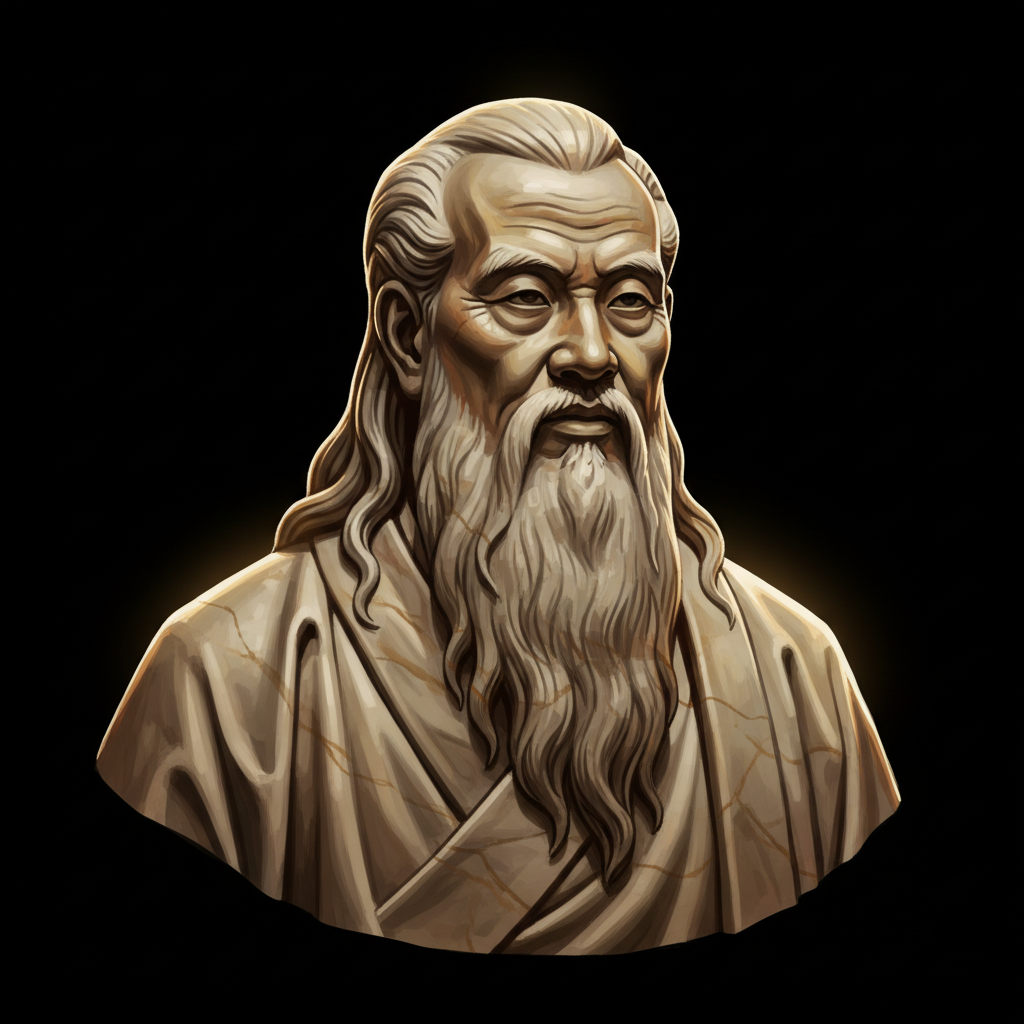
Laozi, the legendary founder of Taoism, taught that genuine power flows from inner cultivation rather than outward control. The Tao Te Ching repeatedly urges the sage to master the self before attempting to guide others, viewing self-knowledge as superior to knowing the world. Legend says he withdrew from a corrupt court rather than reform it by force, embodying this quote's principle: transform yourself quietly, and your example naturally ripples outward without coercion or noise.
The era
Laozi lived during the turbulent late Zhou dynasty in ancient China, an era of collapsing feudal order, constant warfare between rival states, and widespread social suffering that preceded the Warring States period. Rulers sought philosophers who could offer political fixes through law, ritual, or military strategy. Against this backdrop of externally-imposed solutions, Laozi's insistence on inner cultivation and wu wei was radical: peace would not come from better rulers or stronger armies, but from individuals awakening within themselves.
AI-generated insights based on extensive research and information for context. Factual errors? Email [email protected].