What it means
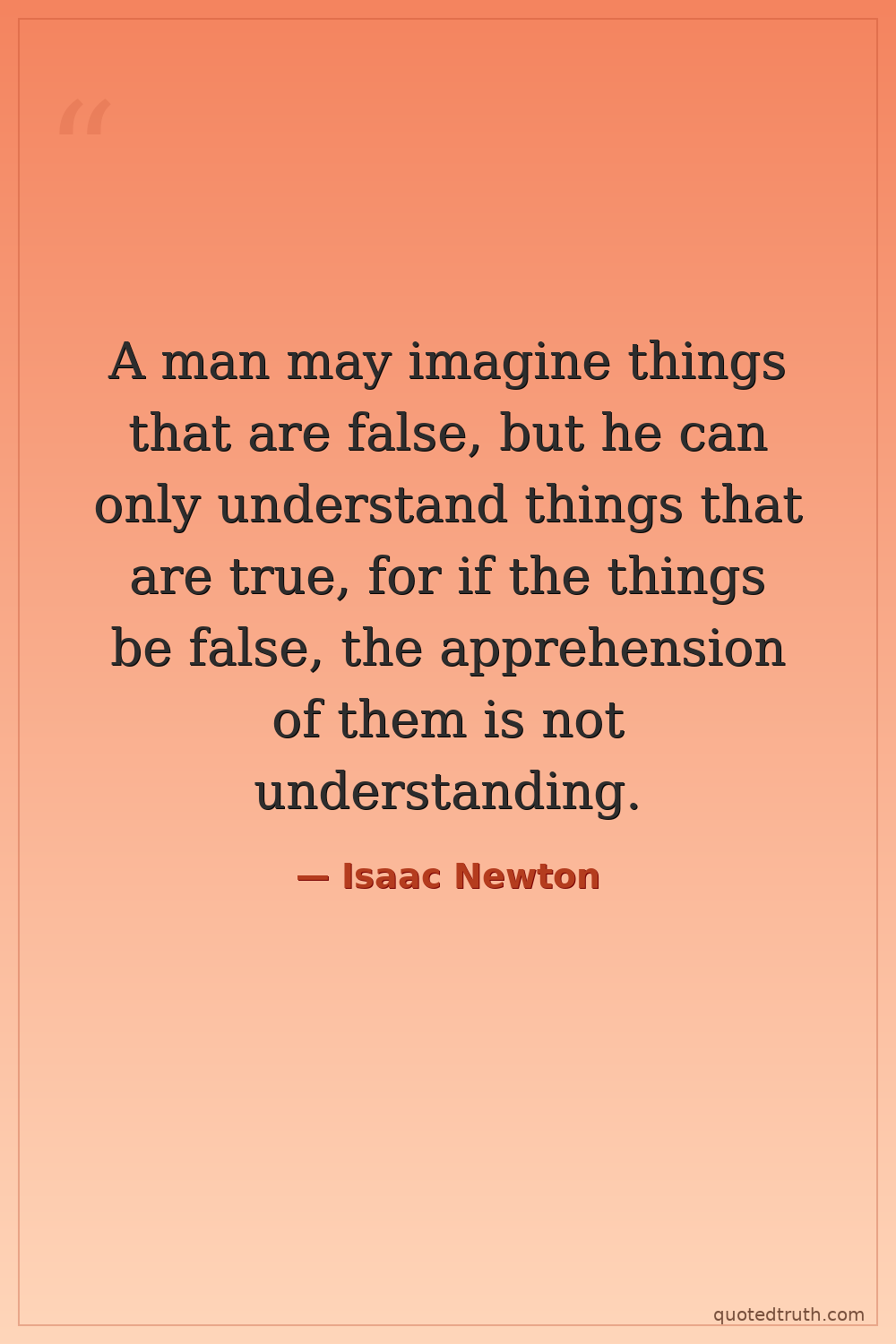
Newton draws a sharp line between imagination and genuine understanding. Anyone can picture or believe something false — that is just mental imagery. But real comprehension can only attach to what is actually true. If you think you understand something that turns out to be false, you were not understanding it at all — only holding a mistaken impression. True knowledge, by definition, requires its object to be real.
Relevance to Isaac Newton
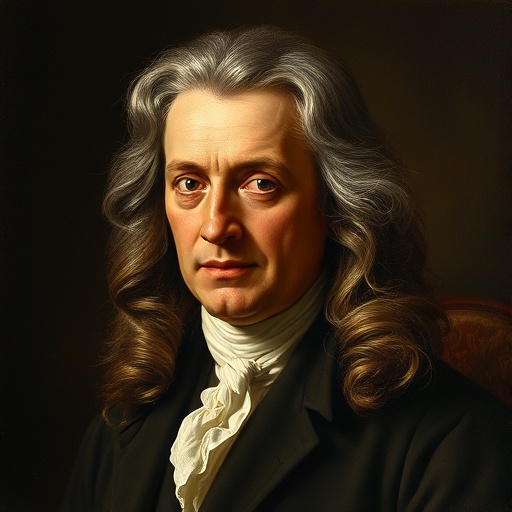
Newton's entire method demanded proof over assumption. His laws of motion and universal gravitation were built from observation and rigorous mathematics, not inherited tradition. He famously refused to speculate beyond demonstrated evidence. Having personally dismantled Aristotelian physics — long accepted as settled understanding — he knew how false certainty corrupts knowledge. His private theological writings show the same impulse: he rejected Trinitarian doctrine, convinced the established 'understanding' rested on misreading.
The era
Newton worked during the Scientific Revolution, when European thinkers were dismantling Scholastic natural philosophy that had dominated since medieval times. Aristotle's explanations of motion, celestial mechanics, and matter had been treated as settled understanding for fifteen centuries, yet collapsed under experiment. The Royal Society's motto — 'take nobody's word for it' — captured this shift. Newton's quote crystallizes the era's core epistemological battle: inherited belief versus verified, demonstrable knowledge.
AI-generated insights based on extensive research and information for context. Factual errors? Email [email protected].