What it means
If these experiments hold up, the study of color becomes an entirely new science. People have noticed colors forever, but nobody has actually understood what produces them until now. Newton is claiming a genuine scientific breakthrough — not just new observations, but the first real explanation of why colors exist and how they behave.
Relevance to Isaac Newton
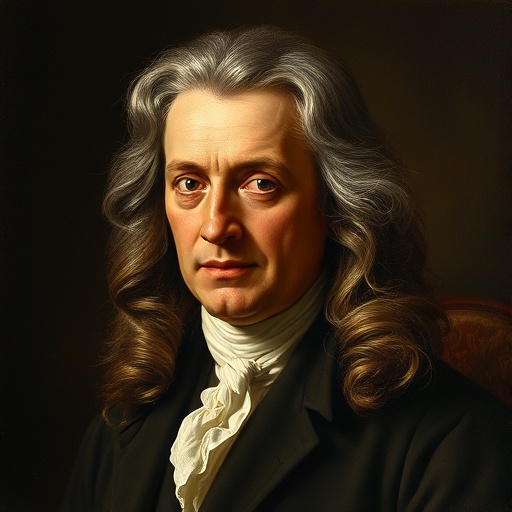
Newton made this claim in his 1672 paper on light and color, presenting his prism experiments to the Royal Society. It reflects his core character: rigorous, evidence-driven, and confident in his findings. His discovery that white light contains all spectral colors overturned ancient theories and demonstrated his belief that mathematics and experiment could reveal nature's hidden mechanisms.
The era
In the early modern period, natural philosophy was overthrowing inherited Aristotelian explanations. Color had been debated since antiquity — Aristotle called it a mixture of light and dark. Newton's era saw the rise of experimental method and mathematical description of nature. His optical work landed amid fierce debate about the nature of light, making his empirical claim especially bold and consequential.
AI-generated insights based on extensive research and information for context. Factual errors? Email [email protected].