What it means
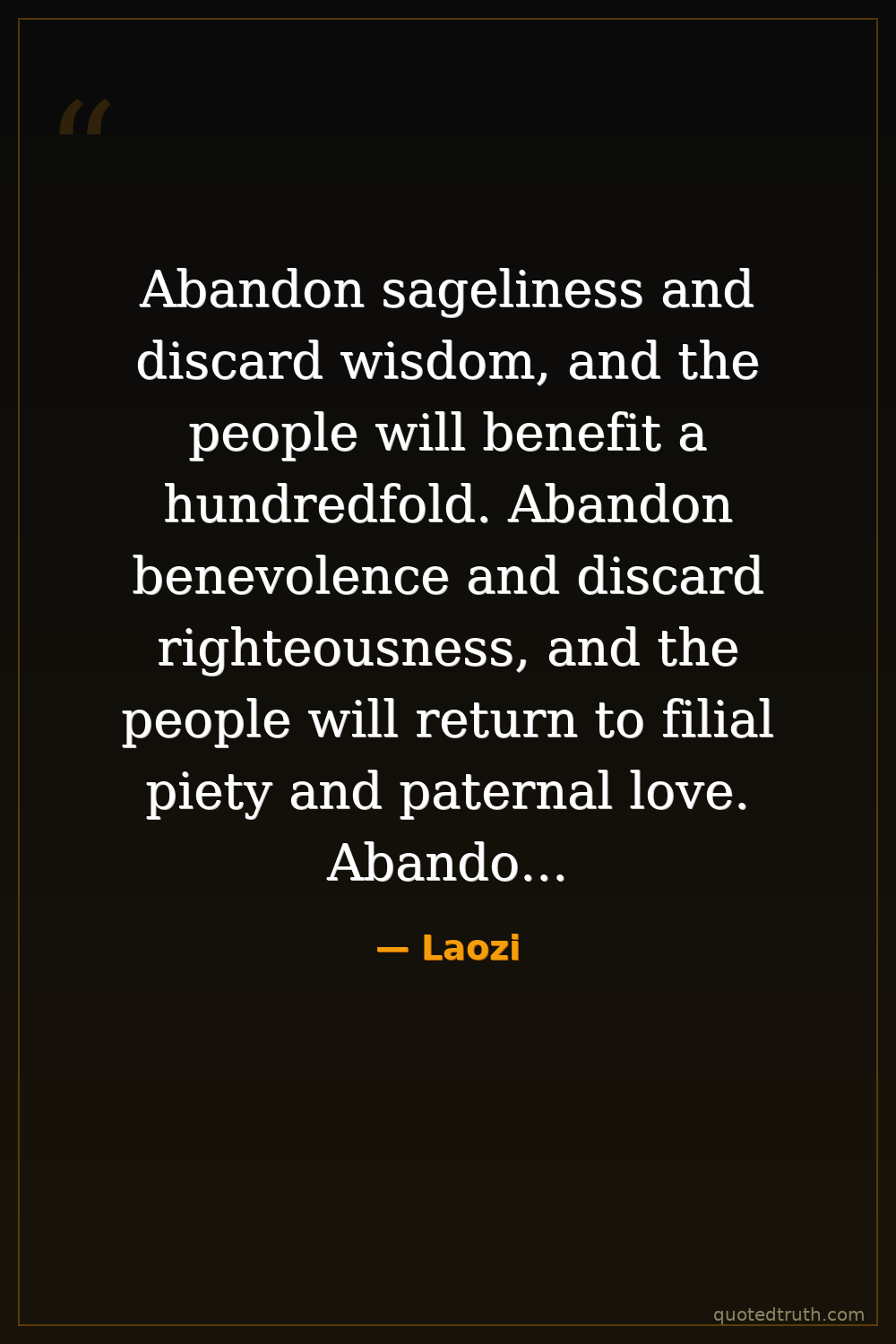
Drop the lofty labels society celebrates—clever wisdom, moral righteousness, and profitable skills—and ordinary people will thrive. When authorities stop performing virtue and scheming for gain, families naturally care for each other and theft disappears. The argument is that imposed ideals and ambition create the very problems they claim to solve; stripping them away lets genuine goodness emerge on its own.
Relevance to Laozi
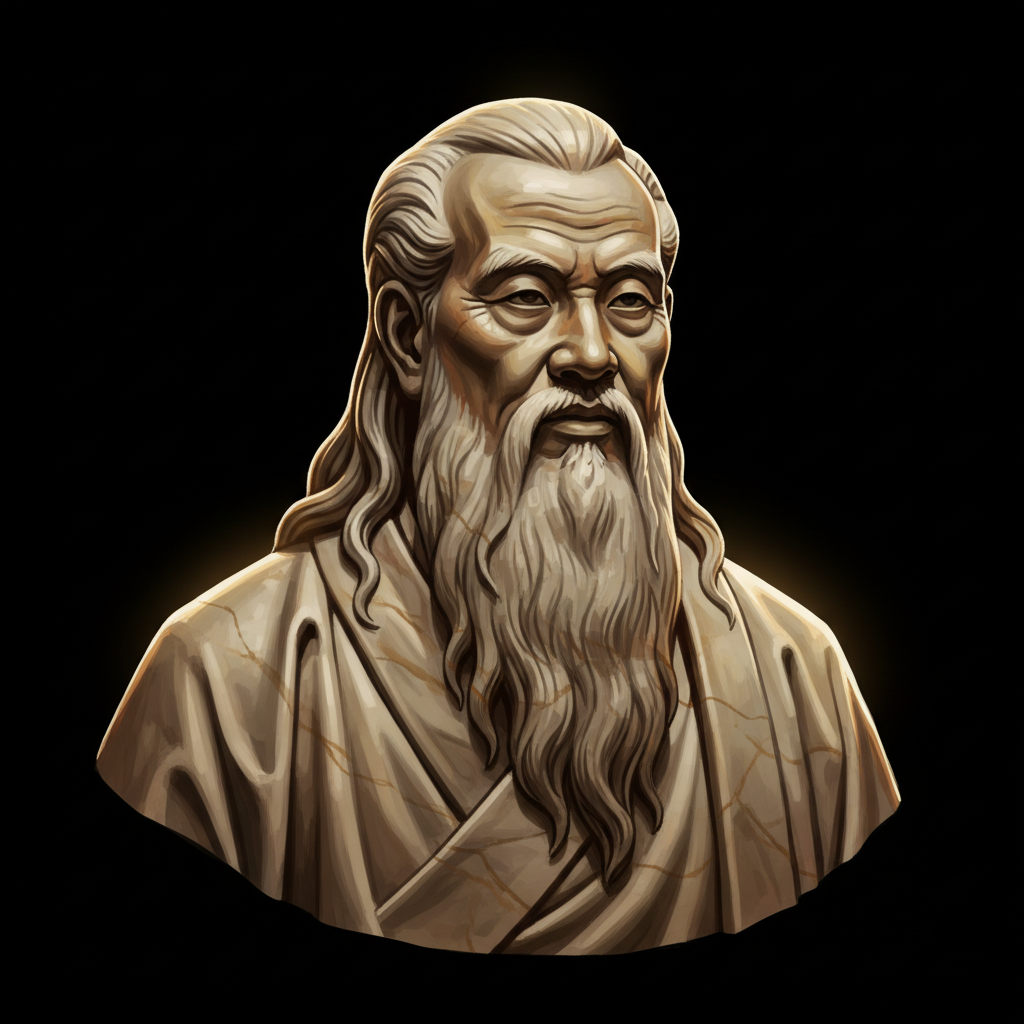
Laozi, the semi-legendary founder of Taoism, reportedly served as an archivist in the Zhou court before withdrawing from public life, disillusioned by its decay. His teaching here mirrors that exit: rejecting Confucian prescriptions of sageliness, benevolence, and righteousness in favor of wu wei, effortless naturalness. The Tao Te Ching he left behind consistently favors simplicity, humility, and returning to an uncarved, unforced state over cultivated virtue.
The era
Laozi lived during the late Zhou dynasty (6th–4th century BCE), a period of collapsing feudal order sliding toward the Warring States era. Rival thinkers—especially Confucians—proposed elaborate moral codes, ritual, and scholar-officials to restore stability. Laozi pushed back: the more rulers legislated virtue and prized cleverness, the more corruption, ambition, and banditry followed. His saying is a direct response to that intellectual arms race over how to save a fracturing society.
AI-generated insights based on extensive research and information for context. Factual errors? Email [email protected].