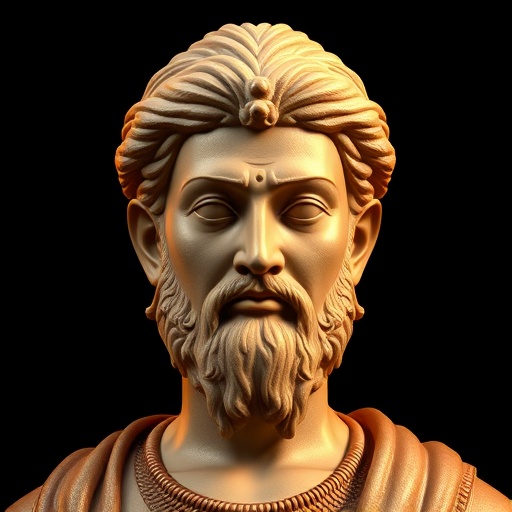
Mahavira — "He who neglects the present moment, loses both future and past."
He who neglects the present moment, loses both future and past.
He who neglects the present moment, loses both future and past.
Click any product to generate a realistic preview. Up to 3 at a time.
* Initial load can take up to 90 seconds — revising the preview in another color is nearly instant.
"The soul is the only reality; everything else is transient."
"The path to liberation is through right faith, right knowledge, and right conduct."
"Man's true nature is divine."
"The soul is pure and eternal. It is never born, nor does it ever die."
"The soul is the doer of its own deeds, and the enjoyer of its own fruits."
24th and last Tirthankara of Jainism, whose teachings of strict ahimsa (non-violence), aparigraha (non-attachment), and karma reshaped ancient Indian religion. Closely associated with The Buddha (near-contemporary moral revolutionary, also reacting against Vedic ritualism). For an intellectual contrast, see Vedic Brahmanical ritual sacrifice, the animal-sacrifice-centered Vedic religion of his era — Mahavira's ahimsa demanded total non-violence, including not eating root vegetables that kill the plant — a maximum-distance ethical move from the Vedic priestly tradition that ritually sacrificed cattle and horses. The two cleanest poles of ancient Indian religious ethics.
Found in 1 providers: grok
1 source checked
Stop waiting for the right time or dwelling on what was. The only moment where anything real can be done is now. Miss it and you forfeit both the lessons of your past and the opportunity to shape your future. Action and awareness must happen in the present, or they never happen at all.
Mahavira spent twelve years in deep meditation and rigorous ascetic practice, training his mind to remain fully present each moment. Jain philosophy centers on conscious action, since karma accumulates through inattentive deeds. His path to enlightenment demanded radical present-moment awareness, making this not abstract advice but the literal method by which he achieved liberation around 527 BCE.
In 6th century BCE India, Mahavira taught alongside the Buddha amid a spiritual revolution questioning Vedic ritual and caste authority. Most people structured life around sacrificial rites for future reward or ancestor appeasement. Mahavira's insistence on present-moment consciousness was a direct counter to that deferred-living framework, arguing liberation is achieved through awareness now, not ceremonies later.
AI-generated insights based on extensive research and information for context. Factual errors? Email [email protected].
Your cart is empty