Mahavira — "By sincerity, a man gains knowledge, by knowledge, liberation."
By sincerity, a man gains knowledge, by knowledge, liberation.
By sincerity, a man gains knowledge, by knowledge, liberation.
Click any product to generate a realistic preview. Up to 3 at a time.
* Initial load can take up to 90 seconds — revising the preview in another color is nearly instant.
"The world is full of suffering, and the path to liberation is through self-control."
"All souls are equal and alike and possess the same nature and qualities."
"The soul is its own friend and its own enemy."
"The soul is the only thing that is eternal; everything else is temporary."
"The greatest wisdom is to know oneself."
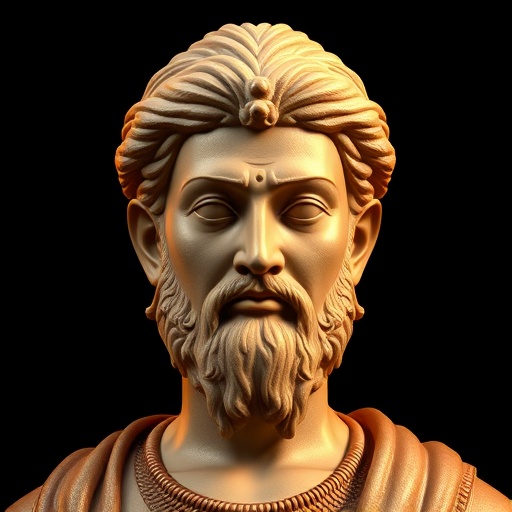
24th and last Tirthankara of Jainism, whose teachings of strict ahimsa (non-violence), aparigraha (non-attachment), and karma reshaped ancient Indian religion. Closely associated with The Buddha (near-contemporary moral revolutionary, also reacting against Vedic ritualism). For an intellectual contrast, see Vedic Brahmanical ritual sacrifice, the animal-sacrifice-centered Vedic religion of his era — Mahavira's ahimsa demanded total non-violence, including not eating root vegetables that kill the plant — a maximum-distance ethical move from the Vedic priestly tradition that ritually sacrificed cattle and horses. The two cleanest poles of ancient Indian religious ethics.
Found in 1 providers: grok
1 source checked
Honesty and genuine effort lead to real understanding, and real understanding sets you free. When you stop deceiving yourself and others, you start seeing clearly. That clarity dissolves ignorance, which is the root of suffering and bondage. Freedom isn't granted from outside — it's earned through truthful inquiry and the wisdom it produces.
Mahavira abandoned wealth and royal comfort at 30 to pursue uncompromising truth. He practiced extreme asceticism for 12 years, refusing self-deception in any form. Jainism's core doctrine of anekantavada — many-sided truth — reflects his belief that honest perception underpins all genuine knowledge. His entire spiritual path was a lived demonstration of sincerity as the gateway to moksha.
6th-century BCE India was intellectually explosive — the Axial Age, when the Upanishads, Buddhism, and Jainism all challenged Vedic ritual orthodoxy simultaneously. Brahmin authority rested on hereditary privilege, not personal sincerity. Mahavira's teaching that liberation came through individual honesty and self-discipline, not priestly intermediaries or caste, was a radical democratization of spiritual access in a rigidly hierarchical society.
AI-generated insights based on extensive research and information for context. Factual errors? Email [email protected].
Your cart is empty