What it means
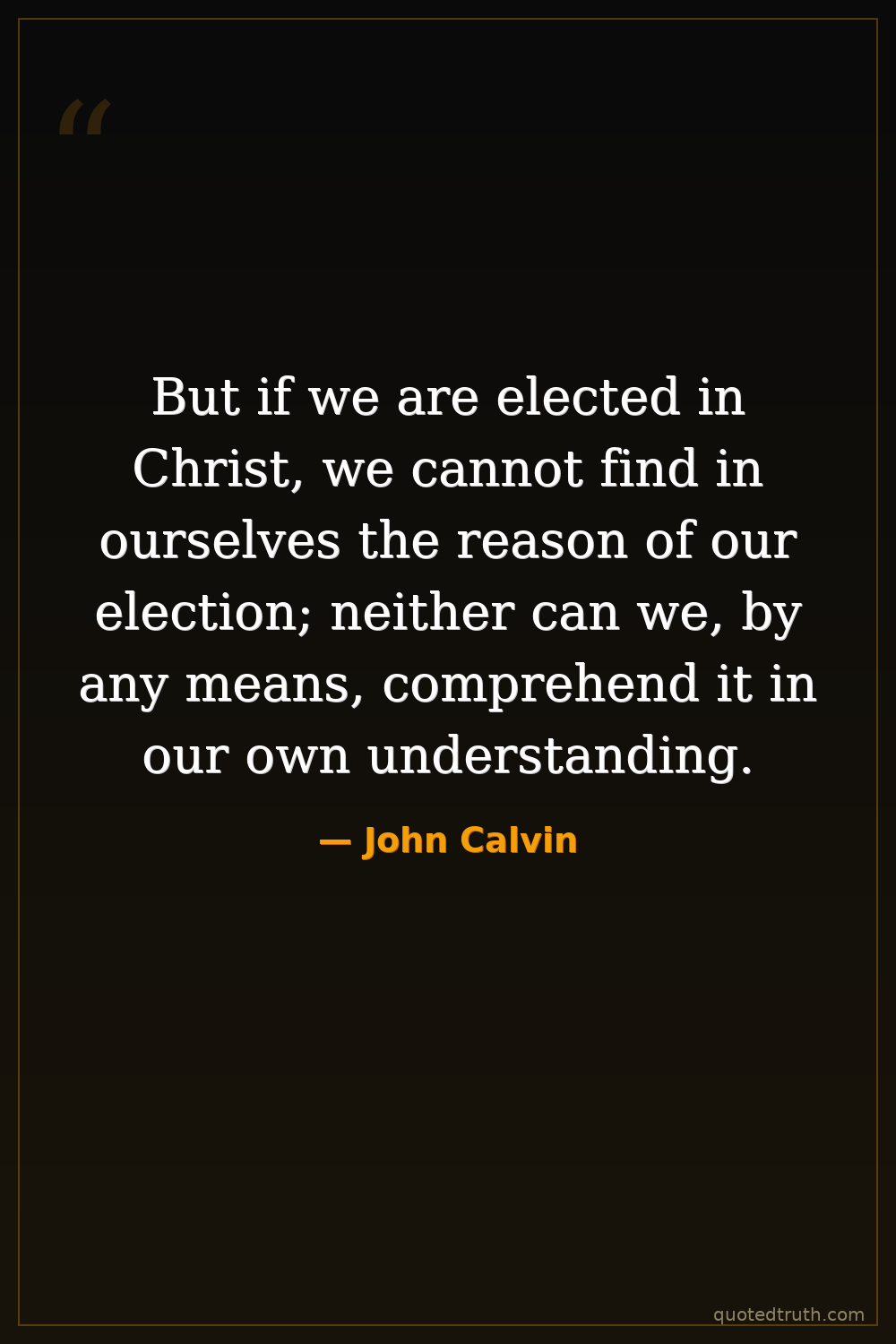
Calvin argues that God's choice to save us — called 'election' — is not grounded in anything we did, deserve, or possess. Looking inward for the reason why God chose you is futile. Our human minds also cannot logically work out the mechanics of divine election. Salvation's source lies entirely outside ourselves, rooted in God's sovereign will in Christ, beyond the reach of self-examination or rational analysis.
Relevance to John Calvin
Calvin built his entire theological system around God's absolute sovereignty in salvation. His landmark Institutes of the Christian Religion (first published 1536) systematized double predestination: God elects some to salvation purely by his own will, not foreseeing merit in them. Calvin defended this doctrine vigorously in Geneva against critics like Bolsec in 1551. This quote encapsulates his lifelong insistence that human pride has no foothold in explaining divine grace.
The era
The Protestant Reformation of the 16th century shattered Europe's assumptions about salvation. Catholics taught that grace cooperated with human effort and merit through the sacramental system. Calvin, writing from Geneva in the 1540s–1560s, pushed further than Luther, insisting God's election is purely sovereign. Simultaneously, Renaissance humanism celebrated human reason and capacity. Calvin's assertion that election cannot be grasped by human understanding directly challenged both Catholic merit theology and humanist confidence in the intellect.
AI-generated insights based on extensive research and information for context. Factual errors? Email [email protected].