What it means
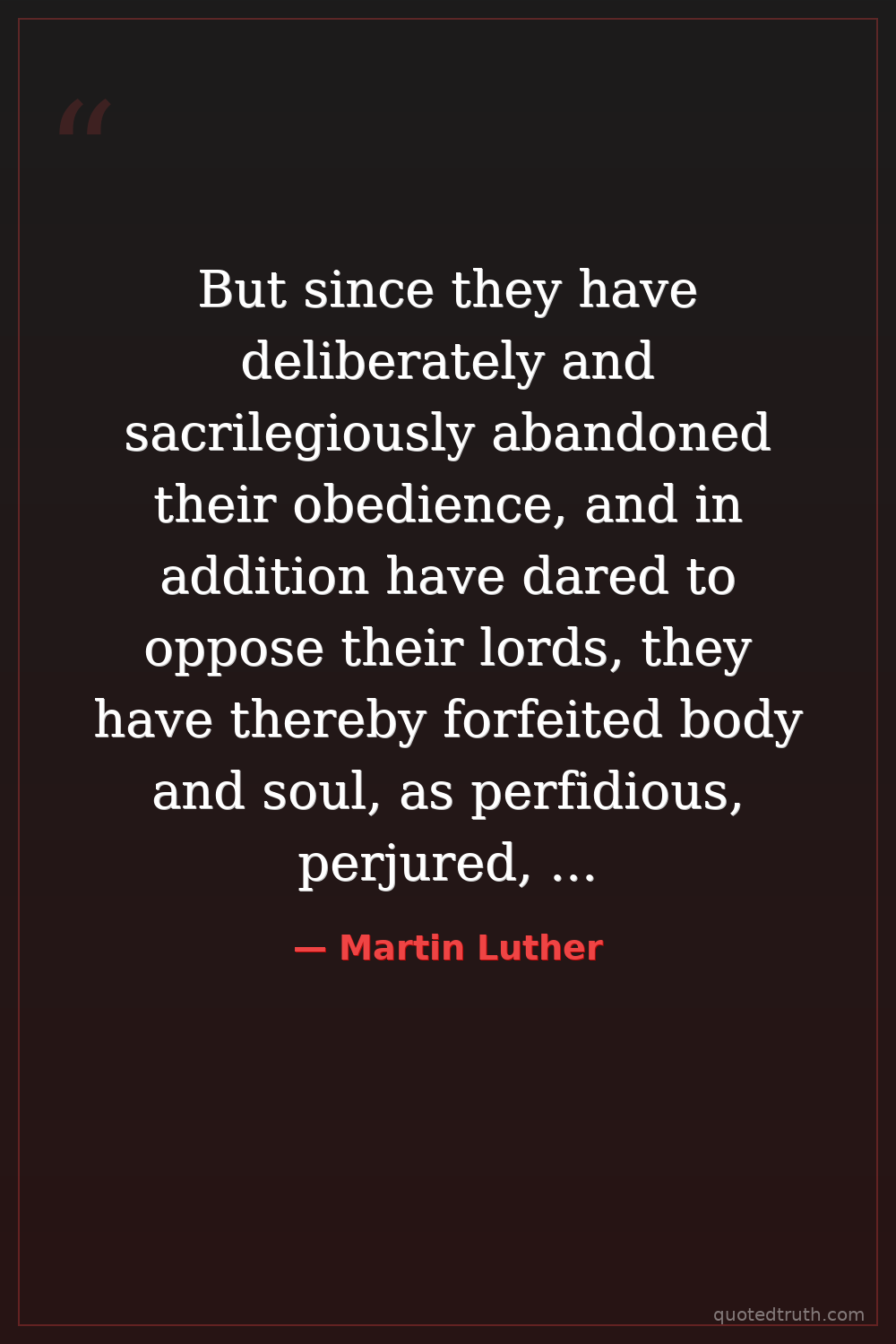
People who intentionally break their sworn duty to obey authority, and then go further by actively rebelling against their rulers, lose all protection for their lives and their souls. Such oathbreakers, liars, and traitors deserve whatever punishment comes to them. The speaker frames rebellion not just as a crime but as spiritual self-destruction, placing disobedient subjects outside the bounds of mercy and casting them as fundamentally corrupt wretches who chose their own damnation.
Relevance to Martin Luther
This captures Luther's harsh stance during the 1525 German Peasants' War, when he wrote 'Against the Murderous, Thieving Hordes of Peasants' urging princes to slaughter rebels. Though he challenged papal authority, Luther fiercely defended secular rulers, believing God ordained temporal government. His theology separated spiritual freedom from political obedience, and he saw armed uprising as satanic rebellion that forfeited both earthly life and eternal salvation.
The era
The early 1500s saw massive peasant uprisings across German lands, with commoners citing Reformation ideas to demand freedom from serfdom and feudal dues. Luther's break from Rome had unintentionally inspired social revolt. Princes feared total breakdown of the feudal order, while reformers scrambled to distinguish religious reform from political revolution. Roughly 100,000 peasants were killed suppressing the revolts, cementing the alliance between Lutheran churches and territorial rulers.
AI-generated insights based on extensive research and information for context. Factual errors? Email [email protected].