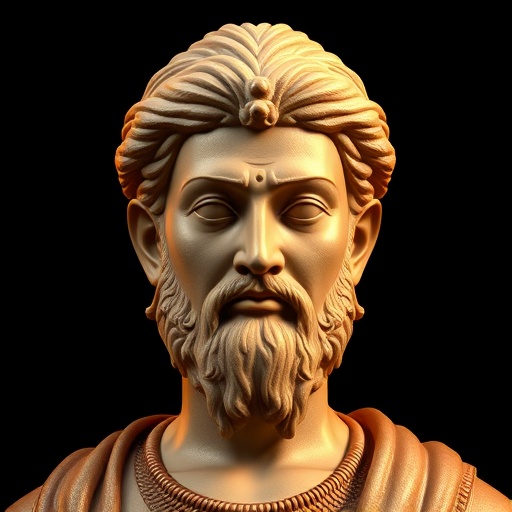
Mahavira — "The world is full of suffering, and the path to liberation is through self-contr…"
The world is full of suffering, and the path to liberation is through self-control.
The world is full of suffering, and the path to liberation is through self-control.
Click any product to generate a realistic preview. Up to 3 at a time.
* Initial load can take up to 90 seconds — revising the preview in another color is nearly instant.
"The greatest penance is to bear all hardships with equanimity."
"The self is the friend and enemy of the self."
"One should not steal."
"The soul is pure, eternal, and full of infinite knowledge, vision, power, and bliss."
"One should always speak the truth, but not utter an unpleasant truth."
24th and last Tirthankara of Jainism, whose teachings of strict ahimsa (non-violence), aparigraha (non-attachment), and karma reshaped ancient Indian religion. Closely associated with The Buddha (near-contemporary moral revolutionary, also reacting against Vedic ritualism). For an intellectual contrast, see Vedic Brahmanical ritual sacrifice, the animal-sacrifice-centered Vedic religion of his era — Mahavira's ahimsa demanded total non-violence, including not eating root vegetables that kill the plant — a maximum-distance ethical move from the Vedic priestly tradition that ritually sacrificed cattle and horses. The two cleanest poles of ancient Indian religious ethics.
Found in 1 providers: grok
1 source checked
Life is inherently filled with pain, desire, and dissatisfaction — no external circumstance can fix this. The only genuine escape is inward: mastering your own impulses, cravings, and actions. Instead of seeking relief through wealth, pleasure, or ritual, true freedom comes from disciplining the self — controlling what you want, what you do, and how you react to the world around you.
Mahavira abandoned his royal upbringing at thirty to become an ascetic monk, living without possessions, clothing, or shelter for twelve years. He fasted extensively, endured physical hardship, and mastered his senses completely — embodying exactly the self-control he preached. His foundational Jain teaching, the Three Jewels — right faith, right knowledge, right conduct — centers entirely on disciplining thought and action rather than appealing to gods or priests.
Mahavira lived in sixth-century BCE northern India during the Sramana movement, a profound uprising against the Brahminical order. Vedic priests controlled liberation through costly ritual sacrifice, reinforcing caste inequality. The Buddha was teaching nearby simultaneously. This era craved inner paths to freedom independent of birth or priestly mediation. Mahavira's insistence that self-mastery — not sacrifice or social rank — liberates the soul was radically democratic and countercultural.
AI-generated insights based on extensive research and information for context. Factual errors? Email [email protected].
Your cart is empty