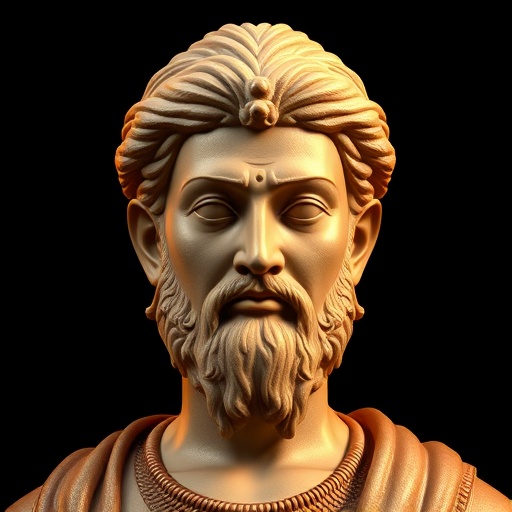
Mahavira — "The soul is its own friend and its own enemy."
The soul is its own friend and its own enemy.
The soul is its own friend and its own enemy.
Click any product to generate a realistic preview. Up to 3 at a time.
* Initial load can take up to 90 seconds — revising the preview in another color is nearly instant.
"One who has conquered himself is truly a hero."
"The wise man is free from all attachments."
"Live and allow others to live. Hurt neither yourself nor others."
"The soul is the only reality; the rest is illusion."
"Do not injure, abuse, oppress, enslave, insult, torment, torture, or kill any creature or living being."
24th and last Tirthankara of Jainism, whose teachings of strict ahimsa (non-violence), aparigraha (non-attachment), and karma reshaped ancient Indian religion. Closely associated with The Buddha (near-contemporary moral revolutionary, also reacting against Vedic ritualism). For an intellectual contrast, see Vedic Brahmanical ritual sacrifice, the animal-sacrifice-centered Vedic religion of his era — Mahavira's ahimsa demanded total non-violence, including not eating root vegetables that kill the plant — a maximum-distance ethical move from the Vedic priestly tradition that ritually sacrificed cattle and horses. The two cleanest poles of ancient Indian religious ethics.
Found in 1 providers: deepseek
1 source checked
You alone shape whether your soul progresses or deteriorates. No external god, fate, or ritual determines your inner condition — your own choices, emotions, and intentions either purify or corrupt you. Treat yourself with discipline and ethical care and you become your soul's greatest ally; give in to greed, anger, or delusion and you become its worst enemy.
Mahavira abandoned royal wealth at 30 to spend 12 years in solitary asceticism, enduring hardship without servants or possessions, proving liberation requires no intermediary — only rigorous self-mastery. Jainism's central doctrine holds that karmic bondage is self-created through passion, attachment, and harmful action. The soul alone accumulates karma and the soul alone must purify itself — his life enacted exactly that.
Mahavira lived in 6th-5th century BCE India during the Axial Age, when Vedic Brahmanism assigned spiritual power to hereditary priests performing rituals for divine favor. Salvation was mediated — you needed priests, sacrifices, and caste privilege. His radical claim that each soul controls its own fate struck directly at priestly authority and caste hierarchy, offering liberation to anyone willing to practice self-discipline.
AI-generated insights based on extensive research and information for context. Factual errors? Email [email protected].
Your cart is empty