Mahavira — "The greatest wisdom is to know oneself."
The greatest wisdom is to know oneself.
The greatest wisdom is to know oneself.
Click any product to generate a realistic preview. Up to 3 at a time.
* Initial load can take up to 90 seconds — revising the preview in another color is nearly instant.
"There is no quality of soul more subtile than non-attachment."
"The universe is a beginningless and endless cycle of creation and destruction."
"The soul is pure and eternal. It is never born, nor does it ever die."
"The path to liberation is difficult, but it is worth pursuing."
"Do not be proud of wealth, people, relations, or youth; time takes all away in a moment."
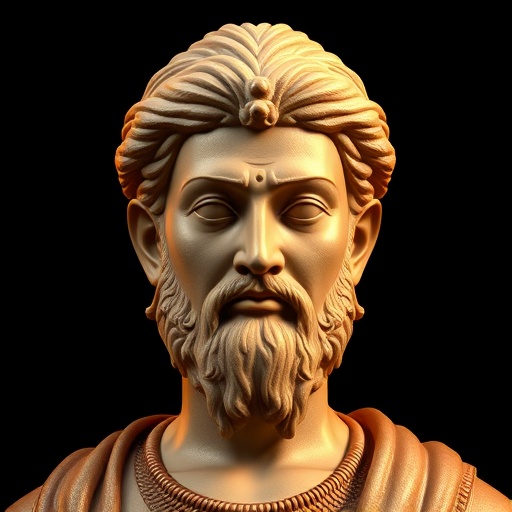
24th and last Tirthankara of Jainism, whose teachings of strict ahimsa (non-violence), aparigraha (non-attachment), and karma reshaped ancient Indian religion. Closely associated with The Buddha (near-contemporary moral revolutionary, also reacting against Vedic ritualism). For an intellectual contrast, see Vedic Brahmanical ritual sacrifice, the animal-sacrifice-centered Vedic religion of his era — Mahavira's ahimsa demanded total non-violence, including not eating root vegetables that kill the plant — a maximum-distance ethical move from the Vedic priestly tradition that ritually sacrificed cattle and horses. The two cleanest poles of ancient Indian religious ethics.
Found in 1 providers: deepseek
1 source checked
Self-knowledge is the highest form of intelligence — understanding your own motivations, biases, desires, and true nature matters more than any external expertise. Before you can make sound decisions, treat others well, or find genuine contentment, you need honest clarity about who you actually are. Most people navigate life reacting to circumstances without ever examining the internal drives shaping every choice they make.
Mahavira abandoned royal wealth and family at 30 to pursue twelve years of rigorous ascetic meditation — a direct act of turning inward. Jainism centers on ahimsa and self-discipline, both requiring deep self-awareness to execute. He taught that the soul's liberation, moksha, comes through conquering one's own passions and ignorance rather than through external rituals or divine favor, making self-knowledge the literal mechanism of spiritual freedom.
Mahavira lived in 6th-century BCE India alongside the Buddha and early Upanishadic thinkers during the Axial Age, when Indian philosophy was shifting from Vedic ritual sacrifice toward interior spiritual inquiry. Dominant Brahmanical tradition held that priestly rites and caste status secured cosmic favor. Mahavira's emphasis on self-knowledge directly challenged that external authority, asserting every individual soul possessed the capacity and full responsibility for its own liberation.
AI-generated insights based on extensive research and information for context. Factual errors? Email [email protected].
Your cart is empty