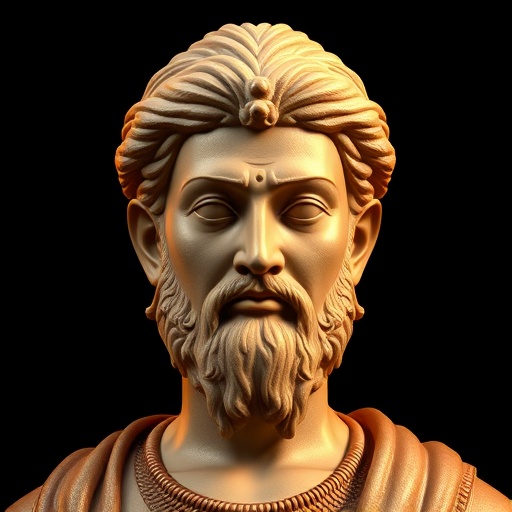
Mahavira — "Control of the senses is the highest form of self-control."
Control of the senses is the highest form of self-control.
Control of the senses is the highest form of self-control.
Click any product to generate a realistic preview. Up to 3 at a time.
* Initial load can take up to 90 seconds — revising the preview in another color is nearly instant.
"Non-violence is the highest religion."
"He who knows one’s own soul knows the souls of all beings."
"One who is always striving for the welfare of all beings, who is free from all passions, and who has attained the highest knowledge, is called a Tirthankara."
"All living beings desire happiness and despise misery."
"Do not desire anything that is not yours."
24th and last Tirthankara of Jainism, whose teachings of strict ahimsa (non-violence), aparigraha (non-attachment), and karma reshaped ancient Indian religion. Closely associated with The Buddha (near-contemporary moral revolutionary, also reacting against Vedic ritualism). For an intellectual contrast, see Vedic Brahmanical ritual sacrifice, the animal-sacrifice-centered Vedic religion of his era — Mahavira's ahimsa demanded total non-violence, including not eating root vegetables that kill the plant — a maximum-distance ethical move from the Vedic priestly tradition that ritually sacrificed cattle and horses. The two cleanest poles of ancient Indian religious ethics.
Found in 1 providers: grok
1 source checked
Mastering your senses — what you crave to see, taste, touch, hear, or feel — is harder and more meaningful than controlling outward behavior alone. Anyone can follow rules; governing your own impulses is where real discipline lives. This says the seat of self-mastery isn't willpower over actions but the deeper ability to not be enslaved by appetite, distraction, or craving — the internal battle is the ultimate one.
Mahavira abandoned every worldly comfort at 30 — clothing, shelter, possessions, regular meals — and spent 12 years in silent meditation and extreme fasting before attaining Kevala Jnana. Jainism's Five Great Vows include strict celibacy and non-attachment, both rooted in sensory renunciation. For Mahavira this wasn't metaphor: he stood motionless while insects bit him, refusing to react. Sensory control was his actual daily practice, not philosophy.
Around 600–500 BCE in the Gangetic plains of northeast India, the Shramana movement challenged the Vedic priestly order. Brahmin ritual sacrifice and caste hierarchy dominated religious life, but wandering ascetics — including Mahavira and the Buddha — offered liberation through personal discipline instead of ritual. Sensory restraint was the counter-program: where Vedic rites rewarded desire and material prosperity, Jainism declared appetite itself the root of karmic bondage and rebirth.
AI-generated insights based on extensive research and information for context. Factual errors? Email [email protected].
Your cart is empty