Confucius — "Do not be desirous of having things done quickly; do not look at small advantage…"

Do not be desirous of having things done quickly; do not look at small advantages. Desire to have things done quickly prevents their being done thoroughly. Looking at small advantages prevents great affairs from being accomplished.
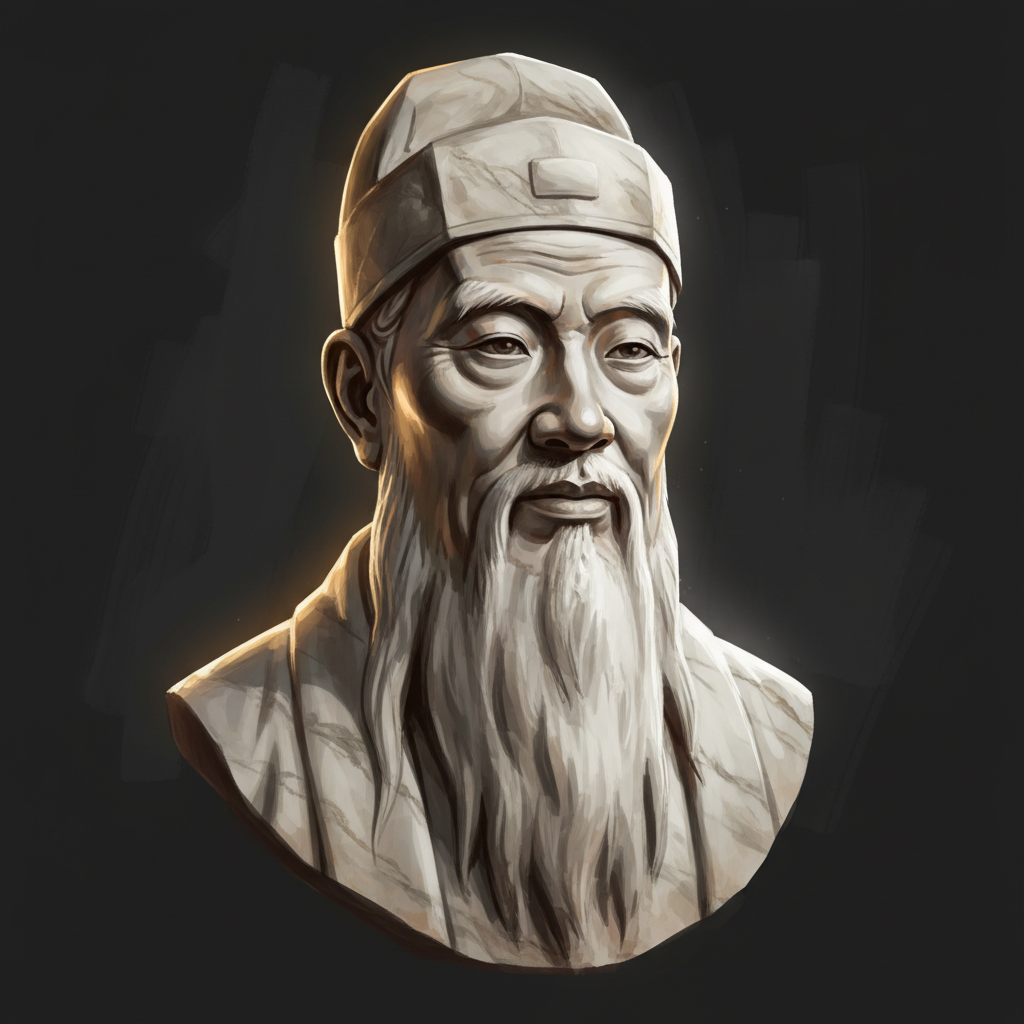
Confucius — Confucius Ancient · Chinese philosopher, founder of Confucianism

Get This Quote & Author's Image Illustrated On:

Click any product to generate a realistic preview. Up to 3 at a time.
* Initial load can take up to 90 seconds — revising the preview in another color is nearly instant.

Kitchen

Apparel

Other

About Confucius (551-479 BCE)

Chinese philosopher and teacher whose teachings (compiled by his students in the Analects) became the foundational ethical framework of East Asian civilization for 2,500 years. Closely associated with Mencius (his most-influential follower a century later). For an intellectual contrast, see Laozi, near-contemporary Chinese sage and Tao Te Ching author — Confucius systematized social order through ritual and family hierarchy; Laozi's Taoist effortless-action philosophy argued such systems were the disease, not the cure. The two founding poles of Chinese moral philosophy — every East Asian moral tradition since has positioned itself between them.

The standard scholarly entry points to Confucius's work: Philip J. Ivanhoe (Georgetown, Chinese philosophy) — Confucian Moral Self Cultivation (2000); Edward Slingerland (UBC, Asian Studies) — Effortless Action: Wu-wei as Conceptual Metaphor (2003); Tu Weiming (Harvard, Confucian scholar) — Confucian Thought: Selfhood as Creative Transformation (1985). These are the works graduate seminars cite when teaching Confucius.

Details

Analects, Book XIII, Chapter 17

Date: c. 5th century BCE

Food & Drink

Verification

Unverifiable

Found in 1 providers: grok

1 source checked

Understanding this quote

What it means

Rushing work and chasing quick wins both sabotage bigger goals. When you push to finish fast, you cut corners and quality suffers. When you fixate on minor gains right in front of you, you miss the larger opportunity that required patience and sustained effort. Real achievement comes from steady, thorough work and keeping your eyes on what actually matters long-term rather than the immediate payoff.

Relevance to Confucius

Confucius spent decades as a teacher, advisor, and traveling sage, repeatedly passed over for high office because he refused shortcuts that compromised principle. He spent thirteen years wandering between states seeking a ruler who would implement his ethical vision patiently. This saying mirrors his core teaching of self-cultivation: virtue and good governance are slow harvests, built through ritual, study, and discipline over a lifetime, not grabbed through expedient gains.

The era

Confucius lived during the late Spring and Autumn period (551-479 BCE), when the Zhou dynasty was disintegrating and rival states fought constant wars. Ambitious officials chased rapid promotions and short-term political wins through intrigue and opportunism, producing instability and cruelty. Confucius was advising disciples, many of whom became magistrates, against this prevailing careerism. His counsel pointed back to an idealized earlier order where rulers cultivated character slowly and governed for lasting harmony rather than immediate advantage.

AI-generated insights based on extensive research and information for context. Factual errors? Email [email protected].
Your Cart

Your cart is empty