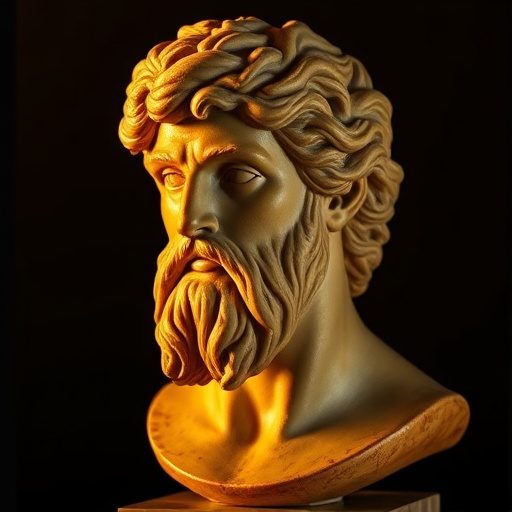
Pythagoras — "Don't leave the outline of a pan in ashes."
Don't leave the outline of a pan in ashes.
Don't leave the outline of a pan in ashes.
Click any product to generate a realistic preview. Up to 3 at a time.
* Initial load can take up to 90 seconds — revising the preview in another color is nearly instant.
"The soul is immortal and undergoes transmigration."
"The soul is a self-moving number."
"Wisdom thoroughly learned will never be forgotten."
"Know thyself and thou wilt know the universe."
"There are men and gods, and beings like Pythagoras."
Greek philosopher and mathematician whose school in Croton combined geometry (the Pythagorean theorem), number-mysticism, and a religious-vegetarian way of life. Closely associated with Thales of Miletus (earlier pre-Socratic and the first philosopher). For an intellectual contrast, see Heraclitus, pre-Socratic Greek philosopher of flux — Heraclitus called Pythagoras 'the chief of swindlers' — among the founding insults of the philosophical-rivalry tradition. Their 'all is flux' vs 'all is number' poles still organize the philosophy of mathematics today (Platonist vs anti-realist).
A Pythagorean 'Symbol', likely a symbolic instruction about cleanliness or leaving no trace.
Date: c. 570-495 BCE (interpreted later)
WisdomFound in 1 providers: gemini
1 source checked
Don't leave traces of your actions behind, especially those driven by appetite or self-interest. The pan's outline pressed into ashes represents evidence of careless, consumptive behavior. The deeper instruction is to move through the world deliberately and cleanly — erasing signs of base, material-focused activity. Live without leaving harmful residue. Be mindful of what marks you make and what they reveal about your character and intentions.
Pythagoras governed his brotherhood in Croton through dozens of cryptic symbolic prohibitions called akusmata. This saying reflects his core belief in ritual purity and disciplined living. He preached transmigration of souls, vegetarianism, and detachment from physical excess. For Pythagoras, leaving careless traces of greedy or indulgent behavior was spiritually corrupting — the ash represents the material world from which his initiates were expected to remain deliberately, consciously clean.
In 6th–5th century BCE Magna Graecia, mystery cults shaped moral life through symbolic behavioral codes. Fire and hearth ash held sacred significance in Greek religious practice. Pythagoras's community existed alongside Orphic traditions emphasizing soul purification through strict ritual observance. Such cryptic prohibitions distinguished initiated insiders from outsiders, reinforcing communal identity. Without scientific frameworks, symbolic cleanliness rules carried the weight of moral order — how you treated fire and its remains reflected your spiritual standing.
AI-generated insights based on extensive research and information for context. Factual errors? Email [email protected].
Your cart is empty