Zoroaster — "Evil is connected to lie or drûj. The Avestan word drûj means literally 'a tangl…"
Evil is connected to lie or drûj. The Avestan word drûj means literally 'a tangle of trickery, deceit and lies.' Evil is what is not original and real.
Evil is connected to lie or drûj. The Avestan word drûj means literally 'a tangle of trickery, deceit and lies.' Evil is what is not original and real.
Click any product to generate a realistic preview. Up to 3 at a time.
* Initial load can take up to 90 seconds — revising the preview in another color is nearly instant.
"He who seeks wisdom, him Ahura Mazda will enlighten."
"With an open mind, seek and listen to all the highest ideals. Consider the most enlightened thoughts. Then choose your path, person by person, each for oneself."
"And when these two spirits came together, they created life and non-life, and how at the end the worst existence shall be for the wicked, but the Best Mind for the righteous."
"The liar is the greatest enemy of mankind."
"There are two fundamental spirits, twins which in waking hours are heard, but in thought are not seen. They are the better and the bad. Of these two, the wise have chosen rightly, not so the foolish."
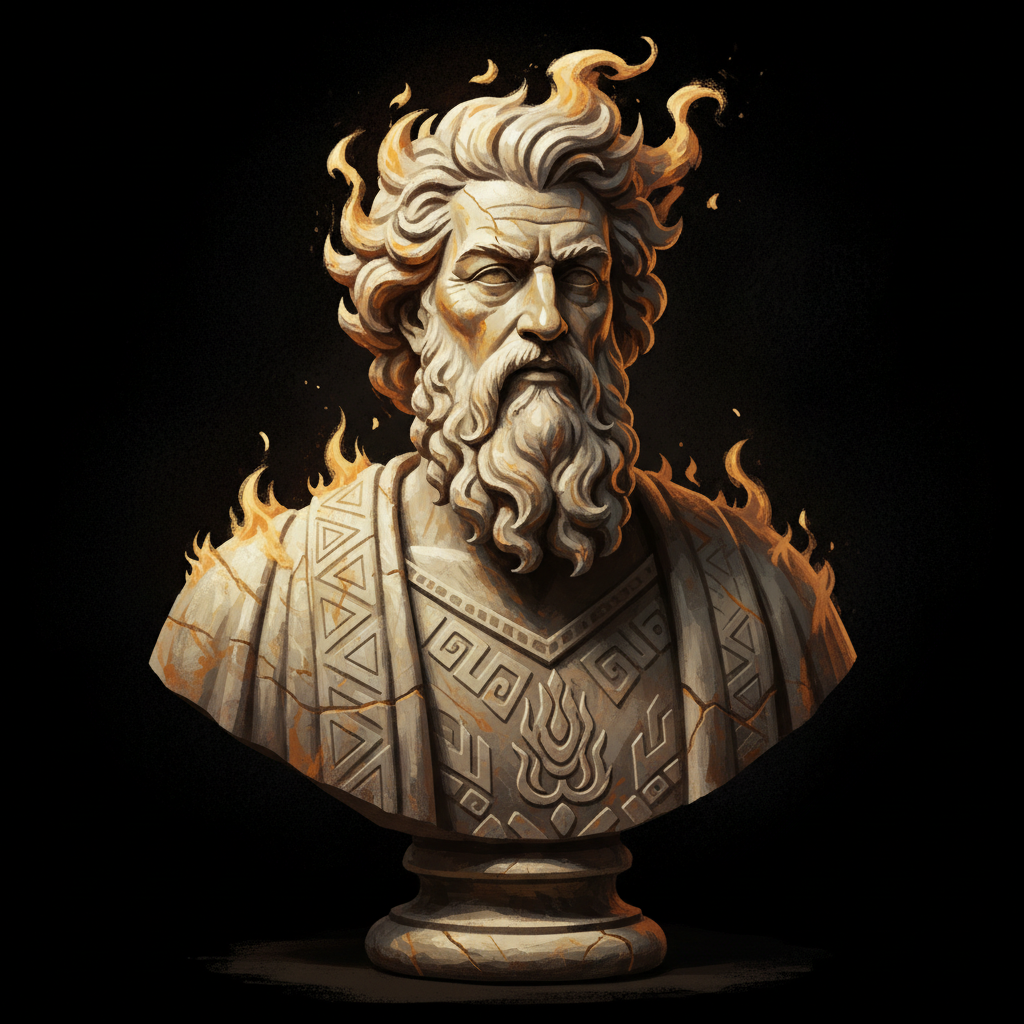
Iranian prophet who founded Zoroastrianism, the first major religion of cosmic dualism between good (Ahura Mazda) and evil (Angra Mainyu). Closely associated with The Buddha (near-contemporary Eastern moral-cosmological revolutionary). For an intellectual contrast, see Friedrich Nietzsche, German philosopher of 'beyond good and evil' — Nietzsche appropriated Zarathustra's name for Thus Spoke Zarathustra (1883) precisely to invert the original's moral cosmology — the historical Zoroaster founded the good-versus-evil framework Nietzsche's character announces the end of.
Found in 1 providers: gemini
1 source checked
This quote defines evil as deception itself. Drûj isn't just lying—it's a whole web of trickery that pulls people away from what's genuine and true. Good equals reality; evil equals distortion of reality. When you lie, cheat, or manipulate, you're not just doing a bad thing—you're participating in the fundamental force that corrupts existence. Truth is the baseline of being; falsehood is a departure from it.
Zoroaster built his entire religion around the cosmic battle between asha (truth, order) and drûj (lie, chaos). As a prophet-reformer who rejected the polytheistic rituals of his Bronze Age culture, he placed honesty at the center of ethics—worshippers pledged good thoughts, good words, good deeds. For him, being truthful wasn't a virtue among many; it was alignment with Ahura Mazda, the wise lord, versus serving the deceiving spirit Angra Mainyu.
Zoroaster preached in ancient Iran around 1500–1000 BCE, during a violent tribal era of cattle raids, warrior cults, and priest-sanctioned intoxicant rituals he considered corrupt. Most religions of the time emphasized ritual correctness and appeasing many gods. By reframing morality around truth versus lie rather than sacrifice and tribal loyalty, Zoroaster introduced one of history's earliest ethical monotheisms—a framework that later shaped Judaism, Christianity, and Islam's ideas of cosmic good versus evil.
AI-generated insights based on extensive research and information for context. Factual errors? Email [email protected].
Your cart is empty