What it means
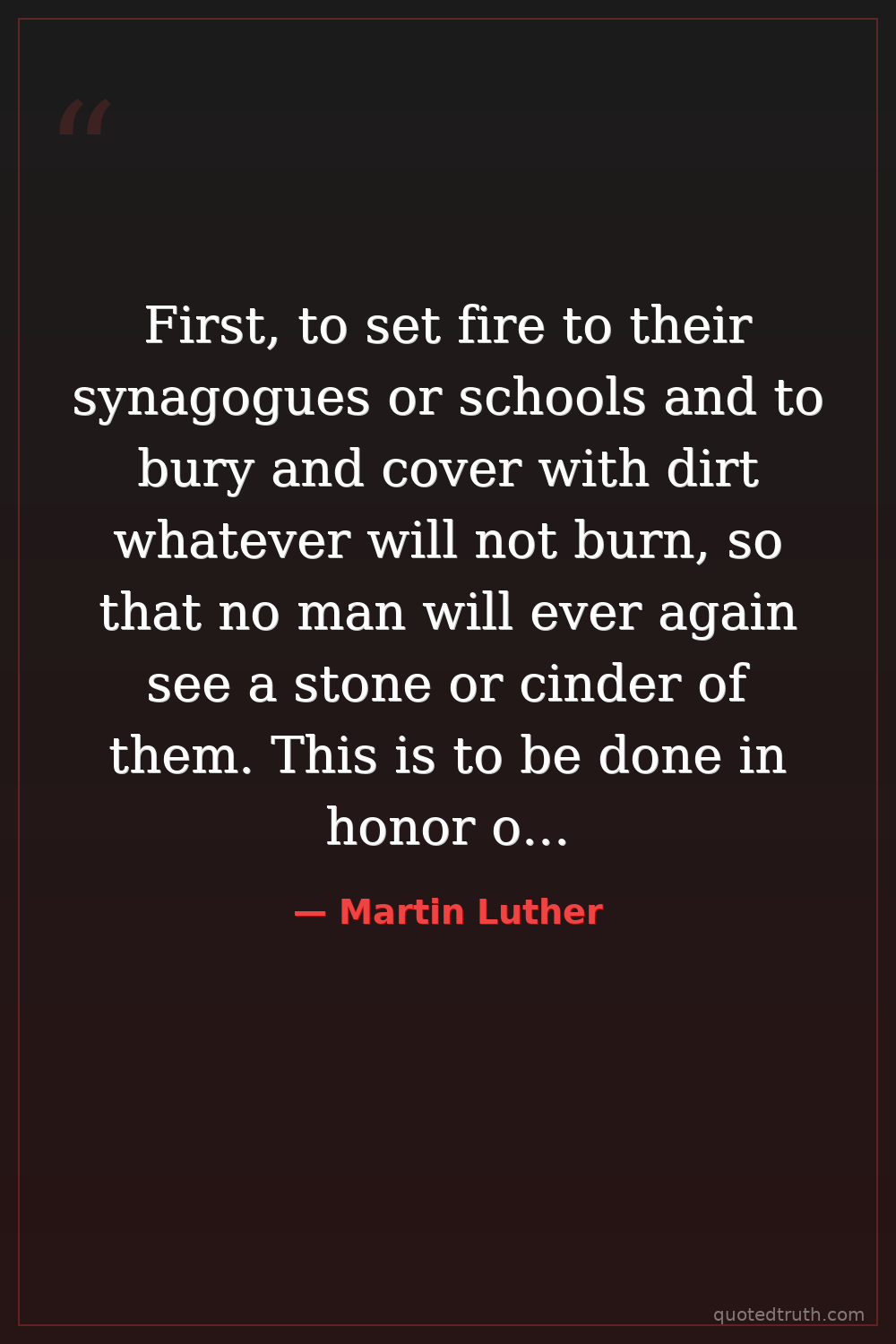
Luther is calling for the destruction of Jewish places of worship and study, urging that synagogues and schools be burned and their remains buried so nothing visible remains. He frames this violent erasure as a religious duty, claiming Christians must act this way to prove their faith to God and avoid appearing to tolerate what he considers blasphemy against Jesus. It is an explicit incitement to religious persecution dressed as piety.
Relevance to Martin Luther
This comes from Luther's 1543 tract On the Jews and Their Lies, written late in his life after Jews refused to convert to his reformed Christianity. Earlier he had written sympathetically of Jews, but bitterness, failing health, and apocalyptic urgency hardened him. The passage shows the darker side of the reformer who challenged papal authority: the same uncompromising certainty that fueled the Reformation also produced virulent antisemitism later weaponized by Nazi propagandists.
The era
Early modern Europe treated religious dissent as a civic threat. Jews lived precariously under expulsion orders, ghettoization, and blood libels across German lands. Luther wrote amid the Reformation's violent fragmentation, peasant wars, and Ottoman pressure, when rulers fused confessional identity with political legitimacy. Calls to destroy synagogues fit a broader pattern where princes enforced theological conformity by force. Luther's pamphlet circulated widely via the printing press, shaping policy in Saxony and influencing centuries of Christian hostility toward Jewish communities.
AI-generated insights based on extensive research and information for context. Factual errors? Email [email protected].