Martin Luther — "Let the wife make her husband glad to come home and let him make her sorry to se…"
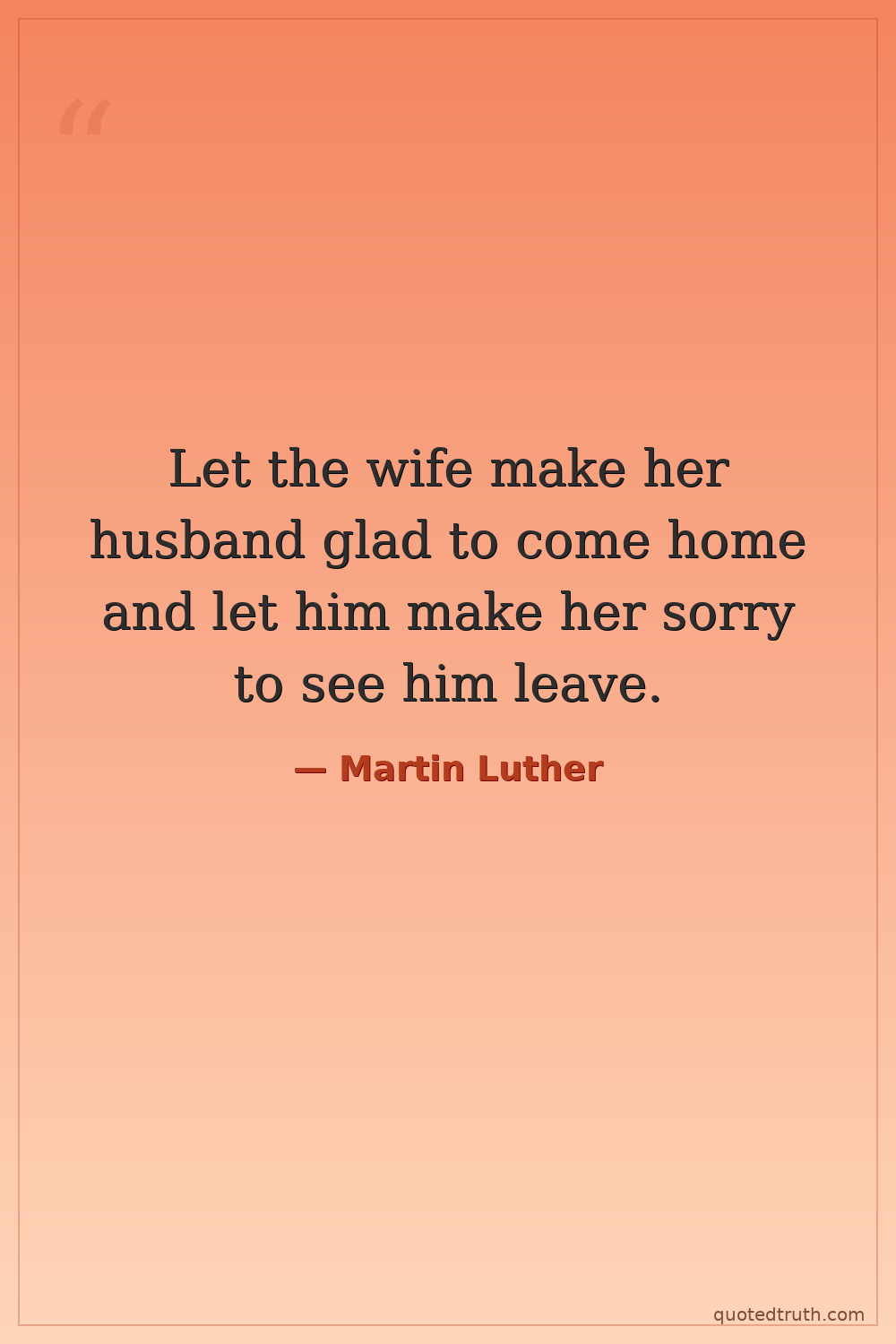
Let the wife make her husband glad to come home and let him make her sorry to see him leave.
Let the wife make her husband glad to come home and let him make her sorry to see him leave.
Click any product to generate a realistic preview. Up to 3 at a time.
* Initial load can take up to 90 seconds — revising the preview in another color is nearly instant.
"If I profess with the loudest voice and clearest exposition every portion of the truth of God except precisely that little point which the world and the devil are at that moment attacking, I am not co…"
"If the earth is fit for laughter, then surely heaven is filled with it. Heaven is the birthplace of laughter."
"Whoever does not know God hidden in suffering does not know God at all."
"Fourthly, their rabbis must be forbidden under threat of death to teach any more."
"I never learned to pray as I ought until I had been scourged by the devil."
German theologian whose 95 Theses (1517) launched the Protestant Reformation and broke the Catholic Church's monopoly on Western Christianity. Closely associated with Philipp Melanchthon (Lutheran systematizer) and John Calvin (later Reformer who built on Luther's break). For an intellectual contrast, see Pope Leo X, Renaissance pope (1513-1521) — Leo X's indulgence sales triggered Luther's break and Leo excommunicated him in 1521 — Luther's entire Reformation is structured as a direct answer to the indulgence-funded Vatican Leo represented.
Found in 1 providers: gemini
1 source checked
A good marriage runs on mutual effort: the wife should create a warm, welcoming home her husband looks forward to returning to, and the husband should treat his wife so well that she misses him when he leaves. Each partner takes responsibility for making the other value the relationship. It describes a reciprocal emotional bond where presence feels like a gift and absence is genuinely felt on both sides.
Luther broke dramatically with Catholic tradition by marrying former nun Katharina von Bora in 1525, fathering six children, and championing marriage as a sacred vocation rather than a spiritual compromise. He wrote extensively on household life and praised Katharina as his equal partner. This saying reflects his lived conviction that clergy should marry and that domestic affection, not monastic celibacy, was the God-honoring path for most Christians.
In early modern Europe, Catholic doctrine mandated priestly celibacy and ranked virginity above marriage spiritually. Luther's 1520s Reformation overturned this, reframing marriage as the normal Christian calling. Household manuals flourished, and reformers wrote openly about spousal duties, affection, and shared domestic joy. Germany was also reeling from the Peasants' War and religious upheaval, making the stable, loving Protestant household a powerful cultural symbol of reformed faith in daily practice.
AI-generated insights based on extensive research and information for context. Factual errors? Email [email protected].
Your cart is empty