What it means
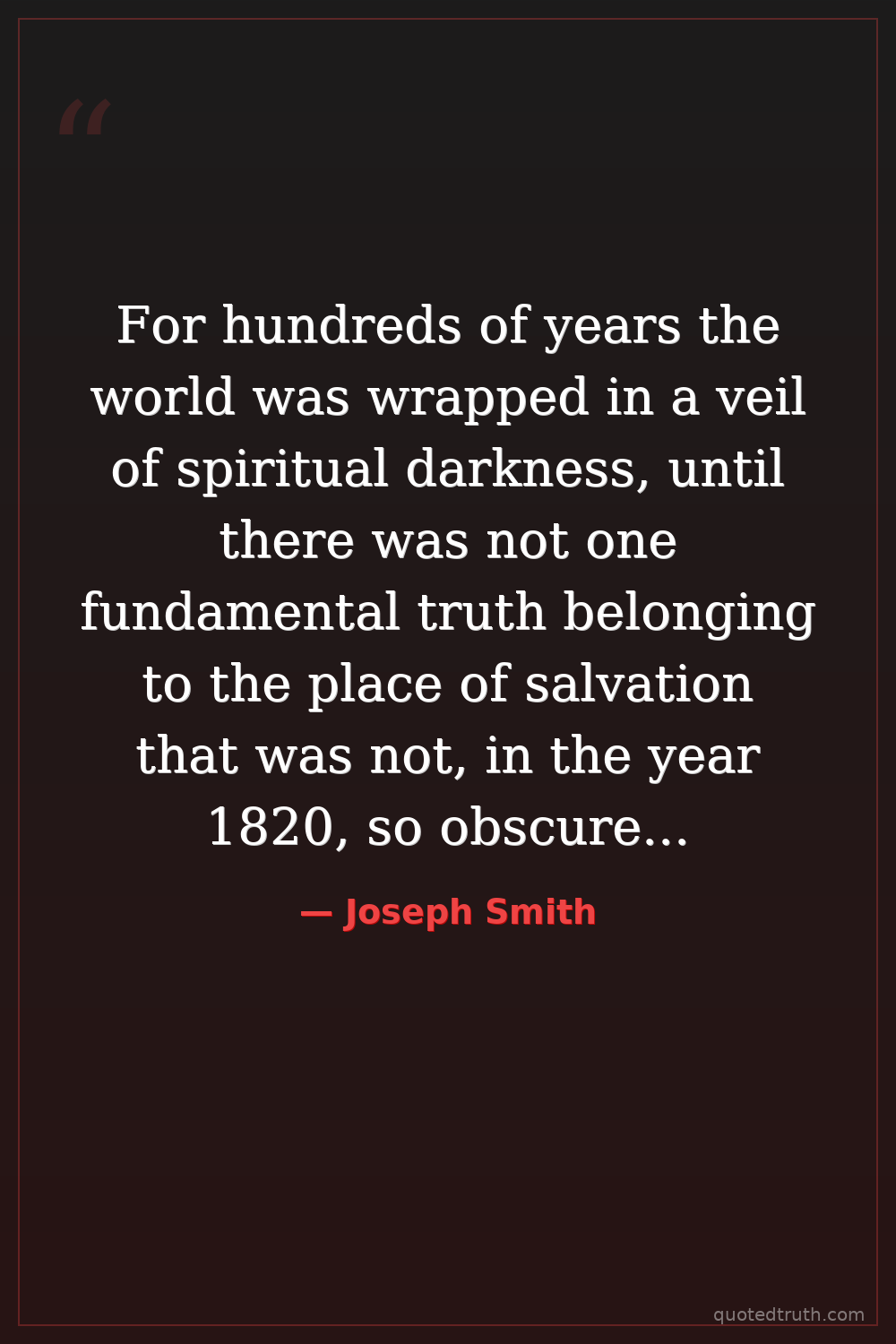
The quote claims authentic Christian truth was buried under centuries of corruption — pagan rituals, false ceremonies, and distorted traditions had either twisted every core doctrine of salvation beyond recognition or eliminated it entirely. By 1820, nothing original remained intact. It frames religion's state not as merely imperfect but as catastrophically lost, requiring total recovery rather than gradual reform.
Relevance to Joseph Smith
Smith founded the Latter-day Saint movement on this exact claim. In 1820, at age 14, he said God and Jesus appeared to him confirming all existing churches had gone astray. His entire prophetic identity rested on being the instrument of a divine Restoration — not Protestant reform, but recovery of truth completely absent from earth. This quote is his theological rationale for why a new church, not an improved old one, was necessary.
The era
In 1820, America's Second Great Awakening was producing intense religious revival and fierce denominational rivalry — Methodists, Baptists, and Presbyterians each claimed authentic Christianity while condemning rivals. This fragmentation created genuine spiritual confusion. Enlightenment skepticism had simultaneously weakened traditional church authority. Smith's total-apostasy narrative offered a coherent answer: if competing churches all contradicted each other, perhaps none held truth, and divine intervention — not human debate — was the only solution.
AI-generated insights based on extensive research and information for context. Factual errors? Email [email protected].