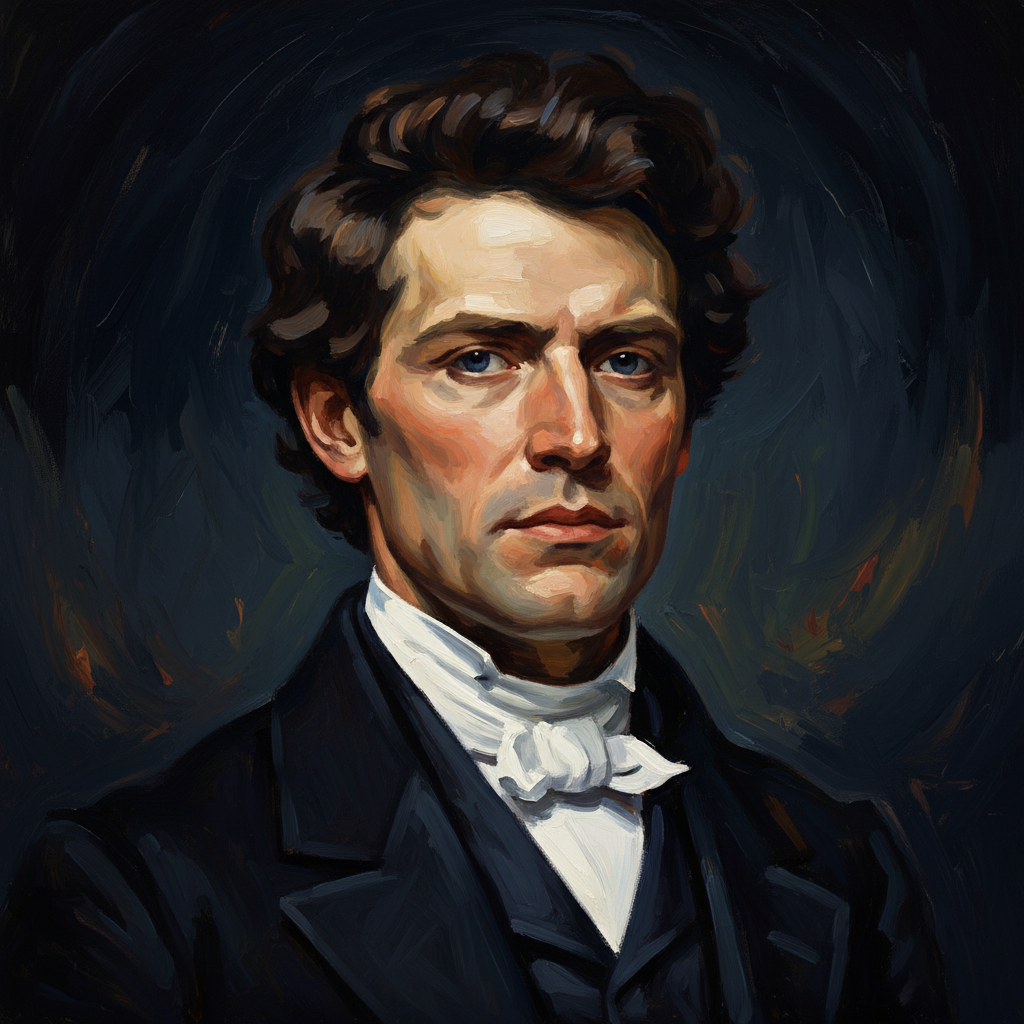
Joseph Smith — "I have the Priesthood, and can administer in the ordinances of the Gospel."
I have the Priesthood, and can administer in the ordinances of the Gospel.
I have the Priesthood, and can administer in the ordinances of the Gospel.
Click any product to generate a realistic preview. Up to 3 at a time.
* Initial load can take up to 90 seconds — revising the preview in another color is nearly instant.
"If I had forty wives in the United States, they did not know it, and could not substantiate it, neither did I ask any lawyer, judge, or magistrate for them. I live above the law, and so do this people…"
"I have seen God, and I know that he lives."
"I have a testimony to lay before you, my testimony is that I am a prophet of God; and I know it; and I tell you in the name of Jesus Christ that I am a prophet."
"I am a lover of the Constitution, and I believe in the principles of republicanism."
"If men do not comprehend the character of God, they do not comprehend themselves."
Found in 1 providers: grok
1 source checked
The speaker asserts a God-granted commission to perform binding sacred ceremonies — baptism, confirmation, blessings, and other rites believed necessary for salvation. This is not a self-appointed preacher's role but a claim of heaven-restored authority. 'Ordinances' are specific acts that spiritually count only when performed by someone divinely authorized. It is a declaration separating legitimate ordained power from ordinary ministry, insisting the rituals he performs are spiritually valid and binding before God.
Smith claimed angels physically restored priesthood authority to him — John the Baptist conferring the Aaronic Priesthood in 1829, then Peter, James, and John the Melchizedek. This restoration was his movement's theological cornerstone: all other churches had lost divine authority through centuries of apostasy. His right to baptize, seal marriages, and administer temple ordinances wasn't inherited through tradition but directly re-granted by heavenly messengers, making priesthood authority the defining credential separating his church from every other Christian denomination.
The early 1800s American frontier churned with the Second Great Awakening — mass revivals, splintering denominations, and fierce public debates over which church held true Christian authority. Many sincere seekers doubted any existing institution was legitimate. Smith's claim that Heaven physically re-commissioned divine priesthood to a young upstate New York farmer was radical precisely in this climate: it didn't just start a new sect but declared every competing church spiritually powerless, galvanizing thousands of converts who craved unambiguous religious authority.
AI-generated insights based on extensive research and information for context. Factual errors? Email [email protected].
Your cart is empty