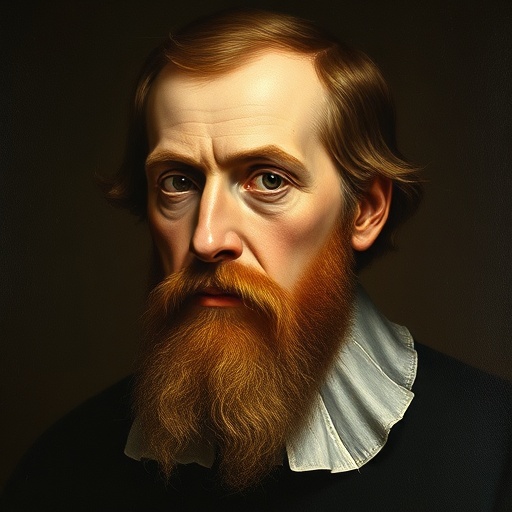
John Calvin — "All that a good man does, all that he suffers, all that he thinks, has a referen…"
All that a good man does, all that he suffers, all that he thinks, has a reference to God.
All that a good man does, all that he suffers, all that he thinks, has a reference to God.
Click any product to generate a realistic preview. Up to 3 at a time.
* Initial load can take up to 90 seconds — revising the preview in another color is nearly instant.
"The human race is condemned to everlasting hell for all have sinned and fallen short of the glory of God. In choosing to save some and choosing not to save others, it would appear to be no different t…"
"Let us also learn that nothing is less consistent than to punish heavily the crimes whereby mortals are injured, whilst we connive at the impious errors or sacrilegious modes of worship whereby the ma…"
"God's purpose is immutable, and cannot be changed."
"The reprobate are not without excuse, because their blindness is voluntary."
"It is not in our power to believe, but it is the gift of God."
French theologian whose Institutes of the Christian Religion (1536) systematized Protestant Reformed doctrine, including predestination. Closely associated with Martin Luther (Reformation founder, Calvin's predecessor). For an intellectual contrast, see Jacobus Arminius, Dutch Reformed theologian (1560-1609) — Arminius's rejection of strict double-predestination founded Arminianism — the theological tradition modern Methodism, most evangelicalism, and Pentecostalism descend from. The Calvinist-Arminian debate has divided Protestantism for 400 years.
Found in 1 providers: grok
1 source checked
A truly good person lives with total orientation toward God — not just in prayer or worship, but in every action taken, every hardship endured, every passing thought. Nothing in life exists in a purely secular zone. Work, suffering, and even private thinking all carry divine significance. Goodness isn't compartmentalized into religious moments; it saturates all of existence with reference to something greater than the self.
Calvin was the architect of Reformed theology, centered on God's absolute sovereignty over all creation. His Institutes of the Christian Religion argued that every aspect of human life — governance, labor, family — falls under divine authority. Calvin governed Geneva as a theocratic reformer, viewing his work as a holy calling. His doctrine of vocation taught that ordinary work glorifies God, making total-life-orientation the practical center of his theology.
Calvin's era saw Western Christianity fracturing from Rome during the 16th-century Reformation. Medieval Catholicism had reserved holiness for clergy and monks, creating a sharp sacred-secular divide for laypeople. Reformers attacked this hierarchy, insisting every Christian could live a holy life in ordinary callings. Calvin wrote amid religious wars, heresy trials, and exile — a time when defining what made a person truly godly carried life-or-death political consequences.
AI-generated insights based on extensive research and information for context. Factual errors? Email [email protected].
Your cart is empty