John Wesley — "Though I am an old man, I am but a little child; for I am just beginning to lear…"
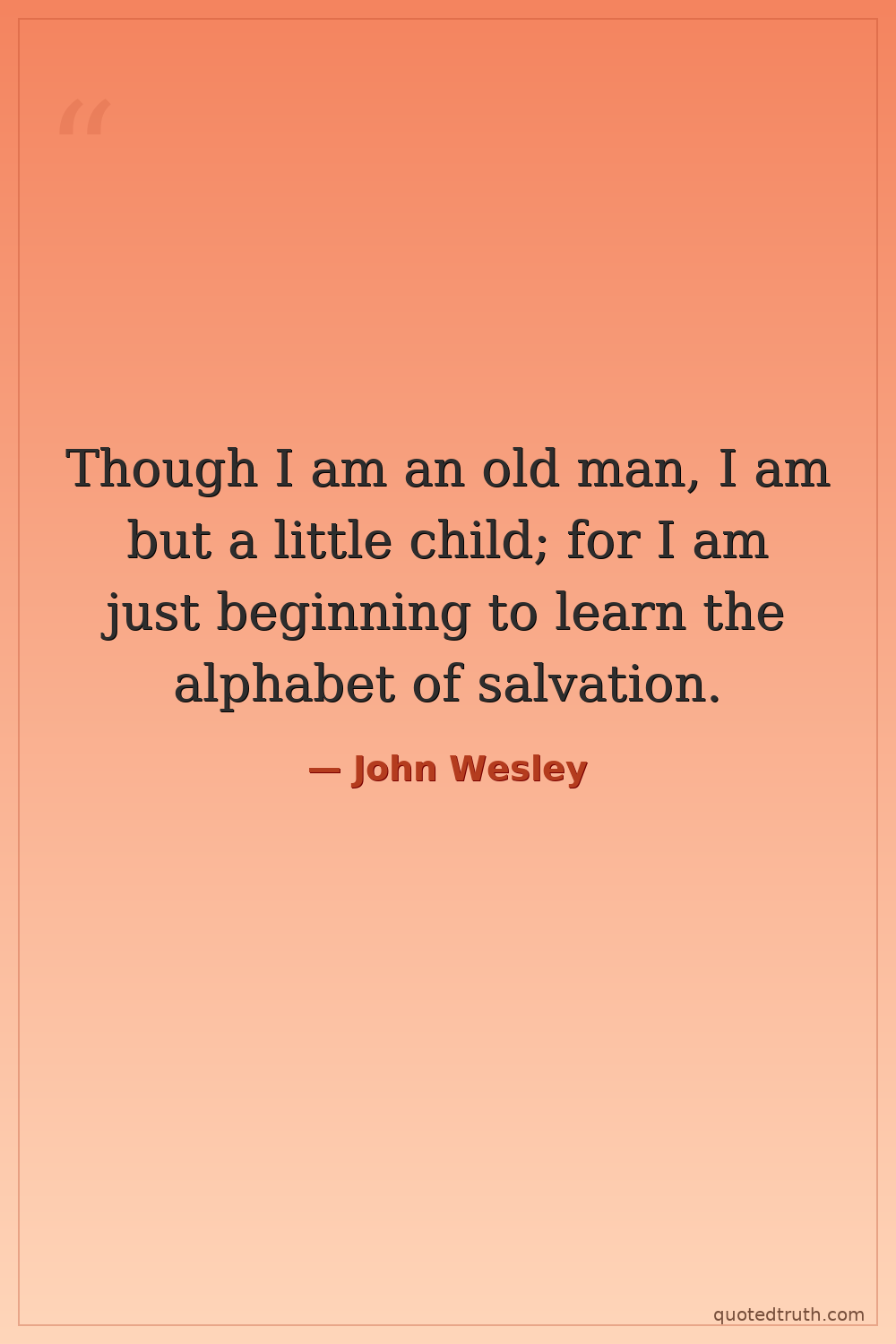
Though I am an old man, I am but a little child; for I am just beginning to learn the alphabet of salvation.
Though I am an old man, I am but a little child; for I am just beginning to learn the alphabet of salvation.
Click any product to generate a realistic preview. Up to 3 at a time.
* Initial load can take up to 90 seconds — revising the preview in another color is nearly instant.
"I am a creature of a day, passing through life as an arrow through the air. I am a spirit come from God, and returning to God; just hovering a few moments over a great gulf, till, on a sudden, I drop …"
"It is not the being in a place, but the being in a state, that makes us happy."
"The first thing that I would advise you to do, is, to get a clear and distinct notion of the state of the world."
"The Gospel of Christ knows of no religion but social; no holiness but social holiness."
"I have been reading a book of travels. I do not know when I have been so much amused. It is a pity that so few of our travellers write like rational creatures."
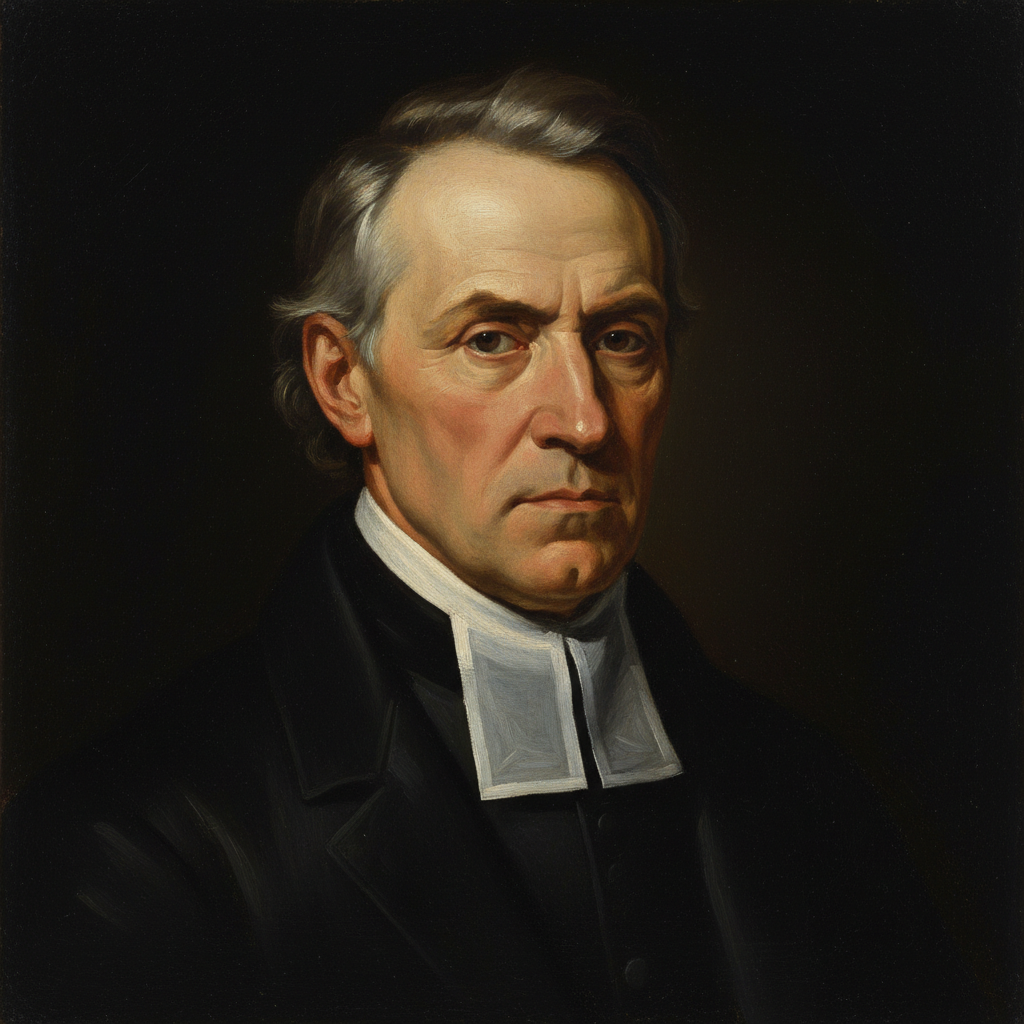
English Anglican cleric and founder of Methodism, whose open-air preaching and class-meeting structure created the largest 18th-century evangelical revival. Closely associated with Charles Wesley (his hymn-writing brother) and George Whitefield (early co-revivalist, later doctrinal opponent). For an intellectual contrast, see George Whitefield, Calvinist evangelical revivalist — Whitefield's predestinarian Calvinism vs Wesley's free-grace Arminian theology split the early Methodist movement permanently in the 1739-41 break. The founding evangelical Calvinist-Arminian schism — the two parallel evangelical traditions American Christianity descends from.
Found in 1 providers: grok
1 source checked
Despite a lifetime of accumulated knowledge and experience, true wisdom reveals how little we actually understand. The speaker acknowledges that genuine spiritual understanding is so vast and deep that even a long life of devoted study leaves one feeling like a beginner. Humility grows alongside knowledge — the more one learns, the more one recognizes the infinite scope of what remains unknown.
Wesley founded Methodism after decades of rigorous theological study at Oxford and over 50 years of itinerant preaching across Britain. He rode 250,000 miles and wrote hundreds of works, yet remained intensely focused on personal sanctification and 'going on to perfection.' This quote reflects his doctrine of entire sanctification — salvation as an ongoing transformative journey, not a completed transaction, consistent with his lifelong spiritual self-examination.
The 18th-century Methodist revival emerged amid Enlightenment rationalism that prized human reason and scientific progress. Wesley countered intellectual pride with evangelical humility, insisting that head knowledge meant nothing without heart transformation. In an era of confident reason and colonial expansion, this quote challenged the prevailing spirit of mastery and certainty, grounding spiritual authority in perpetual dependence on grace rather than accumulated doctrinal expertise.
AI-generated insights based on extensive research and information for context. Factual errors? Email [email protected].
Your cart is empty