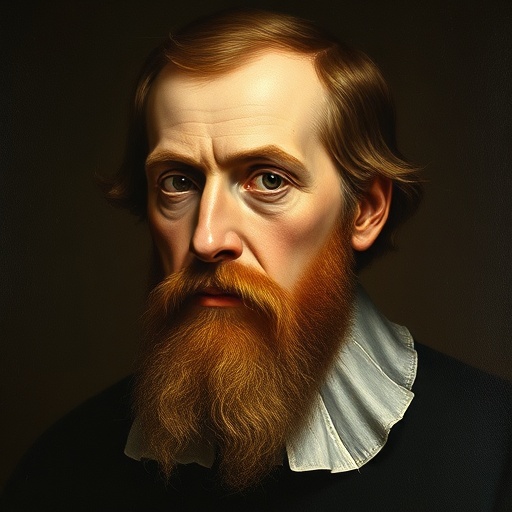
John Calvin — "God has a secret counsel, by which he chooses whom he will, and rejects whom he …"
God has a secret counsel, by which he chooses whom he will, and rejects whom he will.
God has a secret counsel, by which he chooses whom he will, and rejects whom he will.
Click any product to generate a realistic preview. Up to 3 at a time.
* Initial load can take up to 90 seconds — revising the preview in another color is nearly instant.
"The Word of God is the scepter by which he governs his church."
"By predestination we mean the eternal decree of God, by which he has determined with himself whatever he wills to happen with regard to every man."
"The elect are called according to God's purpose, not according to their own merits."
"We frankly confess that God has ordained to death those whom he has not deemed worthy of life."
"I consider looseness with words no less of a defect than looseness of the bowels."
French theologian whose Institutes of the Christian Religion (1536) systematized Protestant Reformed doctrine, including predestination. Closely associated with Martin Luther (Reformation founder, Calvin's predecessor). For an intellectual contrast, see Jacobus Arminius, Dutch Reformed theologian (1560-1609) — Arminius's rejection of strict double-predestination founded Arminianism — the theological tradition modern Methodism, most evangelicalism, and Pentecostalism descend from. The Calvinist-Arminian debate has divided Protestantism for 400 years.
Found in 1 providers: grok
1 source checked
This expresses the doctrine of double predestination — God sovereignly decides, before creation and beyond human understanding, which individuals are saved and which are condemned. No human effort, merit, or faith influences this hidden divine decree. God's will is absolute and inscrutable, operating independently of anything a person does or believes. Human destiny is sealed entirely by divine choice, making salvation a gift granted — or withheld — solely at God's pleasure.
Calvin's magnum opus, Institutes of the Christian Religion (1536–1559), built his entire theology around God's absolute sovereignty. Predestination was its cornerstone: the elect are saved, the reprobate condemned, by God's eternal decree. In Geneva, he enforced this theology through church discipline and civic governance. He clashed repeatedly with critics like Jerome Bolsec, who challenged election as unjust. His certainty of God's inscrutable will gave him the confidence to reshape an entire city around scripture.
The 16th-century Reformation challenged Rome's teaching that the Church mediated salvation through sacraments, confession, and indulgences. Calvin's predestination doctrine was a radical counter: if God's election is eternal and secret, no pope or priest can grant or withhold salvation. This dismantled centuries of Church authority over human spiritual destiny. It also ignited fierce Protestant debates over free will versus divine sovereignty, drawing the fault lines between Reformed, Lutheran, and later Arminian theologies.
AI-generated insights based on extensive research and information for context. Factual errors? Email [email protected].
Your cart is empty