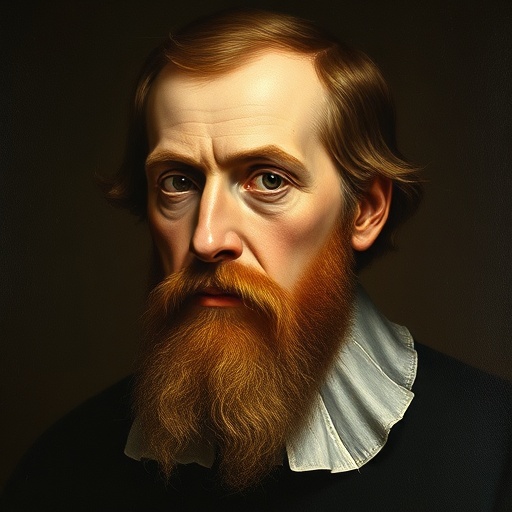
John Calvin — "The Word of God is the scepter by which he governs his church."
The Word of God is the scepter by which he governs his church.
The Word of God is the scepter by which he governs his church.
Click any product to generate a realistic preview. Up to 3 at a time.
* Initial load can take up to 90 seconds — revising the preview in another color is nearly instant.
"Ignorance of predestination is a great evil, because it deprives us of the knowledge of God's glory."
"This is plainly to ascribe divinity to 'free will.'"
"Without knowledge of God, there is no true knowledge of self."
"God's providence extends to all things, even to the least of them."
"It is not enough to believe that God is, unless we also believe that he is the rewarder of them that diligently seek him."
French theologian whose Institutes of the Christian Religion (1536) systematized Protestant Reformed doctrine, including predestination. Closely associated with Martin Luther (Reformation founder, Calvin's predecessor). For an intellectual contrast, see Jacobus Arminius, Dutch Reformed theologian (1560-1609) — Arminius's rejection of strict double-predestination founded Arminianism — the theological tradition modern Methodism, most evangelicalism, and Pentecostalism descend from. The Calvinist-Arminian debate has divided Protestantism for 400 years.
Found in 1 providers: grok
1 source checked
God rules his church through Scripture alone, not through popes, councils, or human traditions. The scepter — a royal symbol of command — represents absolute authority. Calvin argues that whenever the church drifts from the Bible, it abandons God's actual governance. Only when Scripture is preached and obeyed does God truly reign. This makes the pulpit, not the papal throne, the seat of real ecclesiastical power.
Calvin spent his career building Geneva into a city literally governed by biblical law. His Institutes of the Christian Religion (1536) systematized Scripture's supremacy over papal decree and church tradition. He rejected Rome's claim that councils and popes share authority with the Bible. As Geneva's chief pastor, his sermons functioned as civic governance — Scripture was the constitution. This quote distills his defining conviction: Sola Scriptura, Scripture alone as the ultimate authority.
Calvin wrote during the Protestant Reformation, when the authority of the Catholic Church — centered on papal supremacy and conciliar tradition — was being challenged across Europe. The Council of Trent (1545–1563) convened specifically to reassert Rome's interpretive authority over Scripture. In this context, Calvin's claim that the Bible alone governs the church was revolutionary and politically dangerous. Reformers were being burned as heretics for exactly this position.
AI-generated insights based on extensive research and information for context. Factual errors? Email [email protected].
Your cart is empty