What it means
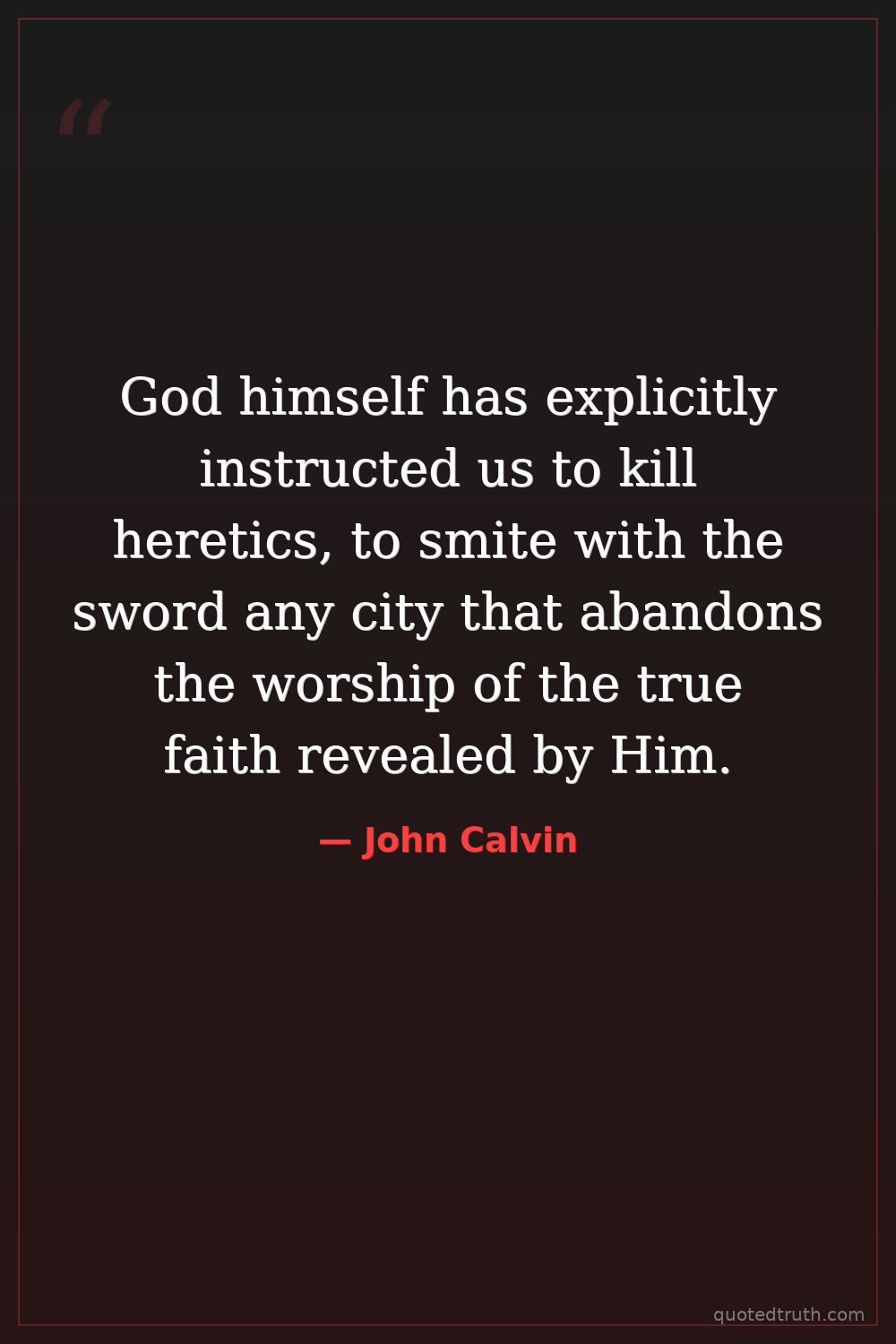
This quote asserts that God has directly commanded believers to execute heretics and destroy cities that abandon true worship. It frames lethal religious coercion not as human cruelty but as divine obligation — obedience to God requires eliminating false belief by force. In plain terms: killing religious dissenters is not optional but scripturally mandated, and failing to do so constitutes disobedience to God himself.
Relevance to John Calvin
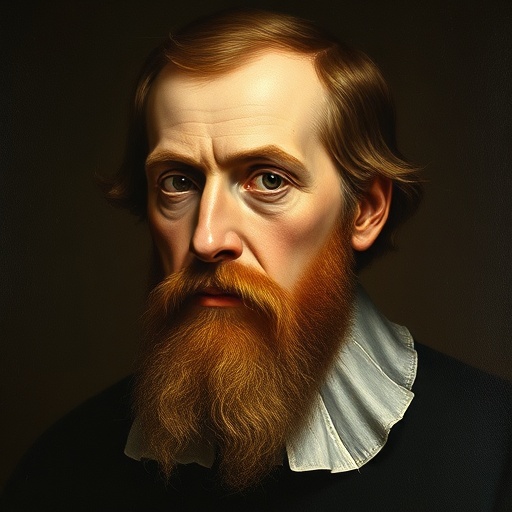
Calvin ruled Geneva as a near-theocracy where civil and religious authority merged. He directly supported the 1553 burning of Michael Servetus for denying the Trinity, and wrote 'Defensio orthodoxae fidei' defending that execution. Calvin genuinely believed magistrates bore a God-given duty to suppress heresy. This quote reflects his core conviction that pure doctrine must be enforced coercively — tolerance of false teaching endangered entire communities before God.
The era
The 16th-century Reformation shattered European religious unity, triggering brutal suppression on all sides. Catholic Inquisitions, Protestant heresy trials, and the mass execution of Anabaptists were commonplace. The principle 'cuius regio, eius religio' — the ruler determines the religion — was emerging as political reality. Religious tolerance was virtually inconceivable; heresy was treated as treason against God and state alike, making Calvin's position mainstream rather than extreme for his time.
AI-generated insights based on extensive research and information for context. Factual errors? Email [email protected].