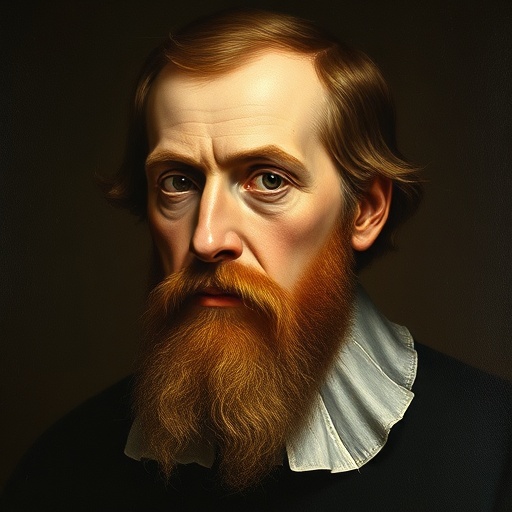
John Calvin — "Prayer is the chief exercise of faith."
Prayer is the chief exercise of faith.
Prayer is the chief exercise of faith.
Click any product to generate a realistic preview. Up to 3 at a time.
* Initial load can take up to 90 seconds — revising the preview in another color is nearly instant.
"For the mind of man, when it has once been infected with this pest, is so utterly perverse that it is with difficulty restrained from framing for itself, after the example of the devil, some new and u…"
"We shall never be clearly persuaded, as we ought to be, that our salvation flows from the wellspring of God's free mercy until we come to know his eternal election, which illumines God's grace by this…"
"God's singular decree is the cause of Adam's fall, and through this fall, the damnation of his posterity."
"We are saved by grace alone, through faith alone, in Christ alone."
"A dog barks when his master is attacked. I would be a coward if I saw that God's truth is attacked and yet would remain silent."
French theologian whose Institutes of the Christian Religion (1536) systematized Protestant Reformed doctrine, including predestination. Closely associated with Martin Luther (Reformation founder, Calvin's predecessor). For an intellectual contrast, see Jacobus Arminius, Dutch Reformed theologian (1560-1609) — Arminius's rejection of strict double-predestination founded Arminianism — the theological tradition modern Methodism, most evangelicalism, and Pentecostalism descend from. The Calvinist-Arminian debate has divided Protestantism for 400 years.
Found in 1 providers: grok
1 source checked
Prayer is not merely a devotional habit or ritual—it is the primary way faith becomes active and real. Faith without expression is passive belief; prayer is how a believer actually engages with God, demonstrates trust, and puts conviction into practice. It is the arena where abstract theology becomes lived relationship, testing and strengthening a person's connection to God through honest, direct communication.
Calvin devoted an entire chapter of his Institutes of the Christian Religion (Book III) to prayer, calling it the primary exercise of faith. As Geneva's leading pastor-theologian, he preached daily and considered prayer the mechanism by which the elect communed with their sovereign God. His Reformed theology rejected priestly mediation, making direct personal prayer the cornerstone of a believer's spiritual discipline and proof of genuine faith.
The 16th-century Reformation was dismantling Catholic structures of mediated prayer—indulgences, saint intercession, and priestly absolution. Calvin and Luther insisted ordinary believers could approach God directly, a radical democratization of worship. Amid the Wars of Religion and the Council of Trent's counter-reforms, emphasizing personal prayer as faith's chief exercise was both a theological declaration and a political act, asserting that no institutional hierarchy stood between the soul and God.
AI-generated insights based on extensive research and information for context. Factual errors? Email [email protected].
Your cart is empty